
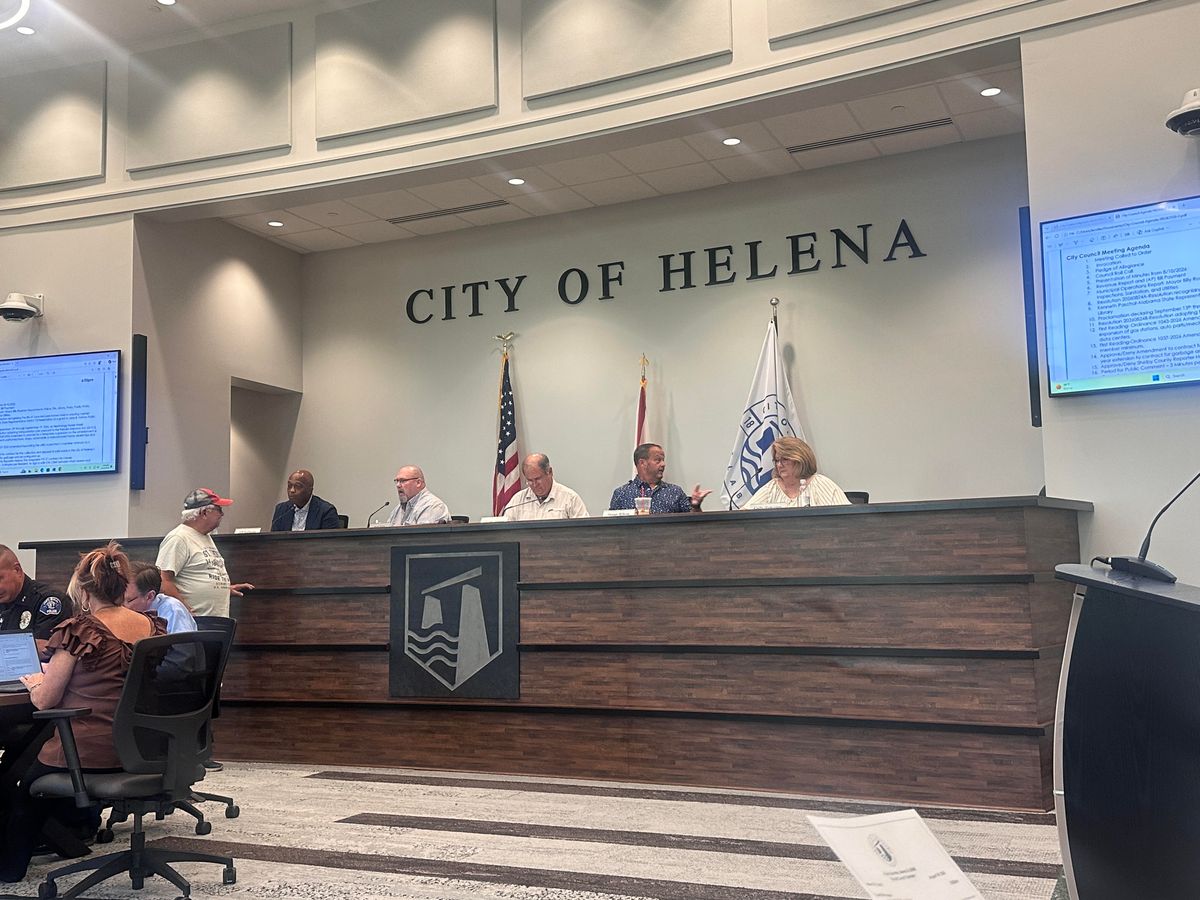
“We try to protect the integrity of the town. Sometimes it’s not going over too good,” Hinds said. “For instance, the front street is history. It is really history. There’s not anything we can do to save front Street, but we are trying to save some of the other history as you know as much as we can.”
Hinds also questioned whether an oil-exchange business would fit the character of the area.
“I don’t think an oil-change is a good idea on front street. I call it an oil pit. I don’t think it’s a good idea, right next to the Seven Brew,” she said.
Sam Richie said the city should maintain consistency with the development restrictions adopted in June.
“In my opinion, leadership, you draw the line in the sand. If you decided in June what you were, you weren’t going to do, just stick to it. Whether they did it before or after, it doesn’t matter,” Richie said.
Richie also said Helena has limited property available for attracting new businesses and should be strategic about how the property is used.
“As the city, we don’t have a lot of property to sell and bring in businesses into Helena. We need to make sure that the property that we are using, that we are creating multifaceted areas that are going to bring revenues into the city,” Richie said.
City officials emphasized that the amendment does not open the door for new applications that fall under the moratorium. Instead, it preserves the ability for projects that had already entered the city’s approval process before the moratorium took effect to continue through the remaining steps.
The amendment allows the city to maintain the temporary restrictions while making exceptions for projects that had already begun the development process before the moratorium was enacted.