
The Lehigh Valley’s housing shortage may look like it’s getting better. In reality, there’s still a long way to go.
There’s a deficit of 6,073 housing units, the Lehigh Valley Planning Commission said Wednesday morning while unveiling its new Housing Supply and Attainability Strategy before officials and members of the business community at DeSales University.
“This strategy is built from partnerships,” LVPC Executive Director Becky Bradley said. “It started more than two years ago, with the realization that the Lehigh Valley was in a monumental housing shortage. When we started looking at the data, the shortage was even bigger than we expected.”
The LVPC had the shortage at slightly more than 9,000 last year, but though it’s reduced that number, major challenges still remain. The reduction is largely attributed to recent upticks in approved housing plans across municipalities — for instance, Northampton County recorded about 1,600 approved units in 2025, its highest single-year total in nearly two decades — but demand is continuing to grow.
In fact, because the region steadily adds 4,000-7,000 residents every year, the LVPC projects that the Lehigh Valley still needs more than 51,000 new units by 2050 to avoid falling back into a deeper crisis.
“I think that this housing crisis represents the greatest threat to our success story in a generation, because there’s no element more quintessential to the American dream than the value and significance of a home,” Lehigh County Executive Josh Siegel said.
Solutions include streamlining municipal approval processes and increasing predictability of projects, adopting preapproved housing plans, inventory development-ready sites and use of mixed-use overlays.
Another strategy is to promote redevelopment of downtowns not just in the cities, but in boroughs such as Nazareth, Hellertown and Northampton.
Of course, the people moving in must be able to afford that house or apartment. Home prices have been on the rise in the Valley, along with the sluggish inventory. In its July report, the Greater Lehigh Valley Realtors said the median price for a house was a record high $389,500.
The LVPC says 30% of residents are cost-burdened, meaning they are paying more than 30% of their income on housing. Broken down, that’s 21% of homeowners and 50% of renters.
Those making less than an average of $76,736 per year may find it difficult to afford a house, while renters need $55,520 per year.
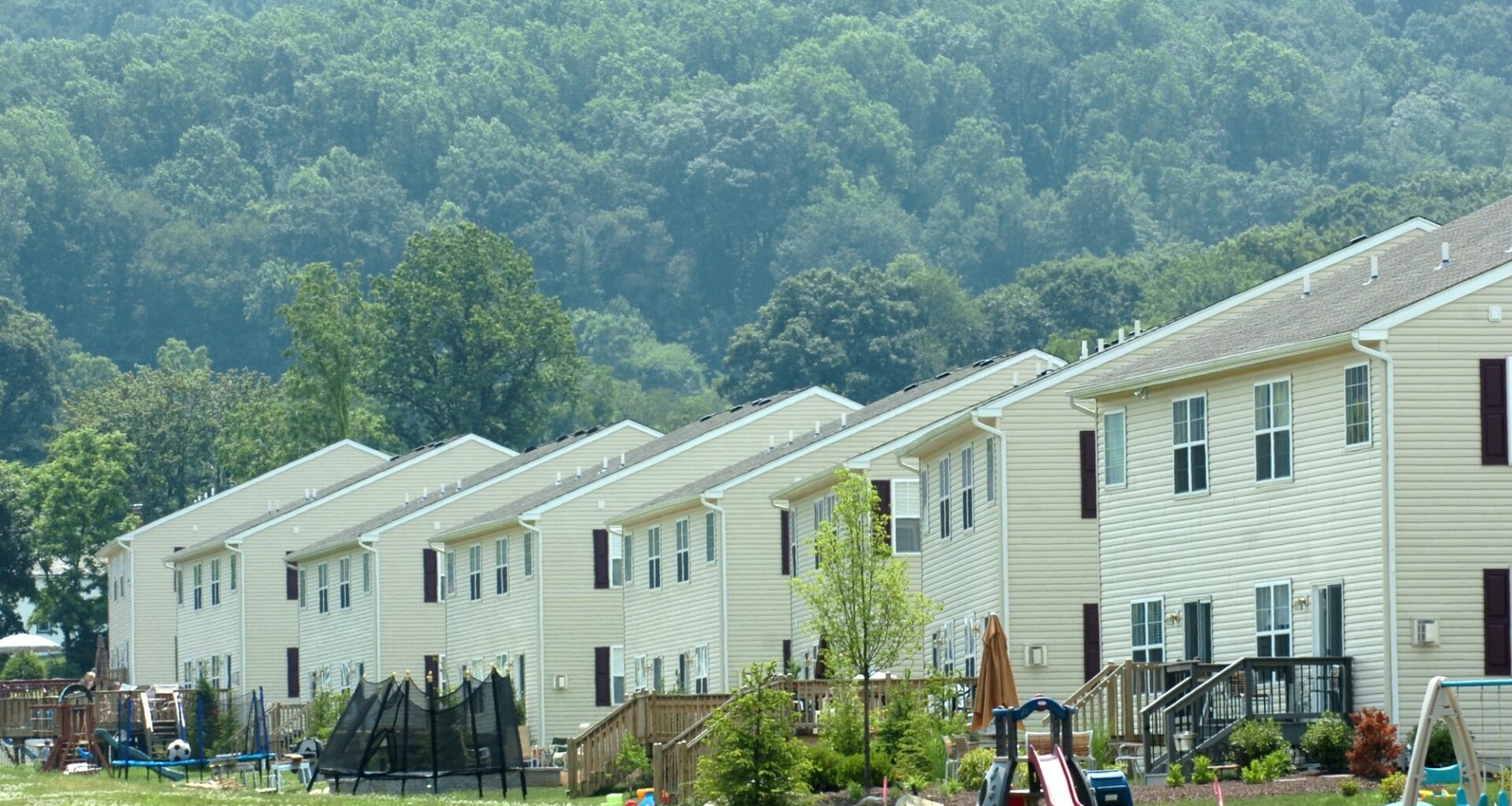
Moving toward more affordable housing includes building more townhomes, twins and condominium units alongside single-family homes, and targeting public sector support for workforce housing when market rate solutions fall short.
“Our data showed that this average home buyer that spent twice the median income for a home in the 1980s, was now spending four times the median income to buy a home in the Lehigh Valley,” LVPC Chair Tori Morgan said. “That price to buy here would grow to seven times our income by 2050 if we didn’t do something.”
To read the LVPC’s Housing Supply and Attainability Strategy, go to lvpc.org/housing-strategy.