
Doctors and health experts urged Philadelphians to make sure their children are up to date on their vaccinations, days after state health officials announced the first measles-related deaths in Pennsylvania since 1991.
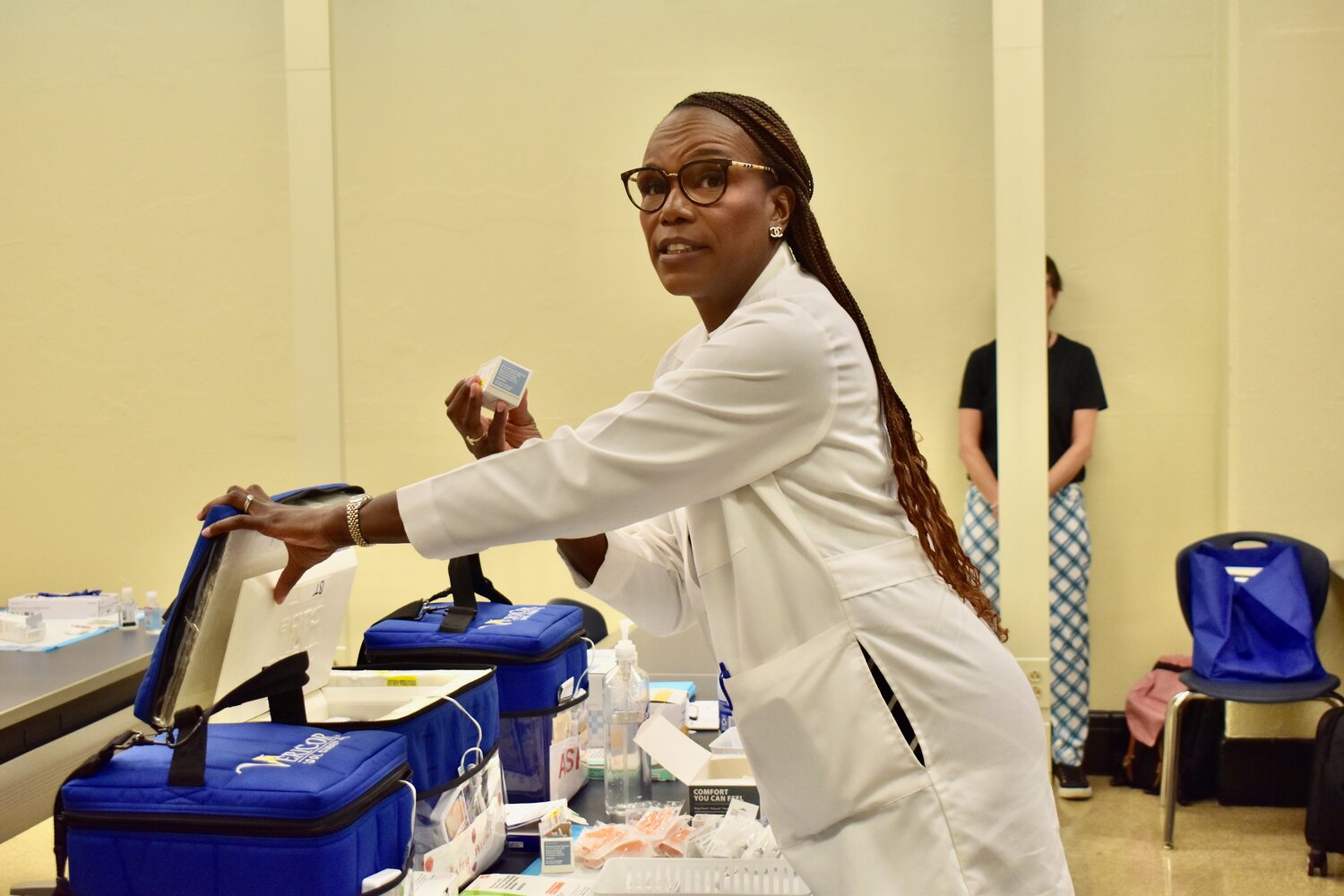
Dr. Ala Stanford, founder of the Black Doctors Consortium, and others gathered Thursday at Benjamin Franklin High School, where a clinic offering free immunizations and physicals was set to wrap up at the end of the week.
Two unvaccinated people from Lancaster County who were infected with measles died, the first fatalities associated with the virus this year in the United States, health authorities stated Aug. 25.
“Because of the success of vaccines, many people – generations even – have forgotten the seriousness of vaccine-preventable diseases,” said Dr. Ericka Hayes, an infectious disease specialist at the Children’s Hospital of Philadelphia. “Here in Pennsylvania, we have seen a stark and sad reminder of how serious these infections can be.”
Pennsylvania has recorded the third-most measles cases in the country in 2026, according to the U.S. Centers for Disease Control and Prevention. There have been 424 documented cases statewide, including nearly 100 over the past week, data from the Pennsylvania Department of Health shows.
No one has caught the virus in Philadelphia; however, 41 cases have been reported in Chester County and three in Montgomery County, according to a state measles dashboard.
Pennsylvania health officials say the measles, mumps and rubella, or MMR, vaccine is 97% effective at preventing the illness following two doses.
“We have decades of vaccine data from around the globe, and the data is clear – it’s crystal clear,” Hayes told reporters. “Vaccines are safe and effective, particularly when we compare the side effects of vaccines to the very serious consequences of the infections themselves.”
Deputy Philadelphia Health Commissioner James Garrow said getting vaccinated is as much about the community as it is about any one individual.
“A child does not receive their first measles shot until 12 months old,” Stanford added. “So every infant in this city – in the stroller, in the car seat, at the family reunion – has no protection of their own. We are their protection. That is the entire system.”
Health experts recommend an initial MMR shot between the ages of 12 and 15 months, and a second when the child is between four and six years old. Two doses are required for admission to kindergarten in Pennsylvania.
Given the current outbreak, Gov. Josh Shapiro’s administration said it is ramping up outreach to local school systems and reminding districts that they need to submit immunization data to Harrisburg by Dec. 31.
Information from the 2025-26 academic year shows that 94.4% of Philadelphia kindergarten students and 97.3% of 7th graders had received both MMR doses. Both metrics are higher than the statewide number. Experts say the community immunity threshold is above 95%.
Dr. Kendra B. McDow, the School District of Philadelphia’s chief medical officer, said students have 30 days from the start of school to get their required vaccines. If they do not and have not been granted an exemption, the children may be excluded from class by state law.
Philadelphia public school nurses are working to finalize immunization data over the coming weeks, McDow said. Once the results are in, the district and its health partners will hold pop-up clinics at schools with low vaccination rates, she added.
McDow and the other doctors at Thursday’s event encouraged parents with questions or concerns about vaccines to reach out to their pediatrician or school nurse.
More information about access to immunizations is available at phila.gov/vaccines.
MORE: Where asthma rates are highest in Philly
Keywords
Measles,
Vaccines,
Philadelphia,
Pennsylvania,
Children’s Hospital of Philadelphia,
School District of Philadelphia,
Pennsylvania Department of Health