
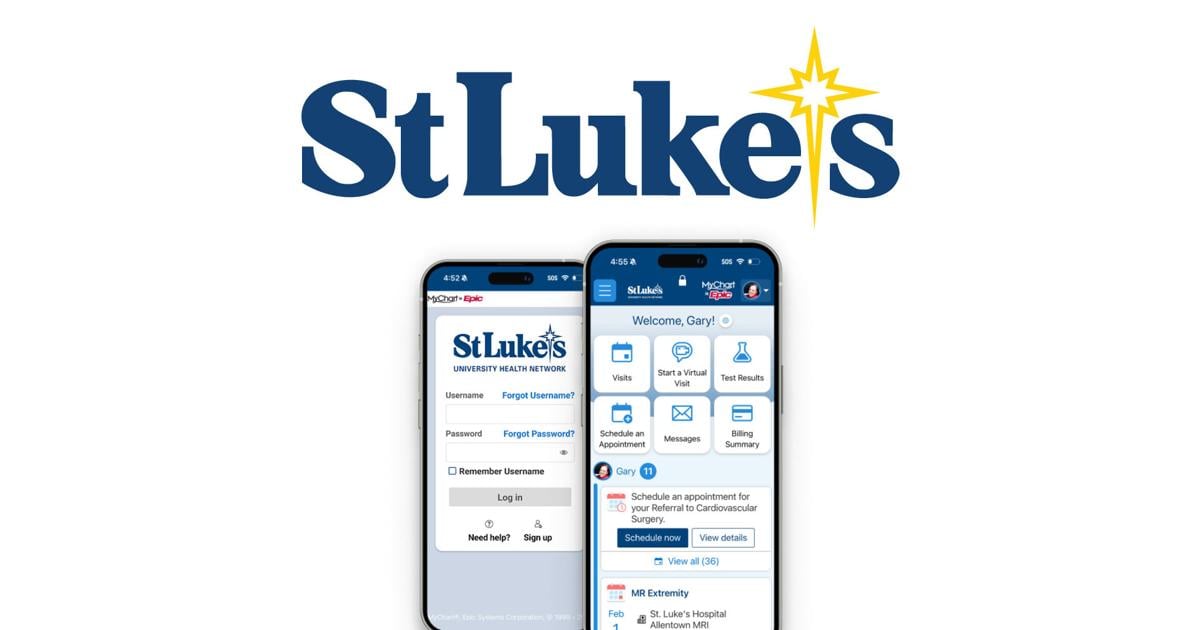
St. Luke’s University Health Network has made a statement regarding a phishing campaign that is targeting patients across the country using the MyChart name and branding.
This activity is part of a broader scam affecting multiple healthcare organizations and is not the result of a known security issue with the MyChart platform, St. Luke’s says.
According to St. Luke’s, the phishing can occur in the form of scam emails, text messages, or phone calls that falsely claim to be from MyChart.
St. Luke’s says these messages may offer a free health package, Medicare-related benefit, gift, or other promotion and ask you to click a link or provide personal information.
The organization says these communications are fraudulent and are not being sent by St. Luke’s or MyChart.
St. Luke’s and MyChart have said they will not contact you unexpectedly to ask for passwords, financial information, or other sensitive personal information.
The organization urges patients to be cautious of messages that create a sense of urgency or offer something that seems too good to be true.
St. Luke’s additionally tells customers not to click links or open attachments from suspicious messages.
They say if you are unsure whether a message is legitimate, do not respond. Instead, log in to MyChart directly through the MyChart app or by visiting the St. Luke’s website.
St. Luke’s shares action steps if you believe you interacted with a suspicious message:
Change your MyChart password immediately.
Monitor your accounts for unusual activity.
Contact the St. Luke’s MyChart Patient Support Line at 866-785-8537, option 5 for assistance.
The organization says that at this time there is no indication that MyChart itself has been compromised. Cybercriminals are simply misusing the MyChart name and branding in an attempt to trick patients into sharing personal information, St. Luke’s says.