
SCRANTON — Area Agency on Aging leaders in the region touted a new evaluation tool as a way for agencies to improve their work serving older adults and their families.
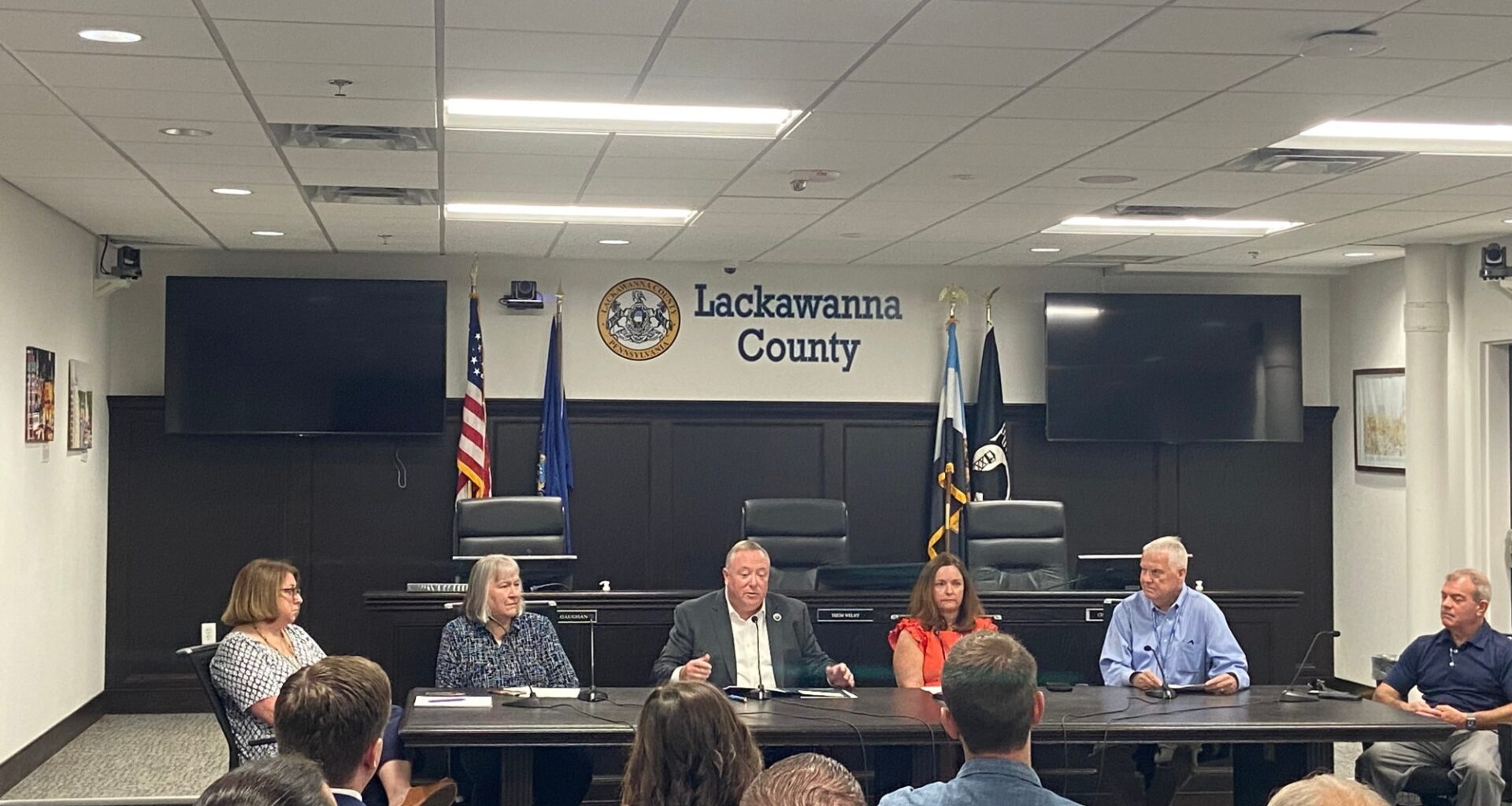
State Secretary of Aging Jason Kavulich hosted leaders from the agencies in Lackawanna, Pike and Monroe counties for a roundtable on the department’s new Comprehensive Aging Performance Evaluation. The program, unveiled at the start of last year, gives the state’s 52 Area Agencies on Aging information on areas they don’t comply with during performance evaluations by the department, and specific steps they need to take to improve to ensure compliance. Officials say the new assessment system provides historic levels of transparency and accountability and streamlines the department’s monitoring of the agencies.
The program is an upgrade from the previous system where agencies either passed or failed their review. Kavulich said it was needed, adding the upgrade is the most significant to the department in decades.
“Older adults in Pennsylvania deserve a modernized system that helps them stay safe and supported, healthy and thriving,” he said. “Change is never easy; it’s never popular, but our infrastructure has not kept pace with the changing needs of older adults. Our administration took this challenge head-on and is making an overdue system improvement to meet the needs of our rapidly growing older adult population.”
The program is the most comprehensive approach to evaluating senior services in the country, Kavulich said, but acknowledged it must evolve.
Kavulich said under the new system, 60% of agencies were below the threshold for compliance for documentation and therefore, they are able to fix it. Robin Soares, executive director of the Pike County Area Agency on Aging, said the program allowed them to improve on their documentation.

Lackawanna County Commissioner Chairman Thom Welby, far right, delivers opening remarks during a roundtable on the state Department of Aging’s new Comprehensive Aging Performance Evaluation Friday, Aug. 28, 2026 as Sara McDonald, director of the Lackawanna County Area Agency on Aging, center, and Secretary of Aging Jason Kavulich, left, listen. (Christine Lee/Staff Photo)

State Secretary of Aging Jason Kavulich, center, speaks during a roundtable on the department’s new Comprehensive Aging Performance Evaluation at the Lackawanna Government Center Friday, Aug. 28, 2026. On his left is Mary Claire Megargle, executive director of the Monroe County Area Agency on Aging and sitting to his right is Sara McDonald, director of the Lackawanna County Area Agency on Aging. (Christine Lee/Staff Photo)
Show Caption
1 of 2
Lackawanna County Commissioner Chairman Thom Welby, far right, delivers opening remarks during a roundtable on the state Department of Aging’s new Comprehensive Aging Performance Evaluation Friday, Aug. 28, 2026 as Sara McDonald, director of the Lackawanna County Area Agency on Aging, center, and Secretary of Aging Jason Kavulich, left, listen. (Christine Lee/Staff Photo)
Sara McDonald, director of the Lackawanna County Area Agency on Aging, which piloted the program, said data from the program gives them information about who they serve, where needs are changing, where gaps exist and whether existing strategies are moving them to better outcomes for the older adults they serve.
“The comprehensive agency performance evaluation tool gives us another mechanism to use data and performance information to stay focused on where we need to go,” she said. “We have an opportunity to use the data more effectively, and the CAPE will help us make sure that the policies and programs keep pace with the realities of today’s older adults.”
Kerri Anzulewicz, deputy director at the Lackawanna County Area Agency on Aging, said the program gives a good breakdown of data, allowing them to take specific pieces of information to see where their deficiencies are.
Unlike the previous evaluation method, Mary Claire Megargle, executive director of the Monroe County Area Agency on Aging, said the new program gives her staff a learning opportunity to improve on services.
The program was implemented at a time when case volume at local Area Agencies on Aging has increased, with several agency heads noting volumes up between 30 and 40% over the previous fiscal year. Anzulewicz and McDonald said the increase drives the need for for better ways to do their work and to call on community organizations to assist.
The roundtable was attended by representatives from organizations that help or have services for older adults, including Jewish Community Center of Scranton, the United Way, and various senior services agencies.
Kavulich emphasized the work agencies do supporting older adults, their families and caregivers.
“We as a department have the responsibility to monitor them, to make sure that work is being done the best it can be, to make sure that the resources that they are provided with are being used the best way they possibly can, and to really help them find a way to do, you know, to improve that work,” he said.