
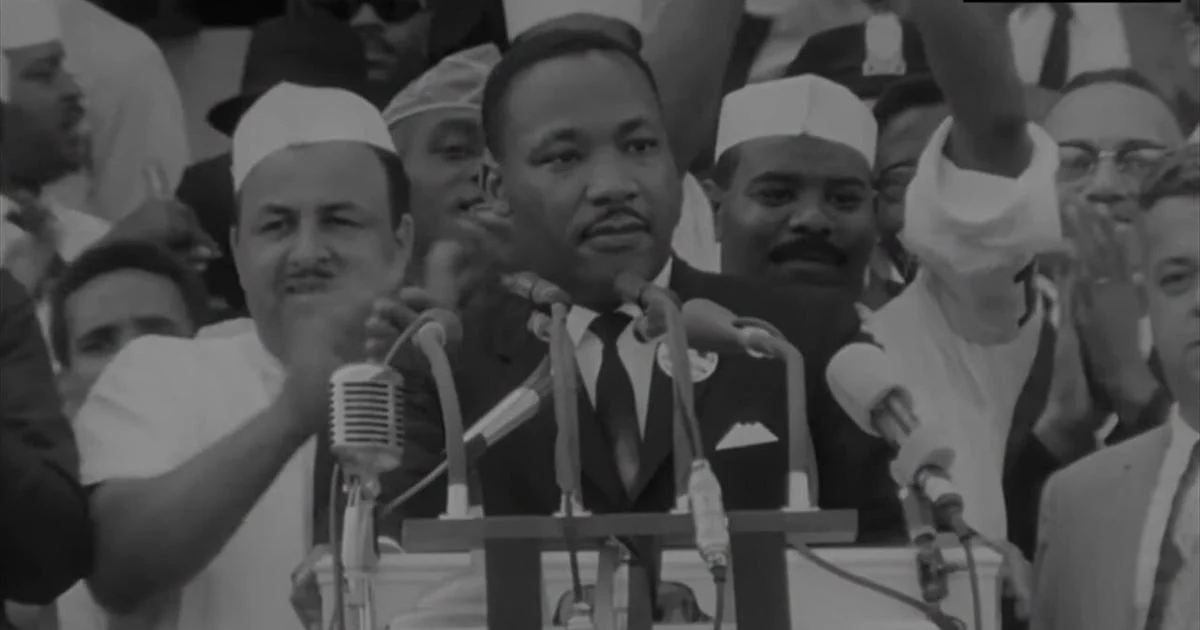
BETHLEHEM, Pa. — On Aug. 28, 1963, Dr. Martin Luther King Jr. delivered his famous “I Have a Dream” speech in Washington, D.C.
63 years later, the question is not only whether the speech still resonates, but whether people can still hear it through the noise of the modern world.
For Winston Alozie, this time of year still carries the echo of King’s dream.
Alozie, head of the Bethlehem Boys & Girls Club and a father of four, said Dr. King’s message is still present in the work being done with young people.
Asked whether King is “here” at the Boys & Girls Club, Alozie answered quickly.
“Oh, very much so,” he said.
Alozie said he sees parts of King’s dream being realized in the way children of different races, backgrounds and identities grow up together.
“It’s a beautiful thing to see children of all races, creeds, colors, backgrounds, orientations, being able to experience the world together, grow up together, and some of those barriers that existed in my parents’ and grandparents’ time aren’t there in those same ways,” Alozie said.
But today’s divisions — over immigration, politics, protest and trust itself — can feel all-consuming.
High school seniors Xavier Moore, Holden Breininger and Louis Lazaro said they trust and believe in King’s words, even if they question whether his message would cut through as strongly today.
“It’s the internet, so a lot of people like to do things for entertainment or for views,” Moore said. “So it’s just kind of hard to trust people’s words.”
Breininger said the number of voices online can make it difficult for one message to break through.
“There’s so many people on the internet now, and everyone has their own opinion,” Breininger said. “One person can’t stop this whole thing. I wish it would, but it’s just the reality that we live in now.”
63 years later, the question may be less whether the dream still resonates and more whether people can still hear it.
Alozie said the country remains unfinished work.
“It’s definitely a work in progress,” Alozie said. “There’s a saying that I grew up with as a child of the Black church: ‘I’m not where I want to be, but I’m not where I used to be.’ And I think that’s where we are as a nation. We definitely aren’t where we used to be, but I think we have some ways to go to be where we want to be.”