
When Gov. Josh Shapiro issued his recent executive order on data center regulation, he pointed the finger at the General Assembly for not taking action. The state’s lawmakers, including Lehigh Valley legislators, say they have more ambitious plans lined up for the fall.
Enabling local governments to enact a pause on data center applications, repealing a state tax break for data center equipment and protecting consumers from rising energy costs are all proposals that have gained support from Lehigh Valley lawmakers.
Multiple data center-regulation bills were considered in the General Assembly’s last session, but what passed before the summer recess was limited to a budget provision that requires data centers to report on their energy and water use annually.
The possibility of a moratorium on data center construction has garnered buzz, and data center opponents have said they’d like to see the governor move in that direction, pointing to New York’s recently enacted one-year pause on state-level environmental permits for hyperscale data center projects as a model.
State Sen. Katie Muth, D-Chester, introduced a bill in June that would impose a statewide, three-year block on hyperscale data center development and permitting, but the proposals Lehigh Valley legislators have endorsed are not as sweeping. Here’s a look at some of the locally endorsed efforts to regulate the state’s data center development boom:
Empowering local governments
Senate Bill 1345: Sen. Jarrett Coleman, R-Lehigh, introduced this bill in June. It would give municipalities the option of imposing a moratorium of up to 18 months on considering new applications for “high impact” data centers (defined as those that would draw 25 megawatts or more of power).
During the pause, municipalities would be able to conduct environmental impact studies and write zoning amendments to regulate data centers. The temporary moratorium would not apply to previously approved applications or permits.
The bill advanced through two committees but did not come up for a full Senate vote. Coleman said in an email statement that he’s optimistic about gaining a final vote when lawmakers return in September.
“There seems to be broad agreement around empowering local governments to strengthen zoning ordinances in response to the serious concerns communities have about data center projects,” Coleman said.
House Bill 2533: This bill, sponsored by Rep. Jamie Walsh, R-Luzerne, also includes the right to enact an 18-month moratorium on data center applications. It did not advance out of committee. Lehigh Valley Rep. Gary Day, R-Lehigh, is a co-sponsor.
HB 2496: Another bill that would grant local governments the option to pause data center applications as they consider their zoning ordinances passed the House in June under the sponsorship of a bipartisan group that includes Lehigh Valley representatives Joe Emrick, R-Northampton; Robert Freeman, D-Northampton; Milou Mackenzie, R-Northampton; Jeanne McNeill, D-Lehigh; and Steve Samuelson, D-Northampton. Prime sponsor Rep. Paul Friel, D-Chester, included a six-month pause in this proposal, which advanced to Senate committees.
Friel said it’s “hard to read” if the Senate will have the appetite to bring his bill up for a vote, but added that its wide bipartisan support makes it “probably the most likely candidate to run.”
Shortening the timeline on the proposed data center application pause helped build consensus and lowered the threat of legal challenge, Friel said. He also noted that municipalities that pass a curative amendment to their zoning ordinance could combine that process with this proposal to gain a year of extra time to rework their regulations.
Removing tax exemptions
SB 1344: Another Coleman-introduced bill would have repealed the tax break that exempts data center equipment from sales and use tax. The bill was under committee consideration alongside a House version, HB 2198, which passed that chamber.
Coleman said in a statement that it was “disappointing that we weren’t able to eliminate a tax break for data center equipment as a part of the budget.” His bill could apply the revenue gained from ending the tax exemption to a gas tax reduction, but he said he’d be open to “considering other ways to reduce costs for Pennsylvanians with those additional funds.”
When asked what work is needed to reach bipartisan agreement on revoking the data center sales tax exemption, state Senate Majority Leader Joe Pittman, R-Indiana, sent this statement: “Senate Republicans passed legislation to eliminate the data center sales tax exemption on equipment purchases earlier this year, yet House Democrats amended the legislation into an unrecognizable bill which was ultimately opposed by the PA Chamber and the Building Trades union.
“The Governor’s stance on issues surrounding data centers is anything but consistent, however his latest executive order makes it clear he believes data centers that bring their own power should remain eligible for the current sales tax exemption signed into law by his predecessor, Governor Wolf. We generally support the notion that data centers must bring their own power to the grid. Given the Governor has emphasized Pennsylvania now has the ‘strictest guardrails in the nation’ for data center development, it seems he believes the matter has been addressed.”
Evan Franzese-Peterson, the executive director of the House Environmental and Natural Resource Protection Committee, said HB 2198 was a “clean repeal” of the tax break that did not specify where the revenue would go. It was amended to also remove data centers from eligibility for state-sponsored economic development zones that provide tax benefits to qualified businesses, he noted.
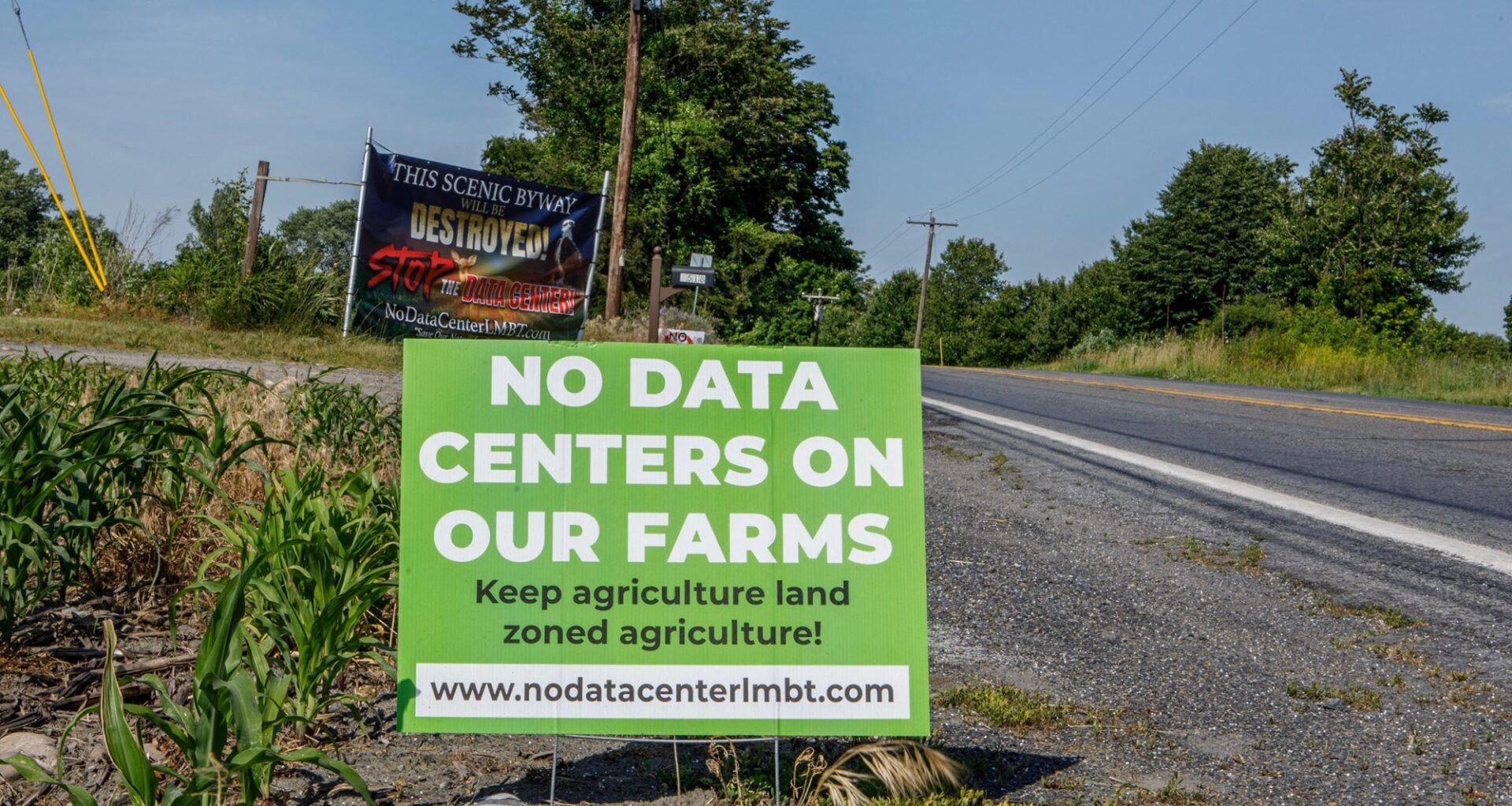
HB 2359: Transparency is the focus of this bill, for which Emrick, Freeman, McNeill and Samuelson are among more than 50 co-sponsors, alongside primary sponsor Rep. Joe Ciresi, D-Montgomery. The bill would set disclosure rules for data center operators seeking to qualify for state tax breaks. Qualifying projects would need to disclose their occupants, provide a detailed report on electricity and water usage, and certify that officials from state and local government agencies have not signed nondisclosure agreements related to development. The signing of confidentiality agreements has been a contested issue in local developments, including a proposed data center campus in Lower Mount Bethel Township.
Regulating data centers
HB 1834: This bill focuses on protecting consumers. It would make data center operators responsible for the cost of grid upgrades and would require contributions to the state fund that helps low-income households pay for heating, with the hope that fund could be expanded to include summer cooling assistance.
Data centers would either have to certify that they are providing their own clean energy or pay into a fund to create new clean energy resources. The bill would also regulate the use of backup generators.
More than 40 Democrats signed on to co-sponsor the bill, including Lehigh Valley representatives Freeman, McNeill and Samuelson. It did not advance out of committee in the Senate, but has continued to receive support from environmental groups and consumer advocates working to assist residents with rising energy costs.
HB 2650: This bill would have passed Shapiro’s proposed regulations, the Governor’s Responsible Infrastructure Development standards, into law. Its sponsor, Rep. Joe Webster, D-Montgomery, told The Morning Call he intends to continue pushing to encode those standards into law and to advance other provisions of this bill that would provide additional environmental protections on issues such as water use, noise and vibration levels. McNeill is a co-sponsor.
Working toward consensus
Although some of the most popular data center-related bills have bipartisan support, both chambers of the General Assembly have not yet found a path to work together to pass regulations.
House Democrats “passed strong measures holding Big Tech accountable and empowering local governments to make the best decisions for their communities” and “are disappointed that the Senate Republicans have yet to act on those numerous bills we sent them, including HB 2198 (which passed the House with nearly unanimous support),” Elizabeth Rementer, press secretary for House Majority Leader Matt Bradford, D-Montgomery, said in an email statement.
“We urge them to take up our bills to protect our communities, our environment and our economy,” Rementer added.
An Aug. 18 news release from Pittman and the Senate Republicans said work is “being undertaken to position pieces of legislation for further action” in the fall.
“We strongly believe communities need to have the ability to weigh in on what is best for their residents and are open to further discussions, including considering measures to allow for moratorium decisions to be made at the local level,” Pittman said.