
A temp agency for artists
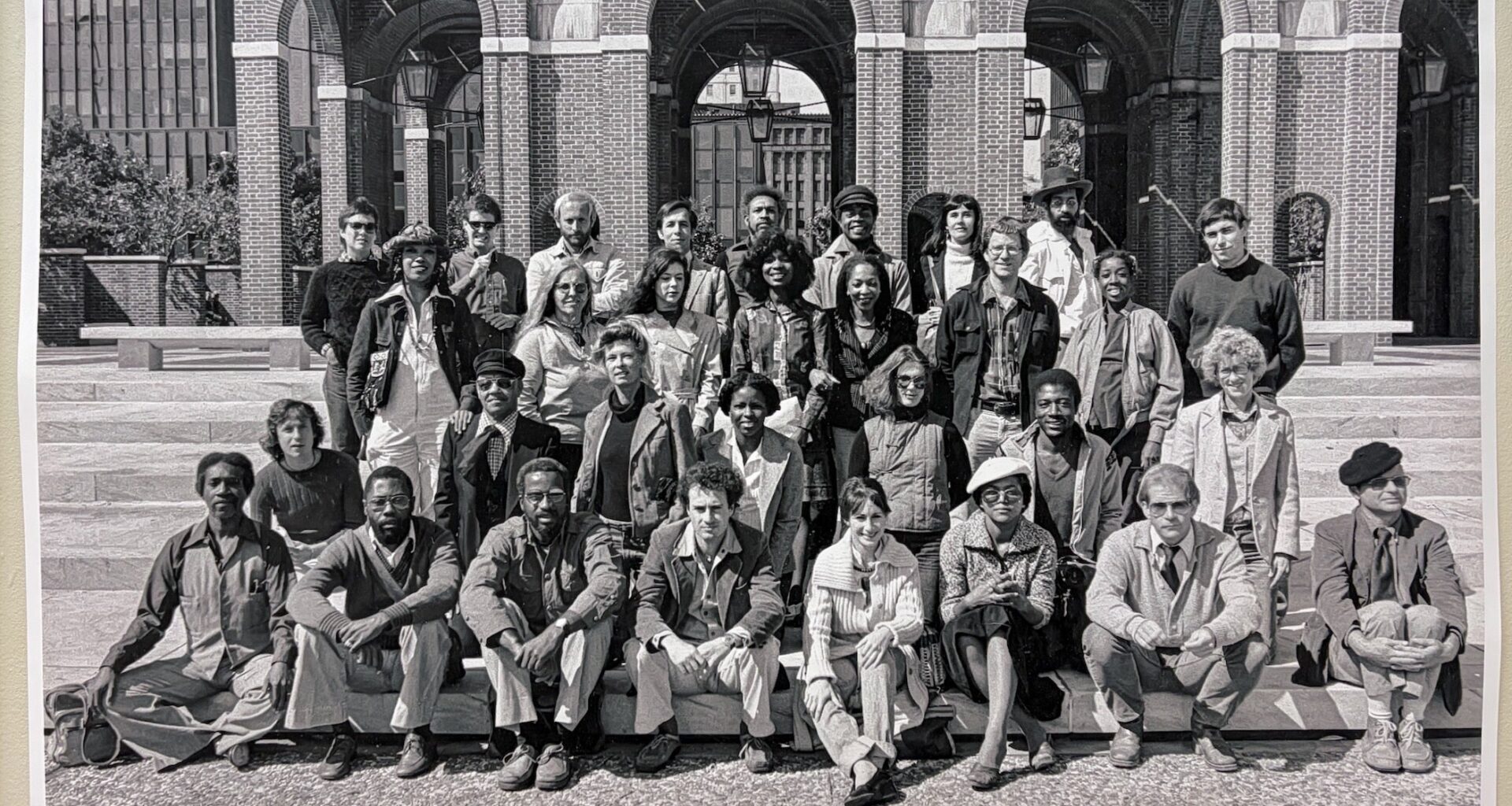
The exhibit was created by Philadelphia artists Blaise Tobia and Virginia Maksymowicz. In the 1970s, the married couple was living in New York City, employed as artists with CETA via the city’s Cultural Council Foundation.
“It was almost like working for a secretarial temp agency,” Maksymowicz said. “Somebody would request from the Cultural Council Foundation an artist. ‘Hey, our community center wants to do a ceramic mural,’ or, ‘Hey, we need someone to work with kids on an after-school project.’”
 Artists Virginia Maksymowicz and Blaise Tobia talk about their experiences working through the Comprehensive Employment and Training Act (CETA) in New York City in the 1970s. They are the curators of ”A Federal Job in the Arts,” an exhibit in the office of Creative Philadelphia at City Hall. (Emma Lee/WHYY)
She said CETA was not a project grant or an artist fellowship, but a job.
“We got two weeks vacation, we got health insurance, and when the job ended, they taught us how to apply for unemployment insurance,” Maksymowicz said. “Artists don’t understand sometimes: They might have a one-year teaching job some place. The job ends and they don’t apply for unemployment insurance. We were taught by CETA that that money’s being taken out of your paycheck. You’re eligible. There is a different mindset when something is a job. You know what’s owed to you.”
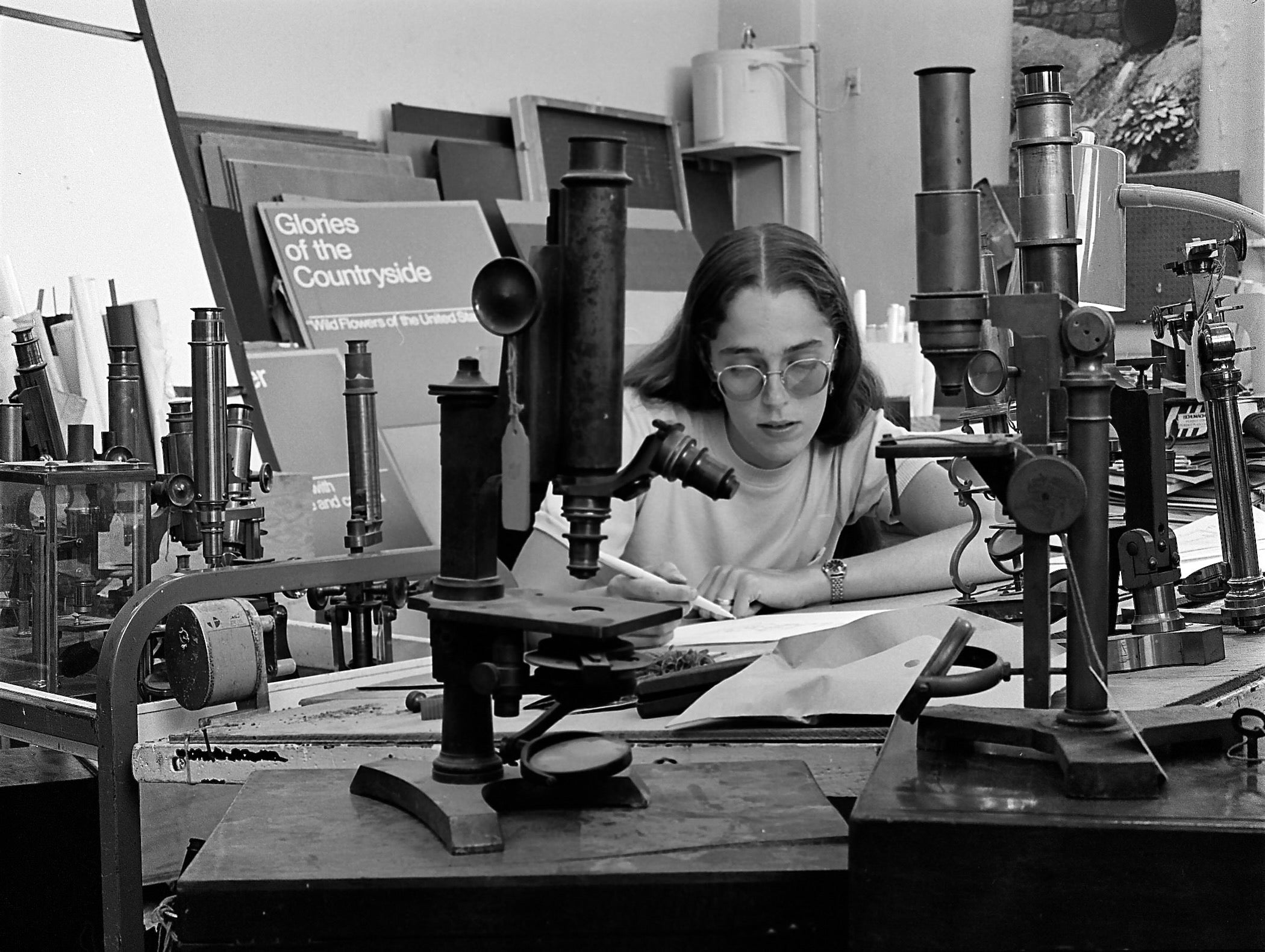 Virginia Maksymowicz is shown working at the New York Botanical Garden in 1978, drawing their historic microscope collection. (Photo by Blaise Tobia for the CCF CETA Artists Project ©1978)
Maksymowicz and Tobia are coordinators of the CETA Arts Legacy Project, having spent the last 15 years hunting in archives and libraries to piece together where CETA money went, who benefitted and what came of it. Maksymowicz said no comprehensive documentation has ever been made of CETA.
“As young artists in New York and the CETA program, we knew what was going on in New York, but we had no idea what was going on all across the country,” she said. “Bit by bit we started tracking down people.”
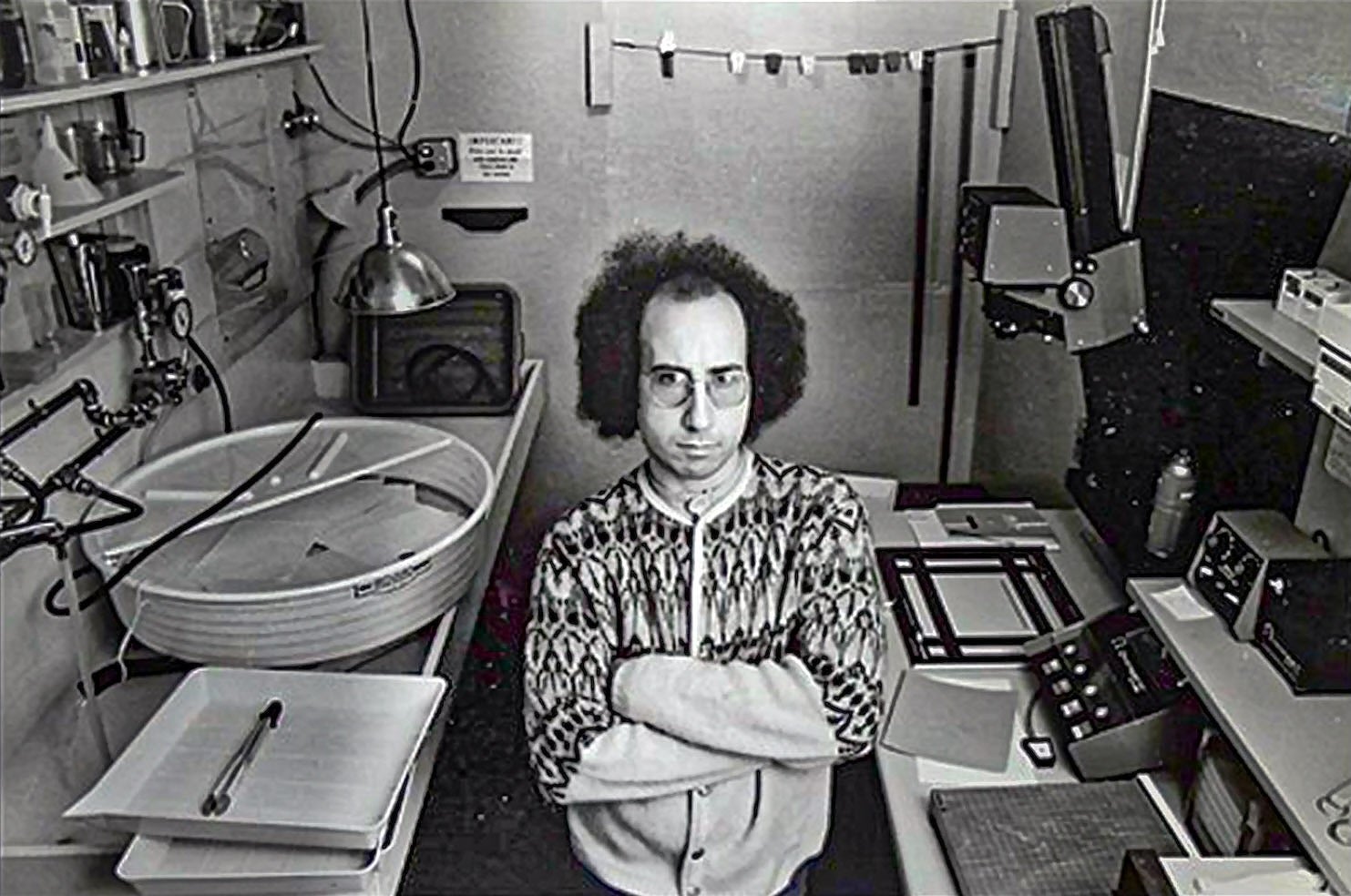 Blaise Tobia in his darkroom in Tribeca in 1978. (Photo by George Malave for the CCF CETA Artists Project ©1978)
“A Federal Job in the Arts” is one of three similar exhibitions running back-to-back in three cities. The Delaware Art Museum recently closed “Citizen Artist,” which focused on CETA and its 1930s predecessor — the Works Progress Administration of the New Deal.
Also running is “ART/WORK: The Practice and Politics of CETA and the Arts” at the James Gallery of the CUNY Graduate Center in New York City.
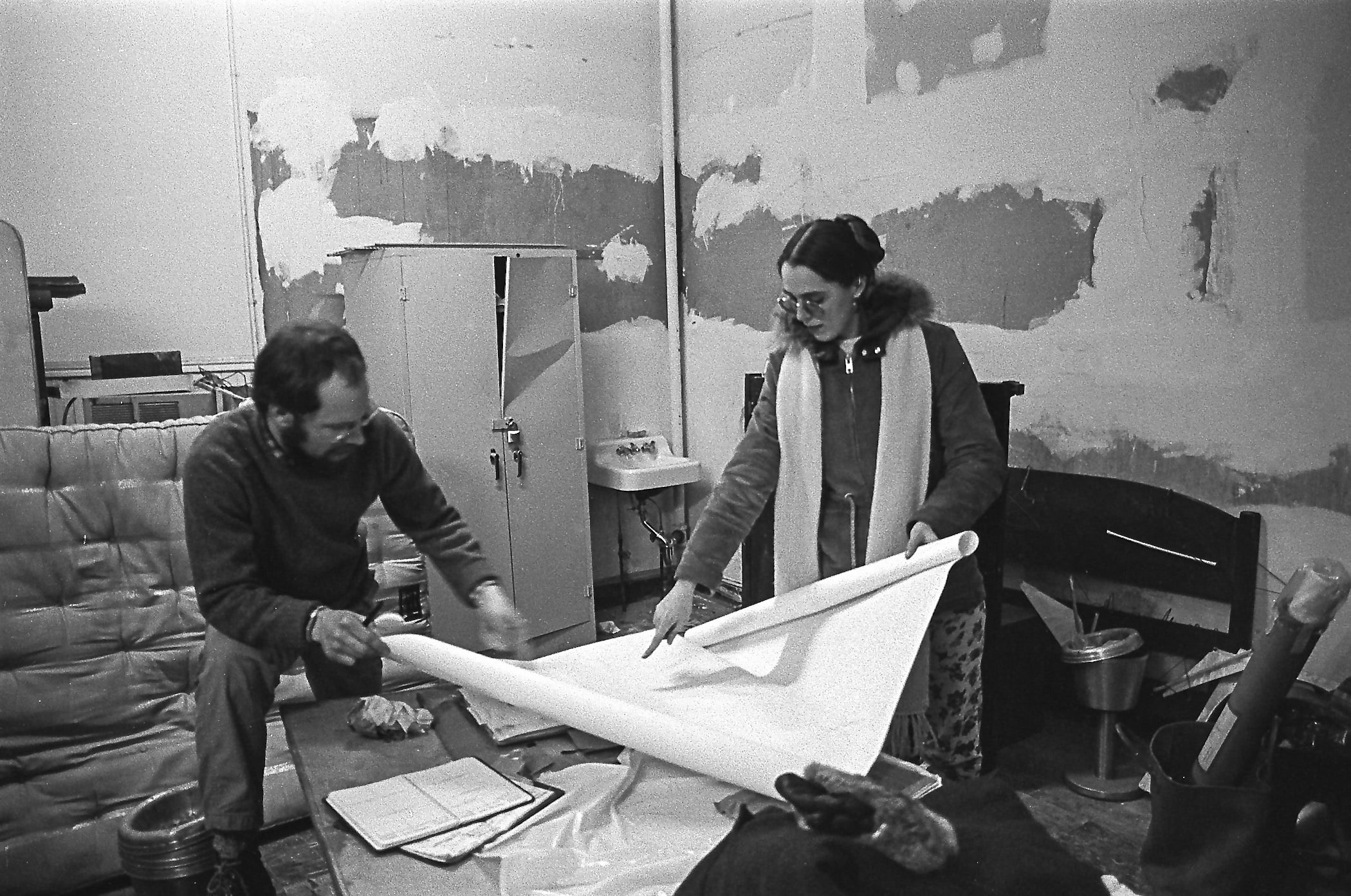 Virginia Maksymowicz and another CETA artist, Richard Nicksic, in 1978 working at what would become the Brooklyn Arts and Culture Association’s new BACA Downtown Center. (Photo by Blaise Tobia for the CCF CETA Artists Project ©1978)
Unlike the WPA, which funded the creation of murals, photographs, graphics and writings, CETA did not target the creation of artwork. Rather, it generated employment.
“The American public was very familiar with the art projects of the New Deal,” Tobia said. “CETA didn’t do anything like that, which is one of the reasons it’s a whole lot less well-known.”