
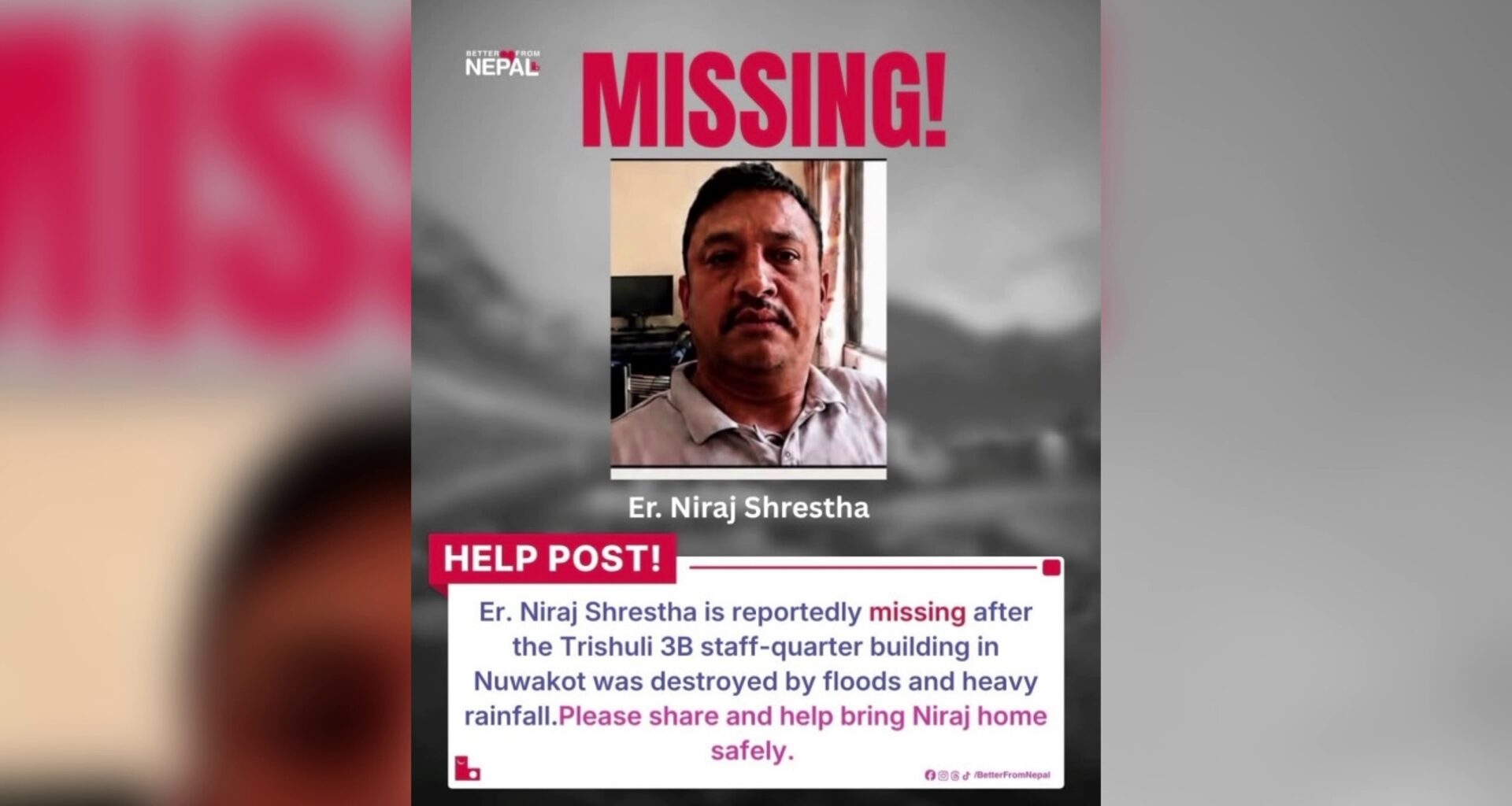
Newswatch 16’s Stacy Lange spoke with Saroj Shrestha, a Dunmore man who went to Nepal to care for his mother and who is now searching for his missing brother
MOOSIC, Pa. — Newswatch 16’s Stacy Lange with Saroj Shrestha, of Dunmore, over a video call to discuss the search for Saroj’s brother in Nepal.
His brother, Niraj Shrestha, has been missing since last week’s landslide devastated Nepal.
Below is a transcript of their interview. It has been edited for grammar, length and clarity.
Saroj, am I saying that correct?
Saroj (pronounced: sah-rose).
Saroj. Thank you. Thank you so much. And can you pronounce your last name for me, too, so I get that correct?
Shrestha. Okay. Yeah. And can you also say your brother’s full name, so I get that absolutely correct?
Niraj (pronounced: nee-raz). And last name Shrestha.
Okay. So, how long have you been in the Scranton area?
25 years, believe it or not.
What brought you to Pennsylvania?
I did my undergrad in Pittsburgh. At the time, my girlfriend went to Marywood, so that’s how I ended up in Scranton.
And so, I’m a psychotherapist. I work in the Scranton Counseling Center. I do have private practice in the Scranton area, so that’s how, like, that’s what happened. I stayed with Scranton area, fell in love with Scranton.
It’s been that long. It’s been a long time…25 years. But I’ve been in the U.S. about 27 years. I’m a U.S. citizen now, but my roots and my family are back in Nepal.
Gotcha. Do you live in Scranton or Dunmore?
Okay, so this is interesting. Before we get into the news of the day, since you’ve been here 25 years, you have seen the Nepalese community in Northeastern Pennsylvania grow exponentially over that time.
Absolutely, absolutely. When I came to Northeast Pennsylvania, there were not many families — like just five or six families — but after, like, you know, a lot of people were coming in. There’s two parts of the families: one from Nepal… and there are Bhutanese refugees. They are the people who have been kicked out of Bhutan and went as refugees to Nepal, and they came to U.S. Basically…2010, I believe 2008 to 2010.
And one of my favorite facts as a reporter who covered Scranton for a decade is that the second most spoken native language at Scranton High School is Nepalese. I find that fascinating, and I think a lot of people in our greater region outside of the city don’t necessarily know that. So that’s one of the reasons why I’m speaking to you about what your family is going through now — I think it’s so important because there are so many of your countrymen here.
So, take me back to a few days ago when you heard about the landslide. What were your immediate thoughts and concerns?
I came on August 20th, no August 24th to Nepal to take care of my mom, who was going through terminal cancer…the cancer had spread to the brain so she had to go through radiation.
So long story short, I just came to Nepal for, like, just two weeks to take care of my mom and to be with her. August 25th is the day we heard the news that my brother was one of the affected persons in this landslide flood from Rasuwagadhi.
I spoke my brother: “Hey, why don’t you stay one more day, you know, so that I can I can meet with you face-to-face because we haven’t met in two years. It’s been two years. And he said like, “you know what, you’re gonna stay two weeks. I’m gonna come back. Why don’t you take care, be with mom, and take care of her for now?”
He’s like two-and-a half hours from here. August 25th, we spoke with him at 8 o’clock in the morning. He was having breakfast. We were having breakfast. After that, we hung up and I had to take mom for radiation.
We heard the news around 9:30, 10 o’clock that a major catastrophic landslide happened in that area. So we tried to get hold of my brother and all the engineers in that area but we couldn’t get hold of anything. All the towers, everything was gone.
So, my frustration with the Nepal government … my brother’s cell phone location has been pinged in the same building where he used to work… he’s trapped inside the building along with 44 staff (members).
So, we’ve been telling Nepali government, you know…I think he’s alive…he could be alive over there. It’s a big building and the building has not been swept away, according to two eyewitnesses. The building is covered by all, like you know mud slides and all the stones, but it’s been seven days. We’ve been begging and I’ve been so frustrated with the slow rescue process.
And that’s why, like, I’m reaching out… to get this news to the all the international media, so that, like, you know, they will bring attention to my brother. The office is called Trishuli Hydropower 3B Project, so that they can focus on that area because we believe that people are still trapped in that specific office area.
So, you are holding on hope that he is still alive?
Absolutely. We are holding out hope because we haven’t seen him like you know dead, right? And we have not seen his body. According to strong eyewitnesses, the building is covered by landslide debris and the building is still there. It hasn’t been swept away, and we believe that he’s still inside.
It’s so hard because I have a mom who’s going through terminal brain cancer. What should I tell her? So, we need closure, and I have a sister-in-law, who’s going through a range of motions…and my dad, who’s 81.
They’re all going through this agony of pain of not knowing what’s going on. I’m a psychotherapist and I’m going through my own suffering because he’s only my brother. I don’t have any sisters. He’s my brother. He’s two years older than me, and it’s been really painful, Stacy, not knowing what’s going on. And we believe that he’s still like he may be alive inside.
Miracles could happen, right? I have a daughter back home, a 16-year-old daughter who goes to high school, Scranton Prep, and she strongly believes that her my brother, her uncle, is still alive, and we should really do something about this.
You have to hope. Hope is a powerful thing.
Absolutely, you never know. We have seen miracles, right? So, unless we see otherwise, I’m not at this point going to accept that.
You said that your motivation for speaking out is to motivate the Nepali government to do what it can. What can we, people on the other side of the world, do to support Nepal or potentially draw attention to some of the issues you’re dealing with?
I think we need to really spread this news that people are still trapped inside the building and there are people from other countries — USA, China, India — they are willing to help us. So, if we cannot expedite the process by Nepal’s government, I think we should really seek out the services and the support from other people. There are a lot of people of different nationalities who have been involved in this. It’s not only about my brother. So many people around the world are affected by this massive landslide.
Can you tell me a little bit about your brother? What’s he like? Had he worked at that plant for a long time?
Yeah, he’s trained…as a civil engineer. He’s been working about 25 to 30 years in this field.
He’s a very kind person, very soft spoken…he’s very introverted and I’m very extroverted. All he cares about is work and home. That’s it. He would work without taking breaks, 15 to 20 days, and he would come home for a few days and stay with the family and go back. He’s a workaholic. He works a lot.
Everybody loves him. There have not been any moments that have had anyone saying that he’s a bad person, he’s such a nice person.
Is there anything else that you would wish to share? Anything else you think we should know?
I really appreciated all the support and the help. I’ve been really, you know, getting all this support and wishes, calls from the U.S., from my friends, families… all the workers from my work, from Scranton Counseling Center, all my doctors, friends, colleagues. But it’s been overwhelming. So, I apologize, I’m not able to answer all the calls, but I really appreciate all the help and support at this time.
Yeah. Have you been up there since the landslide?
Yes, I went there other day, and it’s been so difficult because all the roads are cut off, so you can’t really go to the site. It’s like a 45-minute drive. We were in the army camp over there and it’s just chaos up there. A lot of people, thousands of people, and the bodies all over the place. It’s a really mess, and it’s very devastated.