
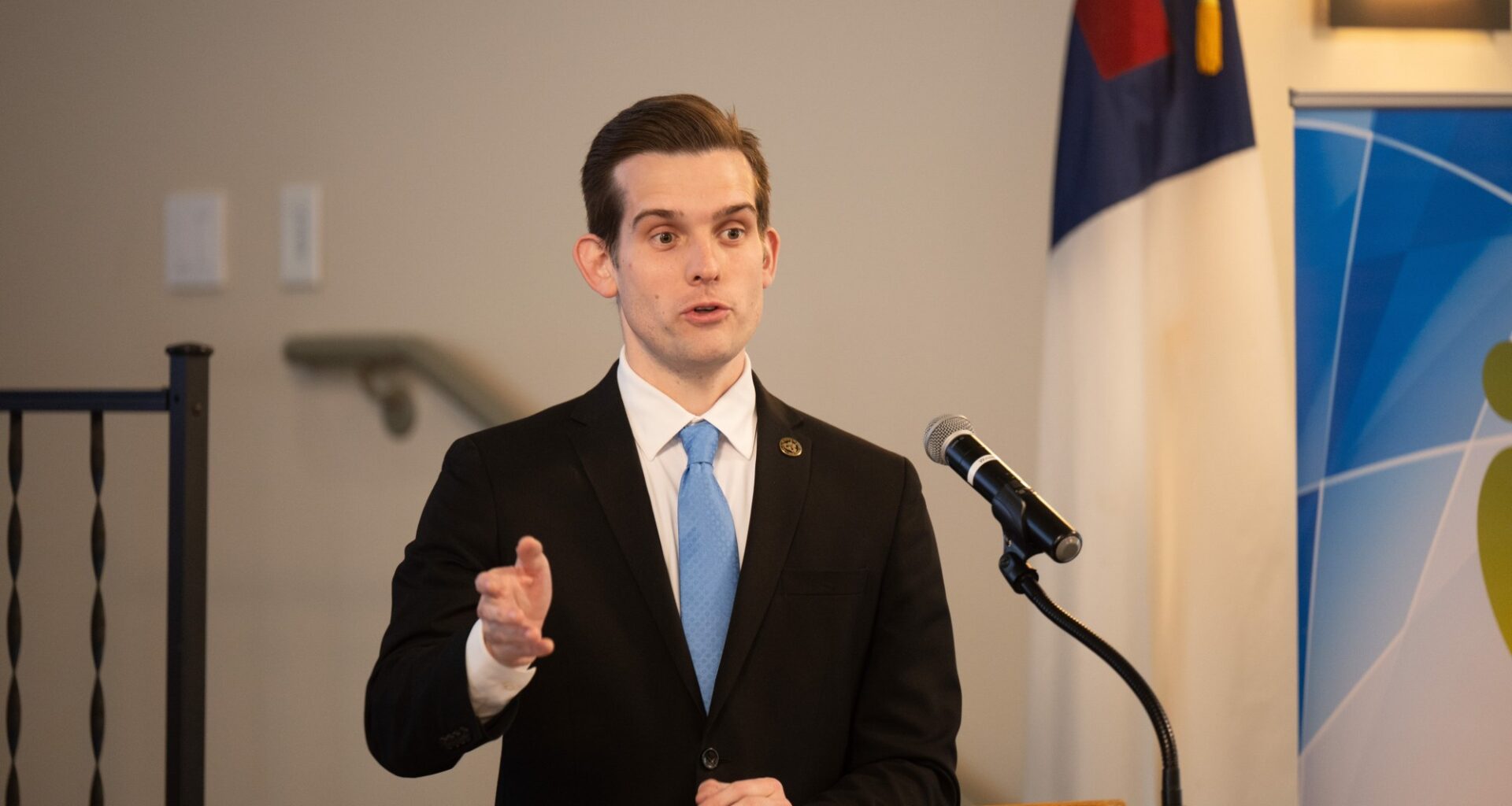
Lehigh County property owners could see a 17% increase in taxes next year under the county’s proposed 2027 budget.
Under the proposal, the county millage rate would increase from 3.78 to 4.45.
Lehigh County Executive Josh Siegel, who is presenting his first budget after being elected last year, said the increase is needed to restore the county’s stabilization fund, which has been dwindling since 2023.
The proposed increase would cost the average property owner about $113 more per year, or about $9.40 per month.
Siegel said the increase is inevitable due to rising costs, notably employee benefits, and cuts to federal programs like Medicaid, which will shift financial responsibility to the county.
County employee benefits are projected to cost more than $27 million in 2028, a 13% increase since 2024.
“This was a well known, widely discussed and highly transparent trend line. This was a crisis that was always going to need to be confronted,” Siegel said
The 4.45 mills would be equivalent to $445 of property tax per $100,000 of assessed property value. The median assessed home value in Lehigh County is $169,400.
There has not been a countywide reassessment since 2013.
Siegel said there will be no county-level wealth tax, an idea that was floated earlier in the year by county Controller Mark Pinsley as an alternative to a property tax. The proposed intangible personal property tax would have raised $25 million for the county, Pinsley said, but was derided by many as detrimental to small businesses.
Siegel commended Pinsley for his report that led to the wealth tax recommendation, saying it highlighted deficits in the budget, but noted that enforcing it would be difficult under current laws.
“What we have determined is that the administrative burdens of the wealth tax would far outweigh its benefits. It would be far too difficult and cumbersome to the county to administer and collect,” he said.
Siegel proposed about $1.5 million in spending on three new initiatives — $500,000 in annual contributions to the stabilization fund, $500,000 per year for a Data Center and Open Space Defense Fund, and $500,000 for a Clean Elections Anti-Corruption Fund. He noted that the programs would be paid for with less than 0.25% of the budget, or $8.50 per taxpayer.
The elections fund, which would use county money to match small campaign contributions, would be the first program of its kind in Pennsylvania. New York City has a similar program.
Following a series of public hearings, the first of which is scheduled for Wednesday, the county commissioners will vote next month on the proposed budget.
Commissioners chair Geoff Brace said he was glad that Siegel was proposing to bolster the county’s stabilization fund.
“It’s a place where we need to focus to improve the county’s finances for years to come,” he said.
Brace said he’d be paying close attention to some of the new funding Siegel proposed, including requests for cash to fund open space preservation, elections and Main Street initiatives.
“These are new proposals with significant cost, and they require careful attention. Support for these large-ticket items should require concrete plans which demonstrate strong return on investment for taxpayers,” Brace said.
County Commissioner Ron Beitler said he would also look at the proposal carefully.
“We do have to address the structural deficit and fully fund core and mandated services, including rising costs to provide our programs residents depend on, especially those serving our most vulnerable. I’m completely committed to doing that,” he said. “My concern is that this budget goes well beyond those obligations. It increases overall spending and adds new discretionary programs. There’s a big difference between funding what the county government has an obligation to do and inflating a tax increase to expand the scope of county government. That’s the distinction I’ll be focused on as we sift through this monster of a budget.”