
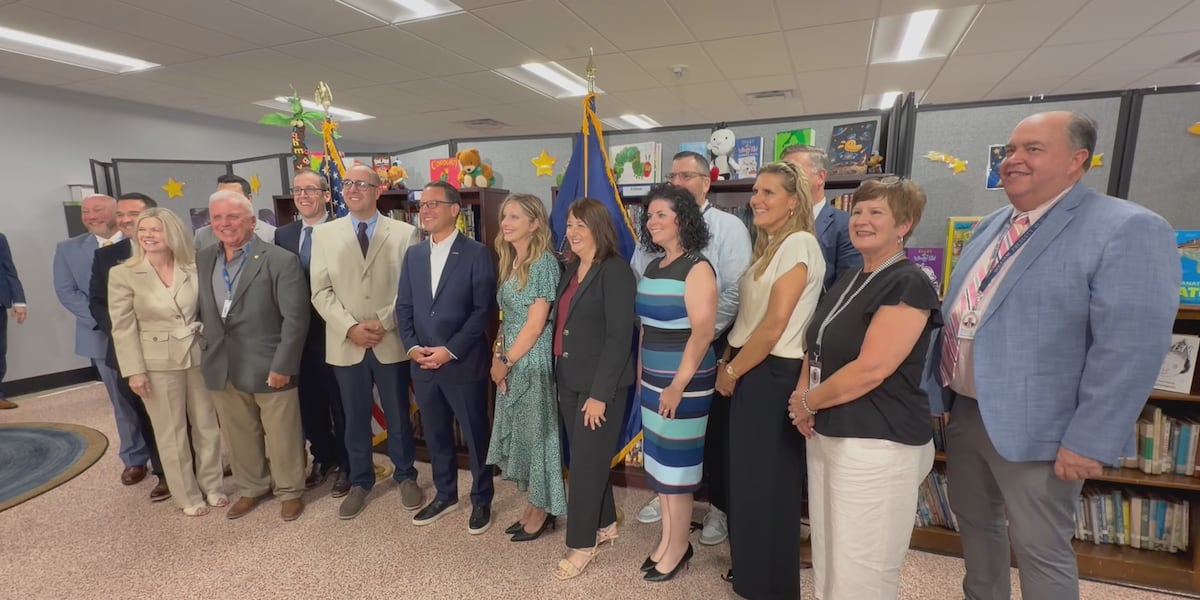
SCRANTON, PA (WBNG) — Governor Josh Shapiro made a stop in Scranton Wednesday morning to highlight the investments his administration has made in public education as a new school year begins.
The governor said the state has added more than $3 billion to public schools over his tenure, a 35% increase in the last four years.
“We’re seeing 4,000 new students enrolled in CTE classes. 778 schools across Pennsylvania now have mental health supports like what you have here,” Shapiro said to the crowd at Neil Armstrong Elementary School. “And get this, we serve 92.3 million free breakfasts across Pennsylvania.”
Shapiro’s 2026-2027 budget includes each of the following:
$565 million increase through the bipartisan adequacy and tax equity formula for a total of $1.9 billion driven out to the schools that need them most.$58 million increase to Basic Education Funding, for a total of $8.32 billion.$55 million increase to Special Education Funding, for a total of $1.58 billion to support students with disabilities and special needs.Maintains $125 million for school infrastructure improvements to create safe, healthy learning environments — including $25 million for the Solar for Schools program to lower energy costs and promote sustainability.Provides more than $100 million in mental health and school safety funding for K–12 schools, ensuring every student has access to the resources and support they need to thrive, continuing the Shapiro Administration’s strong commitment to expanding access to mental health care and support across the Commonwealth.Continued Funding for Universal Free Breakfast and Free Menstrual Hygiene Products for Students: This budget continues funding for a key priority of Governor Shapiro – universal free breakfast for all 1.7 million students. It also includes $3 million to ensure students have access to menstrual hygiene products at no cost.Supporting Student Well-Being Through Daily Recess: This budget establishes 30 minutes of daily recess for students in kindergarten through fifth grade, ensuring students have dedicated time each school day for movement, social interaction, and stress management so they return to the classroom refreshed and ready to learn. Because the Governor knows recess is not just an extra, it is a fundamental part of children’s growth — teaching skills like collaboration, conflict resolution, and self-regulation that are just as essential as math, science, and reading.
It also offers an additional 60% going to vocational tech and CTE programs across the commonwealth.
“If we can take an 8th, 9th, 10th grader and open up their eyes to being a welder, open up their eyes to dairy herd management, or open up their eyes to computer programming,” Shapiro said. “And they can find a job, or they can find a pathway to success and opportunity right out of high school; we want to give them that opportunity.”
The Governor said this budget prioritizes schools in lower-income areas he believes have been underfunded.
The Susquehanna Community School District, a district in which 80% of families are economically disadvantaged, is receiving $15 million from the state in 2026, making up roughly 70% of its budget.
“The school districts that have historically been left behind by the state, we’re actually driving those dollars out in a new formula,” Shapiro said. “So, the districts that need the most help are actually for the first time getting the most help.”
District Superintendent John Rushefski said while these investments are a step in the right direction, he fears it may not be keeping up with rising costs due to inflation.
“Structurally, we could be- we’re chipping away at our fund balance to the point where we’re going to be in a tougher spot as years go on,” Rushefski said. “Unless the state gives us these additional grants and continues to increase the budget.”
Rushefski said health care costs alone at the district have gone up by $300,000. He believes more funding increases are needed at the Capitol.
Copyright 2026 WBNG. All rights reserved.