
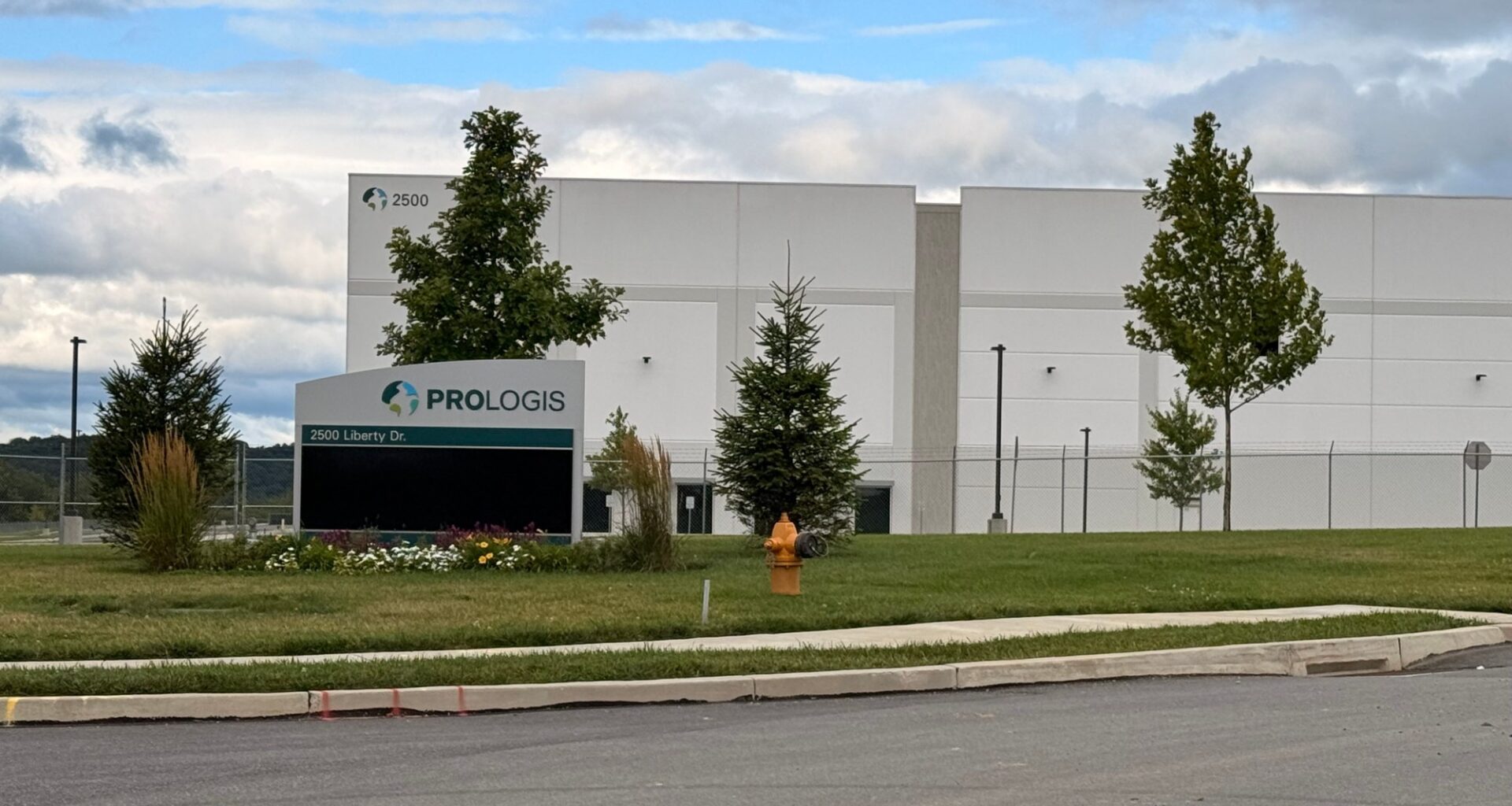
If you have a large, empty industrial building, and can’t find a traditional tenant — such as a logistics company — how does a data center sound? An empty 1 million-square-foot building in Allen Township owned by Prologis could soon become one.
Prologis announced in October that it would invest nearly $8 billion over four years to build 20 data centers, according to CoStar News, which monitors the commercial real estate market. Future plans include adding as many as 80 more to its portfolio.
The Prologis name may be familiar to Lehigh Valley residents as the California real estate company that added several warehouses and other industrial facilities to the region as it grew into a logistics hub. While that part of the commercial real estate industry continues to grow, it has slowed in the years after the COVID pandemic, and vacancy rates have gone up in the Lehigh Valley.
Abundant private equity capital is driving aggressive developer investment, though there are lingering questions regarding long-term revenue models and bubble risks, Lehigh University economics professor Alberto Lamadrid said.
“Right now, there’s plenty of funding available,” he said. “As an economic agent, they’re going to be looking for the areas where the financing is available and where they see highest returns.”
It’s likely a reason that Prologis wants to convert the 1 million square foot warehouse in Allen Township into a data center. The property at 2500 Liberty Drive sits on 85 acres, just north of Route 329. It was built in 2023 and sits in the middle of an industrial park with two other large Prologis-owned buildings that are leased.
A Prologis spokesperson told The Morning Call that the company had no comment about data center projects. But according to CoStar, the company has indicated it wants to “extend its dominance” to properties that power artificial intelligence.
In an interview on CNBC in June, Prologis CEO Dan Letter said he sees data centers “as one of the largest value creation opportunities in the company’s history.”
Letter said Prologis had been accumulating both land and power near cities, and the company has seen its stock rise about 30% over the past year as the race to build data centers has intensified.
“The depth of customer interest for our data center offerings is significant,” Letter said on the company’s earnings call in April. “We believe our ability to bring together land, power and development expertise is a key differentiator.”
The company has been proactive in promoting its data center plans and even published an online list of “responsible data center development commitments” that includes such things as protecting ratepayers, responsible use of water, reducing the environmental impact and engaging with the community.
Hamid Moghadem, who stepped down as Prologis CEO in January, said the company will tap energy from all sources, including solar, natural gas and nuclear reactors. The company plans to add solar panels to 1.3 billion square feet of warehouses globally.
While solar panels have been part of the discussion between Allen Township officials and Prologis, according to documents obtained by The Morning Call, Prologis plans to build an electrical substation to power the facility.
Moghadem said that as the world’s largest landlord to tech companies, including Amazon, it’s logical that Prologis expands into data centers and the energy sources that power them.
“When you look at the numbers, real estate costs are about 3% to 4% of total supply chain costs for our customers, but all of our customers use energy,” he was quoted by CoStar. “Our business is now more of an infrastructure business beyond real estate. That physical infrastructure has transformed into a digital business, which is data centers.”
Commercial real estate company CBRE said it’s becoming a trend for developers to include hybrid-power strategies to speed up construction timelines and reduce grid dependency.
For its latest quarter, CBRE said revenue tied to data center services rose about 30% to surpass $700 million, helping drive better-than-expected earnings. The revenue came from data center build-out and maintenance rather than land development. CBRE said in a presentation to investors it expects “increased data center land monetization” in the third quarter.