
Pennsylvania voters will elect a governor Nov. 3.
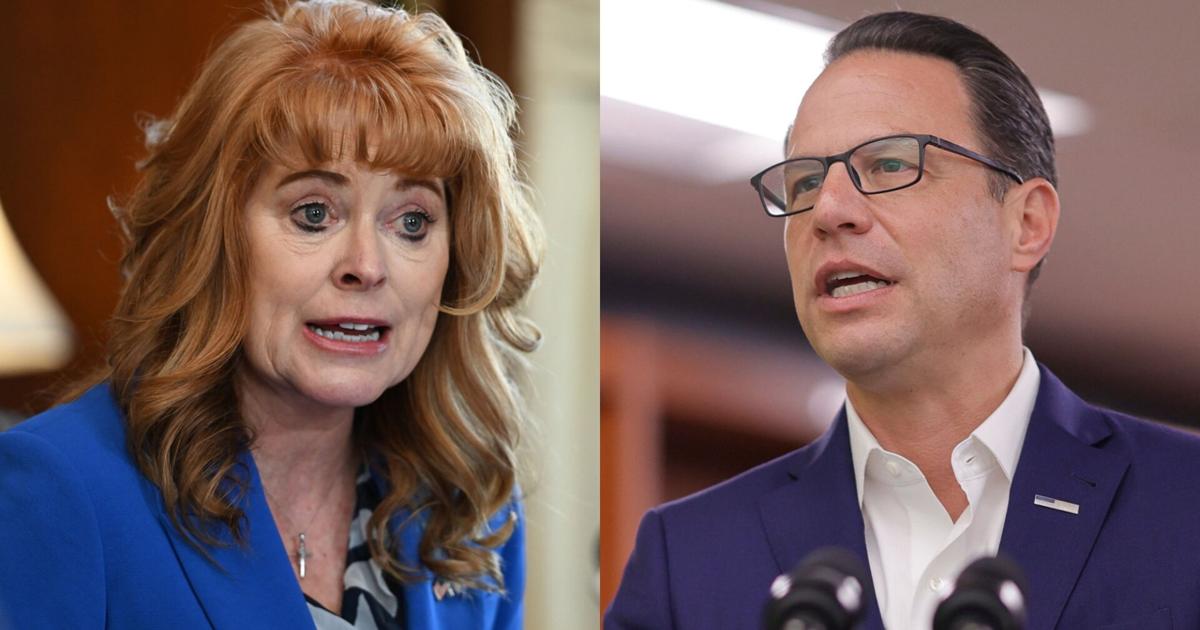
Democratic incumbent Josh Shapiro is seeking a second term, with Austin Davis looking to continue as Shapiro’s lieutenant governor.
Stacy Garrity, the state treasurer, is the Republican nominee for governor. Jason Richey, an Allegheny County attorney, has the GOP nod for lieutenant governor.
These responses from the Shapiro and Garrity campaigns are provided verbatim except for small edits for clarity or Associated Press style.
Shapiro’s response as submitted was somewhat longer than Garrity’s.
What will you do as governor to support the prosperity of Pennsylvania farmers?
Garrity: Pennsylvania was founded by William Penn on the belief that a true commonwealth depends on independent landowners, yet too often today, our state government is an impediment to agriculture’s survival and a barrier to economic opportunity.
Growing up and living in Bradford County taught me the importance of farming to not just our economy, but our entire commonwealth’s way of life, and I am committed to working with Pennsylvania agriculture to ensure it remains a vibrant cornerstone of Pennsylvania.
The Garrity-Richey administration will put farmers, specifically farming families, first by prioritizing building the next generation of farmers, eliminating burdensome government red tape, protecting and preserving farmland, and unlocking capital for new farmers to build their own farming traditions.
Shapiro: From Day One as governor, I have made clear that agriculture is the backbone of our commonwealth — and I have fought for Pennsylvania farmers every single day in office.
My administration has our farmers’ backs, whether it’s through investing in agricultural innovation, cutting red tape and permitting backlogs, improving rural healthcare services, or training the next generation of farmers.
On my watch, we’ve invested over $30 million to drive innovation in agriculture and secured $13.8 million to fully fund the Pennsylvania Farm Bill each year, supporting business planning, infrastructure improvements, conservation and workforce development. We’ve hit the ground running and secured strategic investments that help farmers grow, innovate and stay competitive.
We’re also protecting the farmland that makes Pennsylvania agriculture possible. The Shapiro administration has invested nearly $182 million to preserve 610 farms and 50,447 prime acres of farmland across the commonwealth. Pennsylvania has preserved more farms than any other state, and I’m committed to building on that record so future generations of farmers have the land and resources they need to succeed.
In our finalized 2026-27 budget, we’re investing in the next generation of agricultural leaders by bolstering our apprenticeship and pre-apprenticeship programs to help train young farmers in everything from dairy herd management to urban agriculture. Here in the commonwealth, a greater share of our farmers are under the age of 35 than any other state, and we’re building on that advantage by creating more pathways for young people to succeed in agriculture.
At the same time, we’re helping farmers manage risks beyond their control. This year’s budget provides $5 million for the Highly Pathogenic Avian Influenza Fund to expand education and prevention efforts, along with $10 million for the new Freeze Disaster Assistance Recovery Grant program to help producers recover from this year’s devastating spring freeze.
Pennsylvania agriculture is the backbone of our commonwealth, with more than 48,800 farms contributing over $132 billion annually to our economy and supporting nearly 600,000 jobs. I’m going to keep fighting and delivering for our farmers — and together, we’re going to keep building on Pennsylvania’s legacy of national agricultural leadership.
What should the state do to protect farmers from negative effects of data center development?
Garrity: This year I have traveled to all corners of our commonwealth and held five in-person listening sessions and three tele-town hall meetings focused on data center development.
It is clear that Gov. Shapiro has not even tried to hear from community stakeholders because their concerns have gone unaddressed while he accepted more than $5 million in campaign contributions from out-of-state data center interests.
My plan to address data center development is clear — any data center development can only occur on old industrial land and not our precious farmland, data centers must add to the electric grid and not take from it, data centers must bring their own water, and developers must sign community engagement agreements to ensure they have skin in the game for the long haul.
And because Josh Shapiro has prioritized his campaign donors over our communities, I have called for a pause in data center development so local communities can understand the impact, ask questions, and provide input so they can determine their future — not Harrisburg.
Shapiro: We have a responsibility to protect our farmlands and ensure data center development does not come at a cost to our farmers or threaten the land and resources that Pennsylvania families and rural communities depend on.
That’s why my administration has established the toughest data center guardrails in the nation, requiring every data center proposal seeking permits from the commonwealth to meet strict standards and receive local approval.
As a result, the commonwealth will block speculative, irresponsible data center projects that are attempting to bulldoze our communities — and instead, we are giving local communities the power to decide how development moves forward.
Under these standards, data center developers must pay the full cost of their own power generation without passing those costs on to consumers. They must also provide greater transparency to the communities where they operate, work with local municipalities to establish community benefit agreements, hire and train local workers, and create at least 250 new jobs.
Just as importantly, developers must meet strong environmental protection measures to minimize their air pollution, limit water consumption, and protect Pennsylvania’s natural resources. Growth should never mean sacrificing the health and future of our communities.
Pennsylvania is open for business, but development must remain responsible, transparent and accountable to the community. We will welcome investment that creates good jobs and strengthens our economy while making sure communities, consumers, farmers and our environment are protected.
How will you advance permitting reform as governor?
Garrity: My administration will launch a new F.A.R.M. (Farmers Aid and Rural Management) office at the Pennsylvania Department of Agriculture.
This one-stop office will be directly coordinating with other government agencies so farmers do not have to reach out to multiple parties when trying to accomplish one goal. This office will also be the center for all filings for farmers. There will no longer be a need for farmers to submit filings to multiple agencies.
For too long, the Pennsylvania Department of Environmental Protection has earned the moniker “Don’t Expect a Permit.” Under a Garrity-Richey administration, it will be known as “Delivering Every Permit.”
We will streamline permitting for barns, manure storage, water usage and on-farm improvement with clear timelines and uniform standards. We will roll back regulations on nutrient management and manure paperwork to simplify reporting, scale rules to farm size, and eliminate redundant submissions.
And we will eliminate duplicative reporting across agencies, ending multiple filings to DEP, Agriculture, and conservation districts through one statewide submission.
Shapiro: Lt. Gov. Austin Davis and I believe that government should be a partner, not an obstacle. My administration has been focused on modernizing the permitting process by cutting red tape and reducing backlogs that can stand in the way of innovation and growth in Pennsylvania’s agriculture.
We’re seeing the results of that commitment across Pennsylvania’s farms. Under our administration, farmers are receiving key permits ahead of schedule, expanding and making critical infrastructure improvements.
By streamlining permitting, increasing transparency, and making government more responsive and predictable, we are giving Pennsylvania farmers the certainty they need to invest and grow and are attracting billions in private-sector investment, creating good-paying jobs, and positioning Pennsylvania as a national leader in efficient, effective government.
This is what permitting reform should do: Make government work at the speed of opportunity while preserving the strong protections that safeguard our farms, communities and environment.
But we know there’s more work to do — and I am committed to continuing to cut red tape and speed up the permitting process if elected to a second term.
How will you support Pennsylvania’s dairy industry?
Garrity: My administration will build upon the work already accomplished at the federal level by Congressman G.T. Thompson and President Trump in the signing of the Whole Milk for Health Kids Act by prioritizing Pennsylvania dairy to be sent to public schools.
Putting real Pennsylvania food products in schools is one of the key ways to give kids healthy food, and our commonwealth is going to put Pennsylvania agriculture products first.
Our products are second to none, and they are the top in the world.
Shapiro: Pennsylvania’s dairy industry is a source of pride in our commonwealth and our agricultural sector. We’re home to nearly 5,000 family dairy farms — the second most dairy farms of any state — supporting more than 53,300 jobs and contributing more than $14 billion to our economy.
For generations, Pennsylvania’s farmers have worked the land, cared for their animals, fed our communities, and strengthened the rural communities they call home. My administration is committed to ensuring they have the opportunity to carry that legacy forward by making historic investments to help dairy farmers innovate, invest and grow.
We’re speeding up permitting and cutting red tape so farmers can move forward with confidence, investing in Agricultural Innovation Grants to help farms adopt new technologies, expanding access to markets and supporting local food systems, and strengthening the workforce through apprenticeships and workforce development — all to support the long-term success of our farms and rural communities with the tools they need to succeed.
We’re also leading the nation in farm preservation and standing up for our farmers when D.C. politicians hand down policies that drive up the cost of supplies like feed, equipment, and fertilizer and make it harder for our agricultural industry to thrive.
My administration is committed to strengthening our dairy farms because when we invest in dairy, we’re investing in the farms, families and rural communities that keep Pennsylvania strong.