
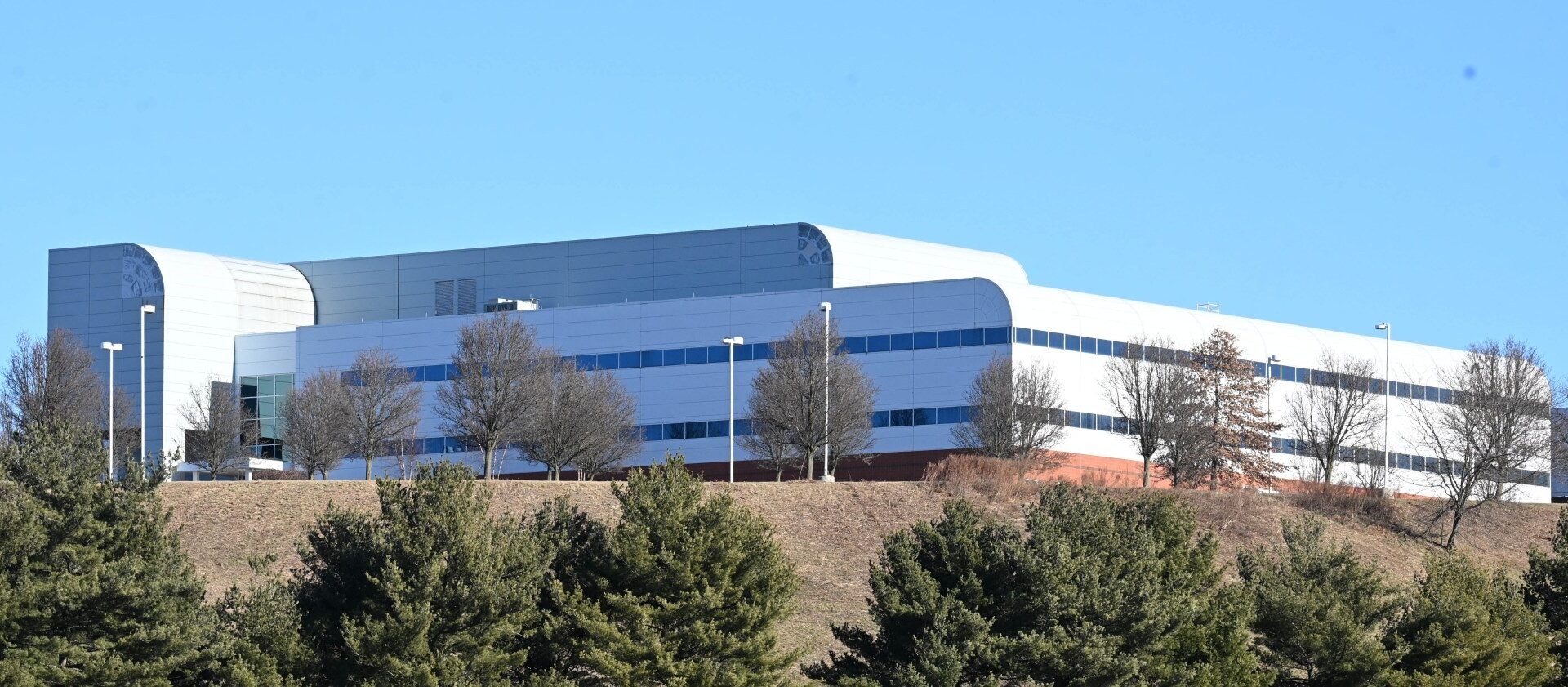
In the face of pushback from critics, data center developers and supporters argue that the developments are worth it for the benefits — financial and otherwise.
But how much impact would data centers have on the Lehigh Valley economy?
Data centers aren’t new to the region. In fact, they already have been an important part of its economic growth.
Tek Park in Upper Macungie Township, for example, has been operating as one for at least 15 years. Other businesses, including Broadcom and local healthcare systems, also have been using them.
“People have really kind of discovered this term data center with this movement to hyperscaling to build these mammoth projects,” Lehigh Valley Economic Development Corp. President and CEO Don Cunningham said. “What’s driving a good portion of the opposition is the massive-sized ones.”
The LVEDC considers data centers to be more of foundational infrastructure, similar to power plants, rather than high-value development.
While essential to support a modern technological economy and cloud-based services, data centers require fewer employees than other industries once operational.
Consequently, regional economic groups such as the LVEDC do not dedicate heavy resources toward recruiting them compared with high-job-creating facilities such as Eli Lilly and Co.’s plan to build a $3.5 billion manufacturing plant or Chobani’s $1.2 billion investment, both in Upper Macungie Township.
“They’re really more infrastructure projects,” Cunningham said, “very much like a power plant or a substation or a large transmission line. It wouldn’t fall into a high value category. In the Lehigh Valley market, it would not rise to the level where we would put a lot of resources and effort behind it.”
The New York Times reports that there are 78 data centers in operation across Pennsylvania, with 51 more in the pipeline. That puts it in 11th place among the states, with Virginia — and its heavy concentration of data centers near Washington in Loudoun County — way in front with almost 700 either built or planned.
In the Lehigh Valley, there are five hyperscale projects being reviewed, all of which have received pushback from residents; a sixth was recently abandoned at the former Air Products headquarters in Upper Macungie.
How many jobs?
Dan Diorio, vice president of state policy at the national Data Center Coalition, said hyperscale data centers usually have 100-250 direct positions, while multitenant data centers have between 30 and 50.
Overall, the Data Center Coalition says there are about 30,000 permanent employees at data centers in Pennsylvania, but when indirect jobs are included, the number increases by 100,000.
For some communities, Diorio says, fewer onsite jobs means less strain to local roads and school systems, which makes such buildings more desirable.
“With less of a job footprint there is less of an infrastructure strain,” he said. “You don’t have the need to house new individuals. You don’t have the need to have the space in your schools. You don’t have that many more people on your roads.
“We’ve actually heard from communities where they say, ‘This actually fits our economic development needs really well. We don’t have the infrastructure to build 350 more homes, but we’re seeing a significant economic impact.’ “
While data centers don’t create as many permanent jobs as warehouses and manufacturing, studies have shown there are other financial benefits in the area where they’re built.
Alberto Lamadrid, an economics professor at Lehigh University, said having local data centers could mean more efficiency for local industries.
“Eventually, this could transform into higher productivity for workers,” Lamadrid said. “The promise of artificial intelligence means that people are going to become more productive.”
Workers will also be employed to build data centers, which has attracted union support.
“We have a huge pool of building trades and skilled workmen, welders, pipe fitters, steam fitters, electricians, and you need that to build all this energy infrastructure,” U.S. Sen. Dave McCormick, R-Pa., said last year at one of the two innovation summits he’s hosted to promote Pennsylvania as a tech center.
Diorio said those construction jobs are not necessarily temporary ones, as companies usually retain contractors to build more than one facility. That means many workers could find themselves in data center construction jobs for a decade or more.
Beyond that, local contractors such as electricians, pipefitters, HVAC technicians and plumbers will be hired to maintain the facilities once they’re built.
“We’ve seen data center construction jobs turn into, what ostensibly was two to three years, turn into five, six, seven, eight, nine, 10 years,” Diorio said.
“Data centers are contracting with those local electricians … saying, ‘Hey, we basically need you at our data center multiple times a week, if not virtually every day.’ … That is a tangible employment impact that folks don’t recognize.”
That has drawn the support of trades unions, which have been openly campaigning for data center projects.
The North American Building Trades Unions recently signed an agreement with Blackrock and the AI Infrastructure Partnership to support the growth of AI and energy infrastructure investment needed to power it.
“NABTU is proud to partner with BlackRock and AIP to help build the skilled workforce that will power America’s data revolution,” said Sean McGarvey, president of NABTU. “As we’ve said, there is no shortage of men and women ready to build America’s future; what is needed is the workforce planning, industry partnerships, and sustained investment required to connect people with world-class training and family-sustaining careers.”
“When people say, you know, ‘data centers are the root of all evil,’ we’re just saying, ‘look, they do create a hell of a lot of construction jobs, which we live and work in your communities,’ ” Rob Bair, president of the Pennsylvania Building and Construction Trades Council, told SpotlightPA.
Lamadrid said in heavy data center hubs such as Virginia, multiplier models estimate up to 10 indirect jobs — service providers, contractors — are supported by every single direct job.
“In indirect impacts, they could be as large as around 10 [for every direct job],” he said. “This is happening in Virginia mostly because Virginia has a huge concentration of data centers. I don’t know that in the Lehigh Valley we’re going to be having that many.”
Powerful profits
The Data Center Coalition estimates the total contribution to the state’s gross domestic product is $19.6 billion.
The potential for such revenue has made some state officials big backers of data centers. One of those is McCormick, who has made tech development a priority since he was elected in 2024.
It has been a bipartisan effort. Democratic Gov. Josh Shapiro has worked with McCormick to bring technology investments to the state. Shapiro was enthusiastic about data centers, and the potential for economic development, but has pulled back during his reelection campaign against Republican state Treasurer Stacy Garrity, who has also tempered her position.
Still early in his term, McCormick has been moving quickly to attract more tech business, including data centers, to the state, in a quest to keep the U.S. competitive with such countries as China as artificial intelligence grows.
McCormick’s innovation summit in Pittsburgh in July 2025 attracted business leaders and politicians, including President Donald Trump. It brought billions of dollars in investments, including funds for massive data center projects.
Lamadrid said the federal government has provided strong backing for data centers from the Department of Energy and the National Science Foundation
“At the federal government, at the national level, even the funding agencies are providing plenty of funding in these areas,” he said. “Basically, they are encouraging it.”
Allentown-based PPL Corp. said at the Pittsburgh summit that it would invest $6.8 billion through 2028 to expand grid capacity and modernize transmission across multiple Pennsylvania counties to support growing power demand. The projects are expected to create 3,400 jobs in Pennsylvania. PPL also announced a joint venture with Blackstone, an investment company, to develop, own and operate combined-cycle gas generation capacity.
In July, the two combined to spend $40 million to buy 500 acres in Luzerne County between Wilkes-Barre and Scranton for possible power plants to fuel data centers.
During its second-quarter earnings call Aug. 7, PPL said economic development projects in Pennsylvania and Kentucky that include data centers could mean $10 billion to $12 billion in investment opportunities through 2032, with increased demand for electricity.
“The estimated opportunity includes regulated generation investment to support growing demand in Kentucky, as well as PPL’s ownership interest in generation development opportunities through Invitium Energy in Pennsylvania,” the company said in its quarterly report.
In Pennsylvania, PPL Electric Utilities’ advanced-stage data center pipeline expanded to 31.8 gigawatts, including more than 11 gigawatts already covered by signed electricity service agreements, the report said.
First Energy, the parent company of Met-Ed — which in addition to PPL provides electricity in the Lehigh Valley — will invest $15 billion to expand power distribution and strengthen grid infrastructure.
“I think our state is uniquely blessed, honestly, relative to the rest of the country, for this moment,” McCormick said during a discussion last December at Lehigh University. “If a Martian landed in America and could pick any state in the country to be the AI energy mecca, I think it’d be Pennsylvania. The reason for that is we’re the fourth largest natural gas reserves in the world.”
How many in the Valley?
The LVEDC’s Cunningham is skeptical that many larger data centers will be built in the Lehigh Valley. However, they can blend into the Lehigh Valley’s business infrastructure with small buildings, with the larger projects going to brownfields and reclaimed mining land to the north.
“A lot of that’s going on today, it’s just a smaller footprint,” he said of existing data centers. “Maybe that ultimately becomes the solution, that these things get scaled back and maybe those will be ones that get less reaction.”
Lamadrid said battles over warehouses in the Lehigh Valley with the sudden growth of the logistics industry after the COVID pandemic has made residents more aware of what’s coming to the various planning commissions.
“A lot of the pushback in the Lehigh Valley is because the warehouses caught a lot of people by surprise,” Lamadrid said. “People in the area tend to say, ‘Hey, now that this thing is coming, we want to be prepared because we don’t want to be caught again by surprise.’ “
Lamadrid said before data centers are rejected outright, there should be comparisons made with other recent economic booms, such as Marcellus Shale natural gas in the northern part of the state. The recommendation is to focus on proactive municipal regulation and smart tariff structures rather than outright bans.
For example, data centers could bring in tax revenue that could go toward education, infrastructure or parks.
“When I saw the moratorium New York declared for data centers, I felt this feels like something similar [to the shale gas revolution],” Lamadrid said. “We may want to learn from our past boom in order to try to come out with lessons for what this is.
“Almost any new development is going to have benefits. It’s a matter of growing with it, creating the right tools, guidelines, and boundaries in order to make sure that it’s actually well implemented.”
Morning Call reporter Evan Jones can be reached at ejones@mcall.com.