
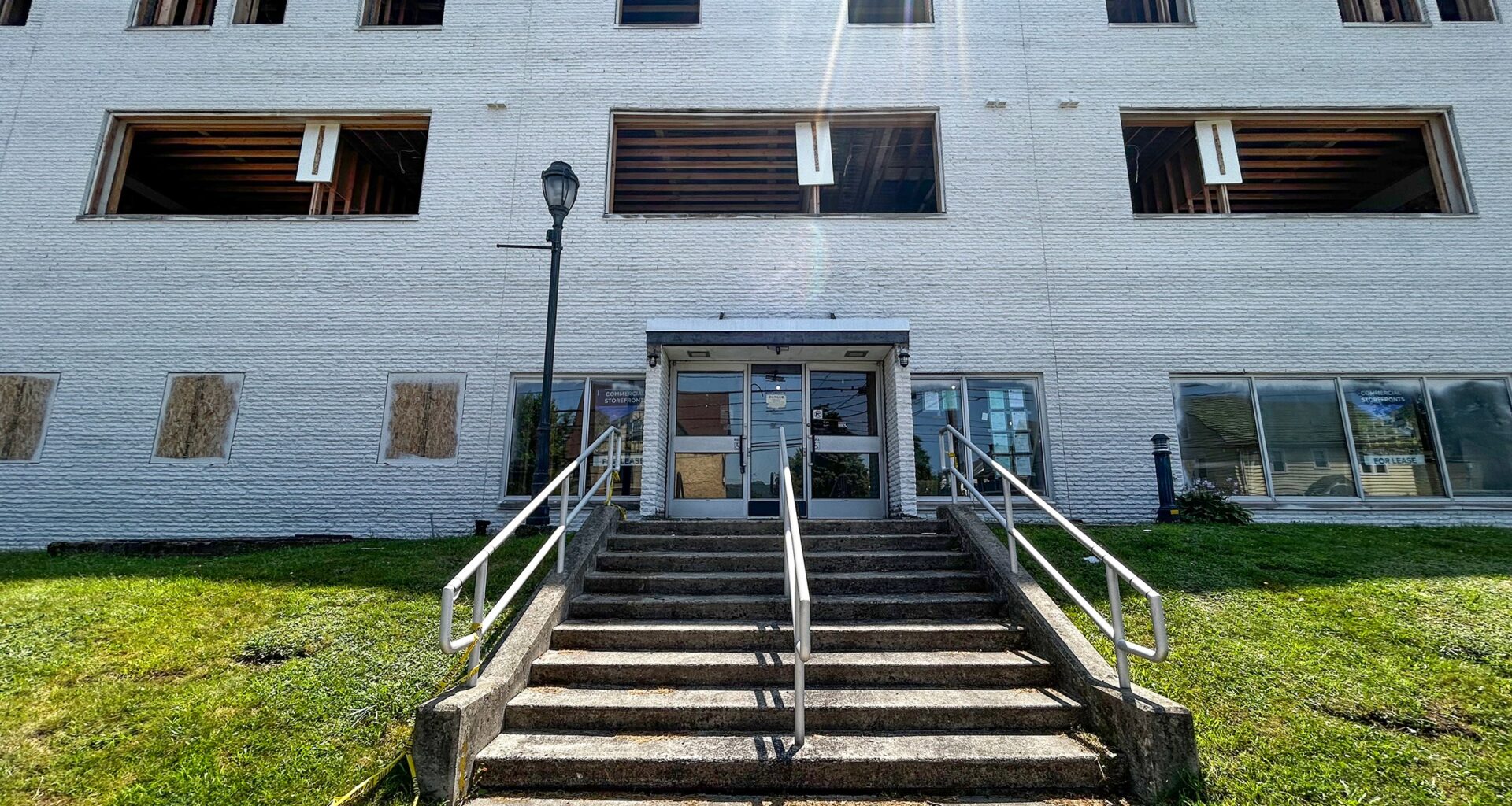
SCRANTON — A firm redeveloping a former Scranton State School for the Deaf building in the city into apartments with ground-floor commercial space secured a property tax abatement for the project.
It’s part of a broader, sweeping rejuvenation of the nearly 9-acre deaf school campus straddling Dunmore and Scranton that began last year after 1801 Jefferson LLC acquired the site from a nonprofit foundation through a foreclosure. The company recently transferred a 1.168-acre portion of the campus to a firm called 1802 North Washington LLC, which plans to create about 15 residential apartments and four commercial tenant spaces in the 1973 brick building on that parcel in Scranton’s Green Ridge neighborhood.
Dunmore Mayor Max Conway, a partner in both firms, touted the project this week before Lackawanna County commissioners unanimously approved a 10-year Local Economic Revitalization Tax Assistance, or LERTA, tax abatement term for that portion of the broader revitalization.
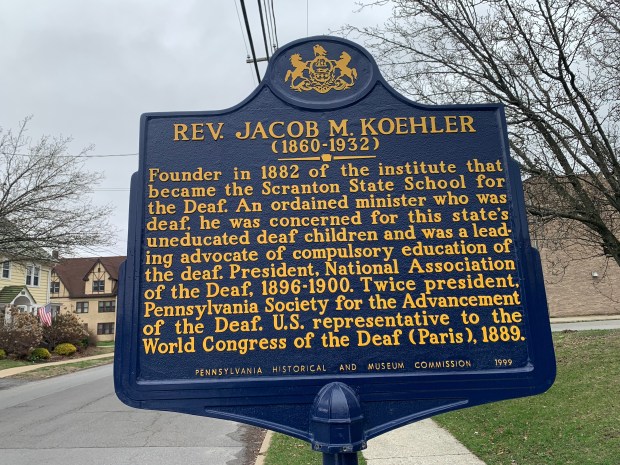 An historical marker for the former Scranton State School for the Deaf, along North Washington Avenue in Green Ridge in Scranton, on April 1, 2026. (JIM LOCKWOOD / STAFF PHOTO)
The county LERTA exempts the Scranton property at North Washington Avenue and Evelyn Street from a portion of county real estate taxes on new improvements that would otherwise be owed over the decadelong term, beginning with a 90% abatement in year one that will drop by 10% each year through year nine and to 5% in year 10, the final year.
The LERTA term will begin the first year after a certificate of occupancy is issued for the renovated building.
While the tax abatement program requires approvals from three taxing bodies — the local municipality, school district and county — Scranton and the Scranton School District previously approved citywide LERTA designations that apply to all residential, commercial and industrial properties within Scranton’s borders and exempt 100% of property taxes on new improvements over the terms. In requesting the county LERTA, Conway told commissioners that the city and school district have been supportive of the redevelopment.
“The former state school for the deaf is a really special property,” he said Wednesday. “For generations these buildings served students and families from throughout this region and became part of the history of Scranton and Lackawanna County. When the school closed in 2009, that chapter ended and this historic campus sat largely vacant for nearly 17 years. We took on this project because we believe these buildings deserve another chapter. We’re making a significant investment to preserve and bring them back into productive use.”
The project also creates a path for the longtime tax-exempt property to “become a meaningful contributor to the tax base” for the first time in its history, Conway said.
“Redeveloping … buildings of this age and significance is a major undertaking,” he said. “The county’s participation in LERTA would be an important part of helping us make that investment and continue moving the project forward. We’re proud to be preserving an important piece of the history of Scranton and Lackawanna County, and we’re excited about what this property can become over the next several decades.”
County officials were receptive, with Commissioner Chris Chermak describing the project as “precisely what these LERTAs are designed for.” A goal of the program is to encourage and incentivize investments in deteriorated properties.
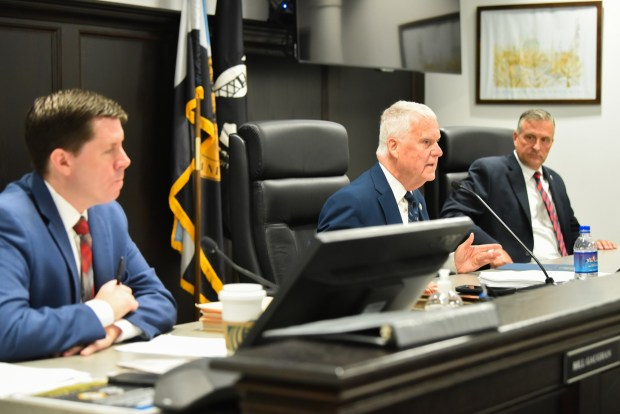 Lackawanna County Commissioner Thom Welby speaks during the commissioners meeting held at hte county goverment center in Scranton Wednesday, September 1, 2026. (SEAN MCKEAG / STAFF PHOTOGRAPHER)
A cover sheet accompanying the LERTA legislation notes the 1.168-acre property’s base tax assessment on the existing land and improvements will remain for the 10-year duration of the LERTA, with the owner paying taxes on those assessments during the term. The new improvements would become taxable in year 11, per the cover sheet, which notes a vacant and blighted building will be “reimagined” through the project, bringing new businesses to the neighborhood and creating more housing.
Commissioner Bill Gaughan pointed to those benefits Wednesday in endorsing the project, which Commissioner Thom Welby also endorsed despite noting his general distaste for tax exemptions. Welby acknowledged that he was “kind of a roadblock on this (LERTA) for a period of time,” but said his fellow commissioners reminded him “quite a bit” that the tax abatement only applies to new improvements made to the property.
In a phone interview, Conway described work on the Scranton building as the first phase of a multiphase redevelopment project of the broader deaf school campus, which also features eight distinctive stone-block buildings in Dunmore dating to the late 1800s and early 1900s. Those buildings are targeted for apartments, too, with Conway noting plans for about 80 residential units across the entire campus.
The goal is to complete renovations to the Scranton building by the end of the year, he said. The application for the county LERTA notes the estimated cost of that renovation is $3 million.
Information on the broader project is available online at stateschoolliving.com.