
When a new treatment facility opens, photographs often capture the hopeful beginning.
Officials assemble for the ribbon-cutting, standing among clean rooms, empty beds and promises of changed lives. But photos do not reveal what happens years later, after the speeches are over and the building becomes another responsibility for the City of Philadelphia.
Beds still need fresh sheets. Kitchens need to be stocked with food. Boilers must keep the building warm during cold January mornings. Clinicians, case managers and treatment providers rely on their paychecks, and people working to rebuild their lives count on the doors staying open.
Mayor Cherelle Parker is using a large amount of opioid settlement money the city began receiving in 2022 to create a response to addiction and homelessness that is meant to last well beyond the initial celebrations.
Philadelphia’s financial plans set aside about $211 million in opioid settlement funding over five years for Parker’s growing Wellness Ecosystem. This includes Riverview Wellness Village in the Holmesburg section of Northeast Philadelphia, Philly Home at Girard in Fairmount, the Kensington Wellness Support Center in Kensington, Neighborhood Wellness Court in Kensington and other services for addiction, behavioral health, housing and recovery.
However, the settlement money is not meant to last forever.
At some point, pharmaceutical companies, distributors and pharmacies will send their last checks while Philadelphia’s growing recovery programs will still have bills to pay.
Long-term risk
That raises an important question: Is the use of temporary settlement money creating future bills that Philadelphia taxpayers will have to pay?
Shagufta Haju, founder of Cashless Time, an organization that tracks public policy and government spending, notes that settlement payments might last for years, but they are not a permanent source of government funding.
“There is a legitimate long-term sustainability concern when temporary settlement revenues are used to establish or maintain recurring expenses,” said Haju. “If a program becomes dependent on settlement dollars for salaries, operations or core services, governments should have a clear plan for how those services will be financed when settlement revenue declines or ends.”
Philadelphia is slated to receive $200 million out of Pennsylvania’s total pool of opioid settlement funds, managed and distributed through the Pennsylvania Opioid Misuse and Addiction Abatement Trust (POMAAT). The city also received a $110 million settlement from Walgreens to resolve a 2021 lawsuit over the opioid crisis.
Some of that money is already being used to “strengthen the city’s wellness ecosystem,” according to officials.
For example, starting in fiscal 2027, operating costs for Neighborhood Wellness Court and the Kensington Wellness Support Center are budgeted to move from the General Fund to the opioids budget, said Sharon Gallagher, senior communications director for city’s managing director’s office. “The Trust requires all remediation programs to be formally approved for settlement funds to be used.”
So, when do the settlement revenue streams end?
“Unless the distribution period is revised, Trust funding is projected to conclude in 2040, and the Walgreens settlement funding is scheduled to continue through 2029,” wrote Gallagher.
After that? “Any programming that is supported by funding sources that end outside the current Plan period may be revisited when future plans are developed,” Gallagher said.
When funding goes away
Marcus Denning, principal and senior lawyer at MK Law, says the risk comes when governments use short-term revenue to cover costs that come up every year.
“Anytime that a city budgets for staff salaries or ongoing projects based on money that is only for a short period of time, it creates a fixed cost in the budget,” Denning told The Tribune. “There can be a problem when the settlement funds go away, and there is still an expense.”
He has a simple rule for using temporary funding. “I always have a standard that requires each person receiving funds based on a temporary source of funds to have a planned exit date from the beginning,” Denning related.
The number behind the number

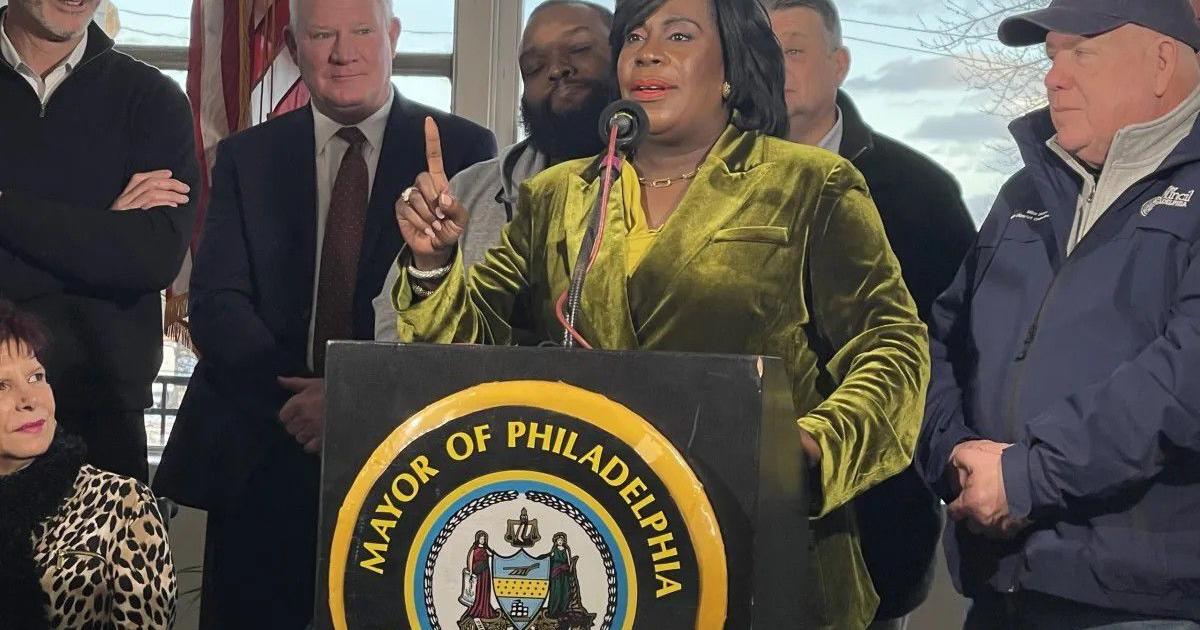
Philadelphia Mayor Cherelle Parker speaks at the ceremonial ribbon-cutting for Kensington’s Neighborhood Wellness Court on June 8. — WHYY/Kimberly Paynter
Philadelphia’s financial reports show several different numbers for the Wellness Ecosystem. The city’s five-year plan includes about $211 million in opioid settlement funding, but total investments in the Wellness Ecosystem go over $260 million when other city spending is counted, according to the Pennsylvania Intergovernmental Cooperation Authority, or PICA. Around $167 million in settlement money is part of the main operating budget for key parts of the system.
Other expenses are supported by city resources, behavioral health and housing funding, Medicaid reimbursements, grants, and other sources.
Some numbers through fiscal year 2031 are estimates or planned funding, not actual spending or final budgets. Still, they show how large the system Philadelphia is building is while this extra settlement money is available.
What these reports do not give taxpayers is a clear, easy-to-read guide showing which programs rely on settlement money, how much each gets, when that funding will end, and what money will take its place.
Entities receiving opioid settlement money should provide exactly that, Haju told the Tribune.
“Governments should also identify which programs are dependent on settlement funding and publish a sustainability plan for those programs,” she said.
Parker’s administration did not respond to multiple requests for comments about the city’s long-term financing strategy with the opioid settlement funds.
Public records do not make it easy to compare, year by year, how much the city spent from its General Fund on these services before and after the settlements, or if city funding dropped as settlement money came in.
The City Controller’s Office tracked almost $18 million from Philadelphia’s first settlement payments received in 2022. This included $6.3 million for Kensington Resident Support, nearly $4.5 million for Housing First programs, $3.5 million for the Overdose Prevention and Community Healing Fund, $1.4 million for medications for opioid use disorder in city prisons, and $1.36 million for mobile wound care.
“The Controller’s Office continues to monitor the funds spent as well as the relevant spending deadlines,” a spokesperson told the Tribune.
“Settlement dollars are increasingly critical in addressing the changing substance use crisis, to support and sustain innovative treatment and street-based services,” Silvana Mazzella, lead executive officer of Prevention Point Philadelphia, told The Tribune.
Prevention Point has used a $750,000 settlement funding grant from the commonwealth to provide mobile medication services for opioid use disorder, bringing treatment closer to people struggling with addiction.
“Because these services are in a mobile unit, we can reach various neighborhoods, including Black and Brown communities increasingly impacted by the drug crisis,” Mazzella said.
The fiscal cliff
The issue is not just that Philadelphia may be using settlement money for regular expenses. Experts say temporary funds can be used responsibly, especially if other money will eventually replace them or if a program is meant to end after a certain time.
The real risk, they say, is when temporary money quietly turns into money the city depends on.
Riverview makes the distinction tangible.
The large recovery campus in Northeast Philadelphia does not get less expensive just because a pharmaceutical company sends its last settlement payment. The kitchens still need food, the lights still need electricity, the plumbing still needs repairs, and workers still need to be paid. Treatment providers and vendors will keep sending bills.
More importantly, providers at Prevention Point have argued that a person who is halfway through rebuilding their life should not be treated as just another line in the budget that can be cut.
However, if Riverview and other Wellness Ecosystem programs are to remain in business, the financial challenge could get even tougher. Recovery experts said it is much harder to cut programs that are helping real people with treatment, housing, and behavioral health than to cut ideas that only exist on paper.
This means that future mayors and City Councils might face tough decisions. They could have to put more money from the General Fund into these programs, seek more Medicaid or other reimbursements, look for grants or outside help, cut services, or even close some programs.
Settlement agreements might end at a certain date, but the expectations that come from successful government services usually last much longer.
Public-finance experts call this situation a fiscal cliff. It is the point when temporary money runs out, but the costs that depend on it remain.
PA rules, Phila. choices
Pennsylvania’s settlement framework gives local governments substantial discretion to spend the money on approved opioid-abatement purposes, according to Haju. She said the state does not appear to impose a blanket statutory supplement-not-supplant prohibition on every local government, although individual grants, contracts, programs, or agreements can impose additional requirements.
This difference matters because using settlement money for an existing service does not always mean misuse.
Settlement money can help add more treatment beds, recovery housing, crisis services, prevention programs, or other addiction resources. The big financial question for Philadelphia is what happens once these additions become part of the city’s regular care system.
After all, the city has already experienced how complex it can be to oversee settlement spending.
Some earlier Kensington expenditures drew objections from POMAAT, which reviews whether local spending complies with settlement requirements. Philadelphia argued the opioid epidemic damaged entire communities and that repairing those neighborhoods could qualify as opioid remediation.
The Trust rejected some expenditures, prompting Philadelphia to go to court. On July 15, Commonwealth Court ordered the Trust to reconsider the disputed spending after concluding the board had not adequately explained its decision.
The ruling was not a blank check for Philadelphia. The court did not say the city could spend opioid settlement dollars however it wished. It found the Trust had not adequately explained why it rejected certain Philadelphia expenditures and ordered the Trust to reconsider them and provide a reasoned explanation.
Still, that dispute was about whether certain expenses were allowed.
The next challenge returns to an argument many have made may be different: figuring out how Philadelphia will pay for these programs once the settlement money is gone.
A sustainability plan
For taxpayers, the issue really comes down to some basic accounting questions.
Which programs depend upon opioid settlement money? How much does each receive? When does that money decline or disappear? And what replaces it?
Publishing that information would allow taxpayers and policymakers to distinguish between programs with durable financing and those whose futures depend on temporary money, Haju said.
If a program becomes dependent on settlement dollars for salaries, operations, or core services, governments should have a clear plan for how those services will be financed when settlement revenue declines or ends,” Haju concluded.
Stay informed and connected — subscribe to The Philadelphia Tribune NOW! Click Here