
On Monday, Transportation Secretary Sean Duffy and Homeland Security Secretary Markwayne Mullin announced the emergency removal of 110 commercial driver’s license schools from the federal Training Provider Registry, tied to more than 5,000 drivers later cited for failing English-proficiency checks. On Tuesday, DOT released the state-by-state breakdown. Pennsylvania tied Texas for the most schools hit, 13 each, out of 84 physical-location providers identified across 20 states. California came in third with 11, Florida with 10, Utah with nine.
Anyone who has been following Harrisburg’s CDL problems for the last year won’t find that ranking surprising. The real question isn’t why 13 Pennsylvania schools got flagged this week. It’s why so many people, foreign nationals in particular, keep ending up with Pennsylvania-issued commercial licenses in the first place.
Start with the number FMCSA put in writing to Governor Shapiro’s office last November: 12,400 unexpired non-domiciled CDLs or commercial learner’s permits on the books in Pennsylvania. A non-domiciled CDL is meant for someone legally authorized to work here who lives, permanently, somewhere else, often a foreign national on a temporary visa. FMCSA’s audit found PennDOT had been issuing them with expiration dates that outlasted a driver’s authorized stay in the country, and without independently verifying legal status beyond a single check against the federal SAVE database.
Duffy threatened to pull as much as $151 million in highway funding if the state didn’t clean it up.
Shapiro’s answer was that Pennsylvania followed the process every state follows, and that the federal government’s own database told PennDOT the applicants were authorized.

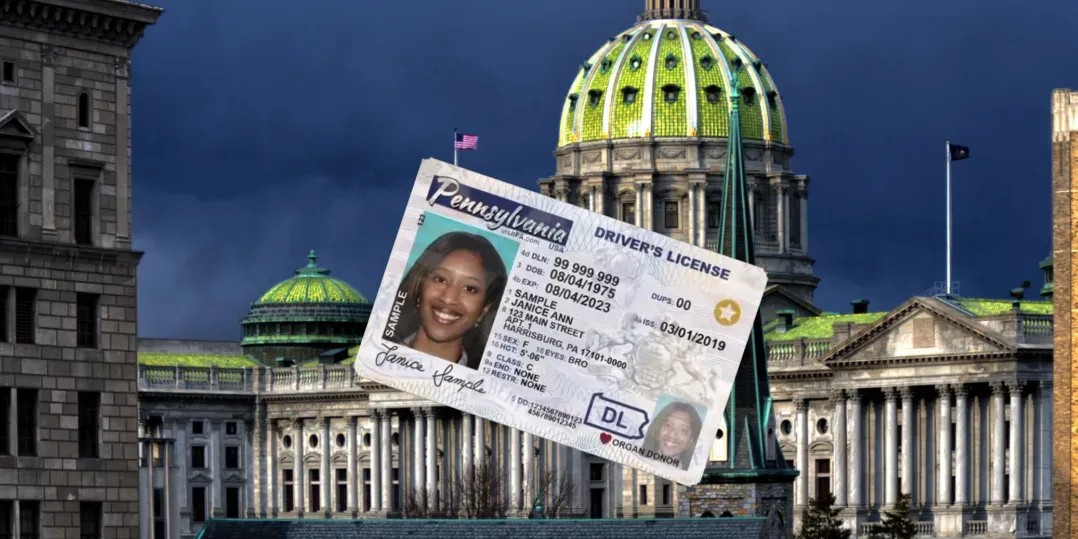
That defense got harder to make in November, when ICE arrested Akhror Bozorov, an Uzbek man holding a Pennsylvania CDL, with RealID insignia, on a warrant tied to a terror investigation in his home country. Stacy Garrity, running against Shapiro this fall, put it plainly: the people of Pennsylvania deserve to know why a suspected terrorist held a CDL issued on his watch.
State Sen. Jarrett Coleman and three colleagues sent PennDOT Secretary Michael Carroll a formal list of questions about how the agency screens applicants. Sen. Judy Ward, who chairs the Senate Transportation Committee, announced a fact-finding hearing.
Then came February 3. A Kyrgyz national named Bekzhan Beishekeev, driving on a Pennsylvania non-domiciled CDL issued the previous July, notice the RealID insignia, again, swerved into oncoming traffic on State Route 67 in Jay County, Indiana, and killed four members of the local Amish community: Henry Eicher, 50, Menno Eicher, 25, Paul Eicher, 19, and Simon Girod, 23.
This time the failure wasn’t just a database check. The school that certified Beishekeev, Aydana Inc., doing business as U.S. CDL, had been incorporated in Hatboro since 2022. It never appeared on the FMCSA registry. It never appeared on Pennsylvania’s own list of licensed training providers. It had no website, no listing anywhere, nothing that would let a regulator or a reporter confirm it existed. PennDOT accepted its certification and issued the license anyway.
Two different men, two different failure points, one state agency approving both. That pattern is the actual story behind this week’s ranking, and it points at something more specific than lax federal oversight. Pennsylvania has, whether by policy or by neglect, become a place where the paperwork is easier to clear than it should be for those who should be disqualified, or at a minimum screened to a more severe degree to ensure legal compliance.
Pennsylvania didn’t just watch this problem from a distance. On July 1, Trooper Michael Pahira Jr., a twenty year veteran of the state police, was killed conducting a routine commercial vehicle inspection on I-81 in Schuylkill County when a tractor-trailer veered off of the roadway and struck him. The driver, Michael Bon, a Haitian national in the country illegally, was operating on a non-domiciled CDL. At Pariha’s funeral a week later, Governor Shapiro stood in front of the community that raised him and called him a “damn good cop.” A little more than a month after that, Shapiro joined twenty-one other Democrat-led states in a lawsuit to block the Trump administration from accessing state CDL records, the very records federal investigators say they need to catch the next Michael Bon before he’s behind the wheel. You do not get to eulogize the casualty of a broken licensing system and then sue to keep federal regulators from seeing the paperwork that might stop the next one.
The scale behind that isn’t limited to two headline cases. Dr. Lynette Kuhn, deputy secretary for postsecondary and higher education at the state’s own education department, told the Senate Transportation Committee in January that 1,273 entities were listed as Pennsylvania CDL training providers on the federal registry. Only 40 were actually licensed by the state’s Board of Private Licensed Schools. The rest were claiming exemption or operating unlicensed, unnoticed, because FMCSA’s registration process is a self-attestation checkbox with no requirement for a verified address, phone number, or named individual behind the business. Kuhn also testified that licensure costs a Pennsylvania provider $8,250, while the maximum fine for skipping that process is capped at $2,500, which she called, correctly, not a sufficient deterrent. Getting FMCSA to actually remove a flagged provider once Pennsylvania catches one can take up to 18 months.
Harrisburg did eventually act. SB 1294, signed into law July 20, gives the state stronger authority to shut down unlicensed CDL schools and raises the civil penalty to $25,000. PennDOT also says it paused all non-domiciled CDL issuance back in late September, ahead of the federal deadline.
Both appear to be real fixes. Neither explains the twelve months, and counting, in which Pennsylvania led the country in exactly the kind of case this week’s federal action was built to catch.
Thirteen schools shut down is Washington’s number. Twelve thousand four hundred non-domiciled licenses on the books, a checkbox-only verification process, and a ghost school in Hatboro that operated for three years without a trace, that’s Harrisburg’s number.
Until someone in the Shapiro administration explains why Pennsylvania keeps being the state these cases trace back to, the tie with Texas for most schools shut down this week won’t be the last uncomfortable ranking with Pennsylvania’s name on it.
Ada Nestor is a writer and conservative commentator who lives in Chester County with her family. She publishes My Reflections from the Edge on Substack which is frequently found on the Top 100 Rising in U.S. Politics.