
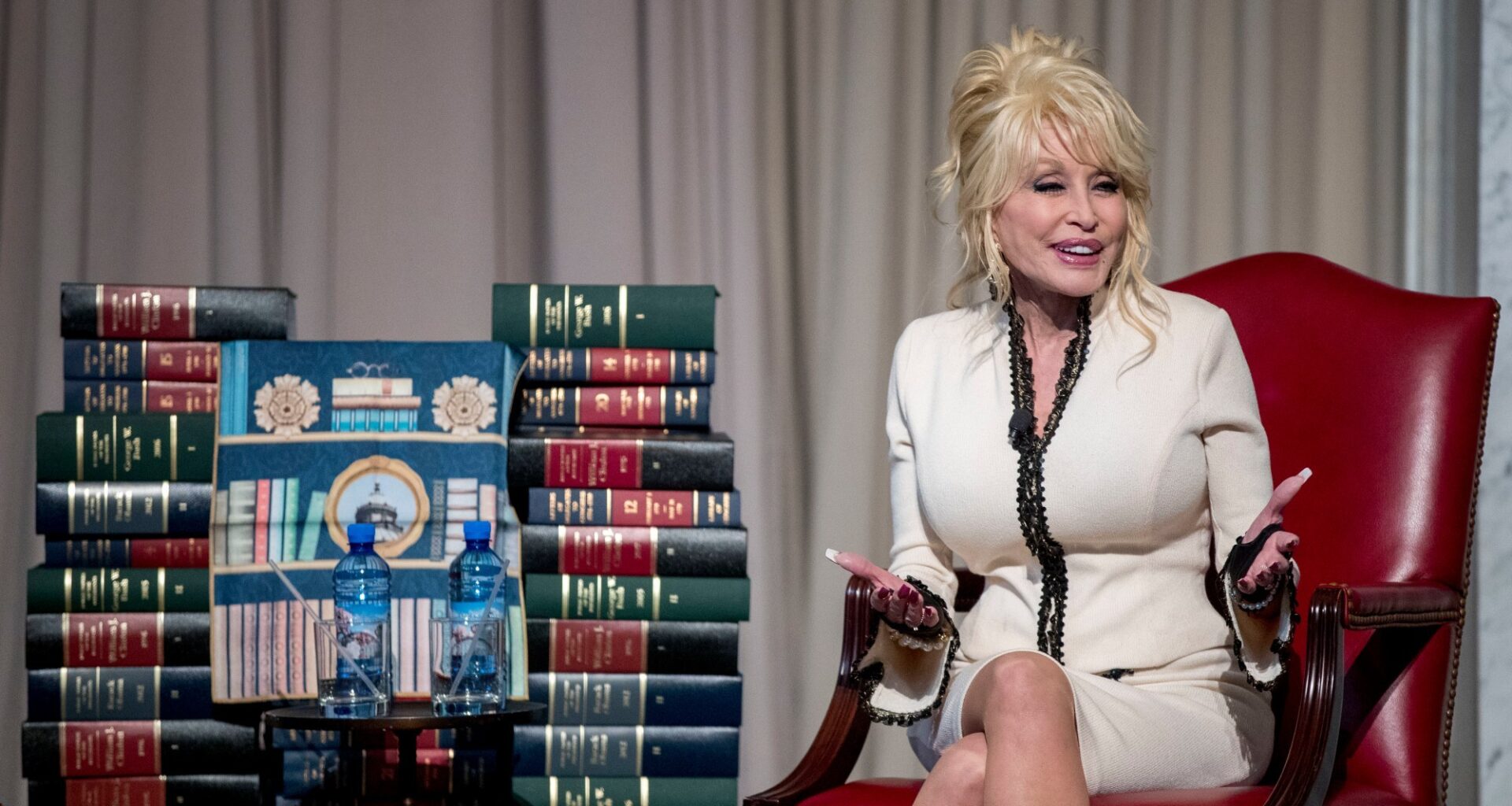
With Dolly Parton’s recent death, the world has rightly remembered the songs, the wit, the rhinestones and the warmth. But one of the most consequential parts of her life arrived not on a stage, but in a child’s mailbox.
In 1995, Parton founded the Imagination Library, inspired in part by her father’s inability to read and write. The idea was wonderfully direct: mail a free, age-appropriate book every month to children from birth until age 5, regardless of family income. By the end of 2025, the program had distributed more than 304 million books. It was philanthropy without lectures or stigma, just a child’s name on a package and a story waiting inside.
That legacy should challenge us. According to United Way of the Greater Lehigh Valley, 2 in 3 of our third graders are not reading on grade level. Third grade is a critical turning point. Before then, children are largely learning to read; afterward, they increasingly must read to learn. A child who cannot comfortably understand a paragraph will struggle not only in English, but also in science, history, mathematics and nearly every subject that follows.
The statewide picture offers little comfort. The 2024 National Assessment of Educational Progress found that only 33% of Pennsylvania fourth graders performed at or above its proficient level in reading. The average state score was lower than it had been in 2002. These figures are not a judgment on children, parents or teachers. They are a warning to all of us.
The warning extends beyond test results. In its August cover story, “The End of Reading Is Here,” The Atlantic described a country drifting toward a “postliterate” culture, one in which people may technically recognize words but increasingly lack the habit, patience and stamina for sustained reading.
Schools assign fewer full books. Adults scroll rather than read. Information arrives in fragments, videos and algorithmically selected bursts. We are surrounded by more words than ever, yet less willing to embrace and understand them.
Children learn from the culture adults create. If they see us constantly checking phones but rarely opening books, they absorb that lesson. If reading is presented only as preparation for a test, it becomes a chore.
Parton understood something more elemental: Before reading can become a skill, a book must become an invitation: to laugh, wonder, imagine, and ask what happens next. Reading aloud also gives a child something no app can duplicate: the voice and undivided attention of a caring adult.
Artificial intelligence makes this issue more urgent, not less. AI can summarize a chapter, explain an unfamiliar word, translate a passage or help a student explore a question. Used wisely, it can be a remarkable educational tool. But it can also tempt us to outsource the very mental work education is meant to develop.
A summary is not the experience of following an argument. A generated answer is not the same as wrestling with ambiguity. Reading deeply trains attention, memory, imagination, empathy and judgment, the same capacities people will need to question AI’s errors and use it responsibly.
A child who cannot read well will not be liberated by AI; that child may become more unduly dependent upon it. The strongest protection against manipulation by machines, advertisers, political propagandists, or anyone or anything else is a mind practiced to slow down, examine language, compare claims and recognize what does not make sense.
The Lehigh Valley already has strong foundations. Lehigh Valley Reads, powered by United Way of the Greater Lehigh Valley, supports early-childhood education, attendance, summer learning, community schools, and high-quality literacy instruction. A new nonprofit in our community, Adventures Made 4 U, personalizes books to be read to engage young minds. Our public libraries, schools, colleges, health systems, businesses, and faith communities all have a role. But scattered good programs will not be enough unless literacy becomes a shared regional priority.
That means expanding access to books from birth, supporting evidence-based reading instruction, strengthening school and public libraries, preventing summer learning loss and making family reading practical for parents working long or irregular hours.
Pediatric and family-medicine offices can give books and reinforce reading aloud as part of healthy development. Employers can sponsor book distributions and volunteer reading time. Community organizations can create multilingual home libraries. And every adult can put down a screen for 20 minutes and read with a child or let a child see us reading for ourselves.
We should measure progress openly, district by district and year by year, while remembering that numbers are not the children themselves. Behind every percentage is a young person whose confidence may rise or fall with the ability to make meaning from a page.
Dolly Parton gave children books because she believed they could dream more, learn more, care more and be more. The most fitting tribute the Lehigh Valley could offer is not simply to admire what she built. It is to continue it: a book in every child’s hands, a reader beside every struggling reader and a community unwilling to accept that two-thirds left behind is good enough.
This is a contributed opinion column. Dr. Tom Whalen is a retired pediatric surgeon. He served as chief medical officer of Lehigh Valley Health Network from 2011-21. . The views expressed in this piece are those of its individual author(s), and should not be interpreted as reflecting the views of this publication. For more details on commentaries, read our guide to guest opinions at themorningcall.com/opinions.