
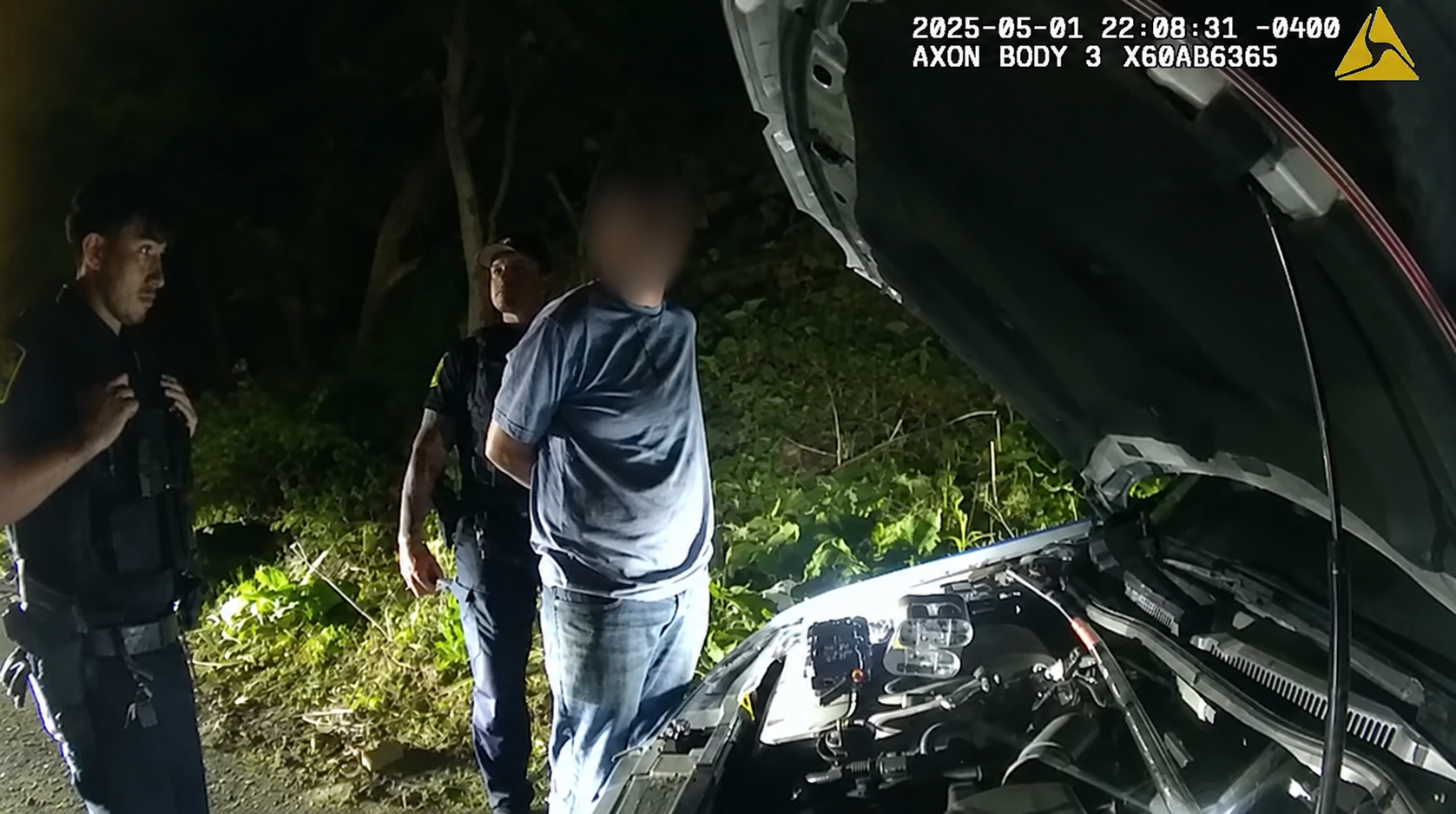
What happens when police respond to an anonymous 911 call, find absolutely no evidence of a crime, but demand your ID anyway? In the case of a viral interaction in Reading, Pennsylvania, it resulted in a blatantly unconstitutional arrest, 15 days in jail, a complete dismissal of all charges, and an incoming federal civil rights lawsuit.
The incident, which took place on May 1, 2025, was recently highlighted by the legal analysis YouTube channel Audit the Audit and has sparked massive outrage over police officers attempting to enforce laws that simply do not exist.
The Bogus Stop and the Fabricated Law
According to the breakdown, Reading Police Officers Tanner Vogle and Shawn Heck responded to an anonymous 911 call reporting two men standing near a blue hatchback with a woman tied up on the ground. However, when officers arrived, the scene didn’t match the tip at all. There was no tied-up woman, just a man named Ryan Mullis attempting to fix a malfunctioning light on his blue Volkswagen after pulling off the highway.
Despite zero evidence of the reported violent crime, the officers immediately demanded Mullis hand over his ID. Knowing his rights as a citizen not suspected of a crime, Mullis declined.
“I’m not going to give you my name,” Mullis stated. When the officer pushed back, Mullis accurately pointed out, “Because I don’t have to legally”.
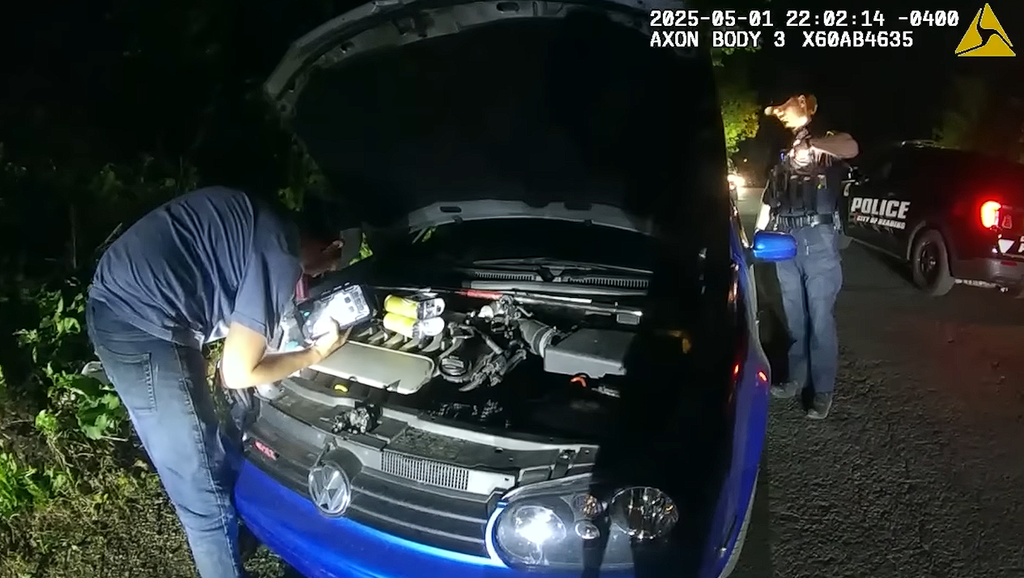
Instead of walking away or investigating further, the officers doubled down and threatened him with an arrest based on a completely fabricated interpretation of the law. “You are required under law to identify yourself… and if you’re not going to identify yourself, you’re going to be detained in handcuffs,” the officer falsely claimed.
As the Audit the Audit points out, Pennsylvania imposes “no general duty to identify” unless an officer can establish reasonable, articulable suspicion that a specific crime has been committed. Simply refusing to identify oneself “cannot supply that suspicion in a jurisdiction that imposes no duty to identify”.
An Arrest Born Out of Frustration
As the encounter escalated, Mullis accurately schooled the officers on the Fourth Amendment. “You have to legally articulate a crime; that’s what you have to do,” he told them.
Infuriated by his knowledge of the law and his refusal to bow to their demands, the officers placed Mullis in handcuffs and patted him down, ultimately discovering a concealed firearm on his person. Realizing they had just detained a man without a primary crime, the officers desperately attempted to retroactively justify the arrest by citing a minor city ordinance about “working on a vehicle on a city street”.
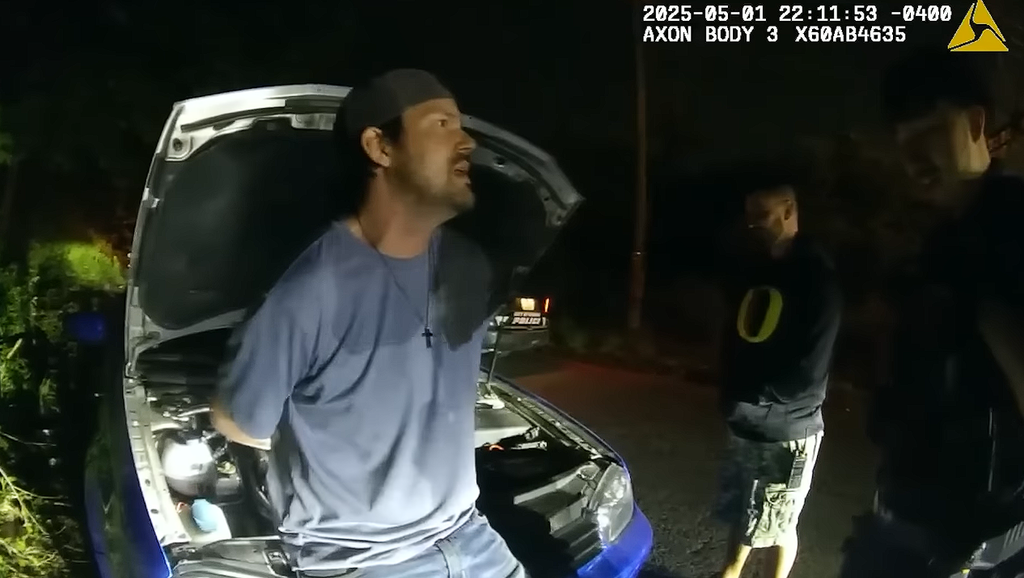
However, the bodycam footage caught the officers admitting on their own cameras after the fact that they had “originally intended to do nothing more than take down the individual’s names”. This damning admission confirmed that the arrest was entirely “driven by frustration rather than lawful suspicion”.
Charges Dropped and a Lawsuit Incoming
Mullis reportedly spent 15 days in jail and racked up $20,000 in legal fees fighting the unconstitutional arrest, but the courts ultimately vindicated him.
According to Berks County Court of Common Pleas records (Docket No. CP-06-CR-0001681-2025), a judge officially suppressed all evidence gathered during the unlawful stop on February 19, 2026. Because the initial detention was deemed entirely illegal under the Fourth Amendment, all subsequent criminal charges—including any firearm charges resulting from the unlawful search—were completely dismissed on May 29, 2026.
Now, with the criminal case vaporized and his record cleared, Mullis is moving on the offensive. He is reportedly preparing an incoming federal civil rights lawsuit (under 42 U.S.C. section 1983) against the Reading Police Department to seek compensation for the massive constitutional violations he endured.