
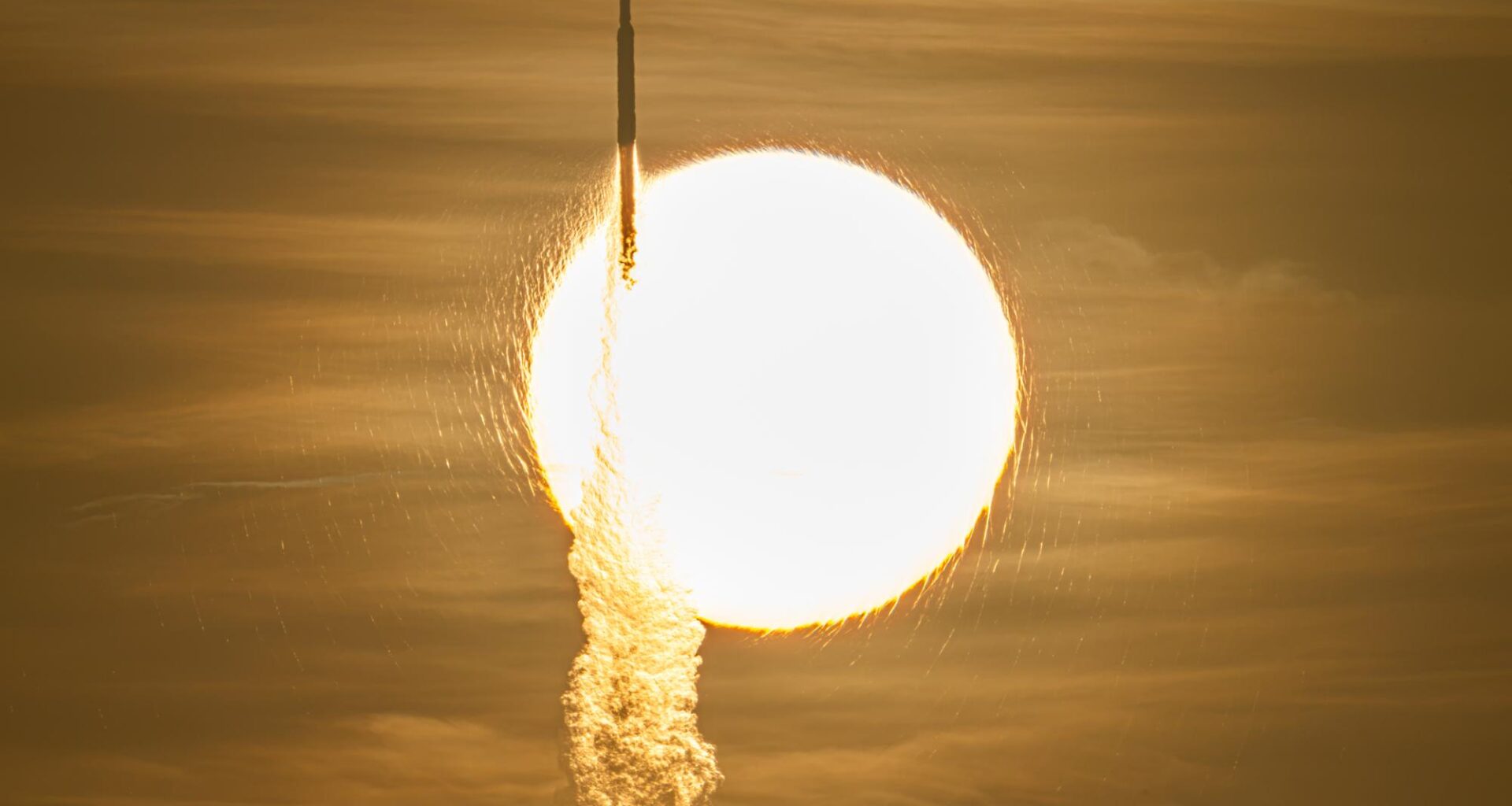
Pitt professors are showing students that they can reach for the stars with the launch of the Nancy Grace Roman Space Telescope.
On Aug. 30, NASA launched Roman, a satellite that researchers at Pitt have worked on for years. Michael Wood-Vasey, Jeffrey Newman and Brett Andrews were among the Pitt professors who contributed to the project.
Roman, which is named after the pioneer of modern space-based astronomy, is approved for a five-plus-year mission. Wood-Vasey, a professor of physics and astronomy and director of undergraduate studies, explained how the origins of the NASA project can be traced back to nearly 30 years ago when astronomers discovered that the rate the universe is expanding is accelerating.
“Gravity is attractive, so that should slow [the expansion] down,” Wood-Vasey said. “The conclusion you would have is there’s some source of energy we don’t know about.”
Experts do not know why the universe is expanding more rapidly, but the mysterious force causing it is called dark energy, according to Wood-Vasey.
Roman will help answer questions about dark energy by capturing images of galaxies, supernovae and exoplanets, which are planets outside of the solar system, to discover how they change over time. A phenomenon called gravitational lensing occurs when dark matter bends the path of light, which affects the perceived image of nearby galaxies, according to Wood-Vasey.
“If you look at the shapes of background galaxies, they’ll be influenced by the mass of galaxies between [the background galaxies and the lens] — but also the dark matter structure in which the galaxies are embedded,” Wood-Vasey said. “That will slightly warp and change the light.”
Roman has the capacity to study weak lensing, or gravitational lensing, on a smaller scale. Wood-Vasey said this will help astronomers map galaxies and track expansion more precisely.
“If you look at those patterns as the universe has been expanding, you can trace out the structure of the dark matter during that time,” Wood-Vasey said. “Then, you can trace out the expansion as dominated by the interplay between dark energy and dark matter.”
Roman’s mission is similar to that of the Hubble Space Telescope, but its field of view is at least 100 times larger than Hubble’s, capturing more detail in less time.
“If you want to do either that weak lensing survey, or even just want to find lots of supernovae and go really deep, having this image totally changes [the process],” Wood-Vasey said. “We’ve done both of these things with Hubble. This could do it a hundred times faster.”
Marina Skuban, a fifth-year senior majoring in physics and astronomy and film and media studies, has been discussing the Roman telescope for several years as a part of the Survey of Transiting Extrasolar Planets team at Pitt.
“Since they announced the Roman telescope, it’s been a big thing for the exoplanet research community,” Skuban said. “It’s going to be one of our first real chances to get direct imaging of exoplanet systems.”
According to Skuban, the Roman Coronagraph, an instrument made up of masks, prisms, detectors and mirrors, is going to make it easier to see exoplanets in detail.
“It’s going to block out light from these exoplanet systems from their host star, which is going to make it really easy for us to see what the planets look like in that system,” Skuban said.
Skuban worked with Wood-Vasey through STEPUP and said being a student at Pitt has given her opportunities that she might not have had at another university.
“As a student, and especially with Pitt being an R1 university, it opens up a world of possibilities,” Skuban said. “The research that’s available to us is limited by what your professors are doing at a certain time, and at Pitt, we’re really lucky to have professors who are really involved in these big projects.”
Rachel Hall, a senior mechanical engineering major, was invited to attend the Roman launch with leadership staff at the Moonshot Museum in Pittsburgh after volunteering at a National Society for Black Engineers event.
“Being able to attend the launch in person and witness the effort of every scientist and engineer that worked on the telescope pay off is something I’ll remember forever,” Hall said. “Seeing the vast size of the rocket and how much detail goes into designing a machine like that was mind-blowing.”
Hall said the idea of contributing to space exploration feels more attainable because of the ties in the Pitt community.
“The thought of working in the space industry used to feel like a far-off goal that was unobtainable, but knowing we have professors that are actively working alongside NASA makes that goal feel much more real,” Hall said. “We need professors working in the industry to show students what’s possible.”
Wood-Vasey emphasized the importance of Roman beyond its mission and hopes it makes people think about their place in the universe.
“The idea of science, the idea of sharing the data, of sharing the questions and sharing what we learn, I think is part of why we’re here,” Wood-Vasey said. “It’s your questions that move things forward as much as the answers.”