
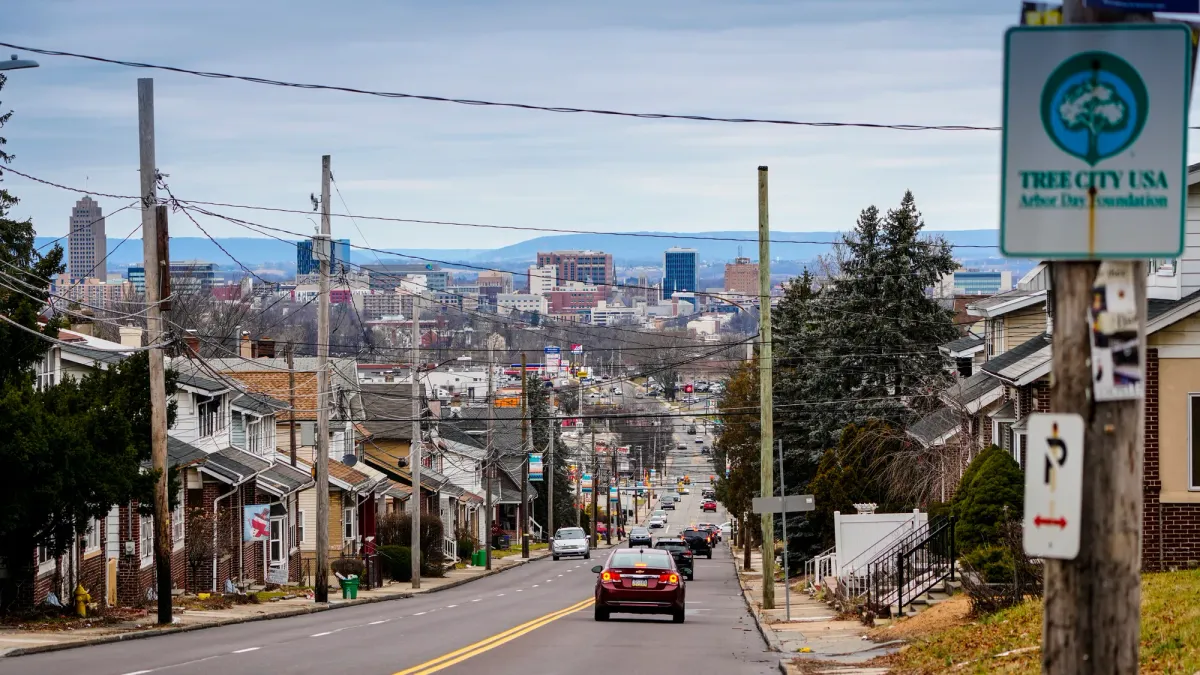
ALLENTOWN, Pa. – Sitting amid a regional housing crisis – but now on a pile of money – city leaders are looking at a group of pilot programs to chip away at the growing shortage of places to live.
Allentown has 865 fewer housing units than it needs for its current population, a number that could approach 5,400 over the next 25 years without serious intervention, according to regional planners.
Officials are looking to tap into a new stream of revenue to help reverse that trend.
Allentown now collects 1% from each deed transfer within the city, after voters approved a referendum and City Council passed legislation to double its take from home and property sales starting this year.
The half-percentage-point increase put a little more than $1 million into the city’s new Housing Trust Fund in its first six months.
That money could help a few families find new homes in the short term, while officials are optimistic about further progress as the pot of money continues to grow.
City Council and leaders in Mayor Matt Tuerk’s administration have discussed earmarking some of the funds to help homeowners make repairs to their properties, while tax-abatement programs also are on the table.
They’re also planning to use a portion of the Housing Trust Fund to help first-time homebuyers compete in an aggressive regional market.
Vicky Kistler, the city’s community and economic development chief, said at a recent meeting that her department is looking to acquire and renovate three blighted homes, with hopes of refining and expanding the pilot program as tax revenue grows.
Those homes would be targeted at a pool of applicants earning 80% or less of the Lehigh Valley’s median income, which hit a new high this year, Kistler said.
A typical homebuyer in the area once spent about twice their annual income to buy a home; they now often spend closer to four times their salary, according to the LVPC.
That puts the income eligibility cutoff for a typical household at about $67,500. A household earning that much could afford to buy a home in the $200,000 range, but many homes would likely cost about $300,000 to buy and fix, Kistler said.
With its Housing Trust Fund up and running, Allentown now has money to fill that gap – at least enough to acquire a few homes to launch the pilot program.
Some council members asked officials to instead determine eligibility based on Allentown’s median income: roughly $55,000, which is about two-thirds of the region’s mark.
That move could significantly hurt the pilot program’s chances at early success, according to Kistler and her deputy, Mark Hartney.
Households that meet the income requirement – earning around $44,000 or less – would likely struggle to become “bankable,” i.e. secure a mortgage for a home valued at $200,000, Kistler said.
City Council considered the pilot programs in the wake of the Lehigh Valley Planning Commission releasing its final Housing Attainability and Affordability Strategy late last month.
The Lehigh Valley is more than 6,000 housing units short of what it needs for its residents. The shortage could soar past 50,000 units by 2050 on the current trajectory, according to the LVPC.
A typical homebuyer in the area once spent about twice their annual income to buy a home; they now often spend closer to four times their salary, the LVPC’s 157-page report states.
Home prices have climbed significantly over the past decade. The median sales price for a home in the Lehigh Valley hit a record high of $389,500 this summer; that number was about $200,000 lower in 2016.