
After decades in the manufactured housing industry, I’ve learned that there are very few simple answers when it comes to housing.
What works in Philadelphia may not work in Erie. What makes sense in a fast-growing suburban county may create entirely different consequences in a rural community. That’s why I’m concerned whenever complicated housing problems are met with one-size-fits-all solutions.
I own and operate Chardonnay Village West, a 55-plus manufactured housing community in Girard, Erie County. I’ve also had the privilege of serving as president and chairman of the Pennsylvania Manufactured Housing Association, which has given me the opportunity to know community owners, manufacturers, retailers and housing professionals all across the state.
If there’s one lesson that experience has taught me, it’s this: Pennsylvania is not one housing market.
Our state is remarkably diverse. We have major cities, growing suburbs, small towns and rural communities. We have regions where housing demand is intense and others where population growth is much slower. Land values, wages, taxes, utility costs, infrastructure needs and the age of the existing housing stock vary significantly from one part of Pennsylvania to another. Our housing policies need to recognize those differences.
More: What’s happened in one Pa. manufactured home community isn’t unique
When it comes to manufactured housing communities, the basic model may look similar from the outside: a homeowner owns a manufactured home and leases the homesite within a community. But the economics behind individual communities can be dramatically different.
The cost of land in southeastern Pennsylvania isn’t the same as the cost of land in Erie. Water and sewer systems vary. Municipal regulations vary. Insurance costs vary. Infrastructure needs vary. A community built decades ago may be facing significant investments in roads, water lines or other aging infrastructure that a newer community does not.

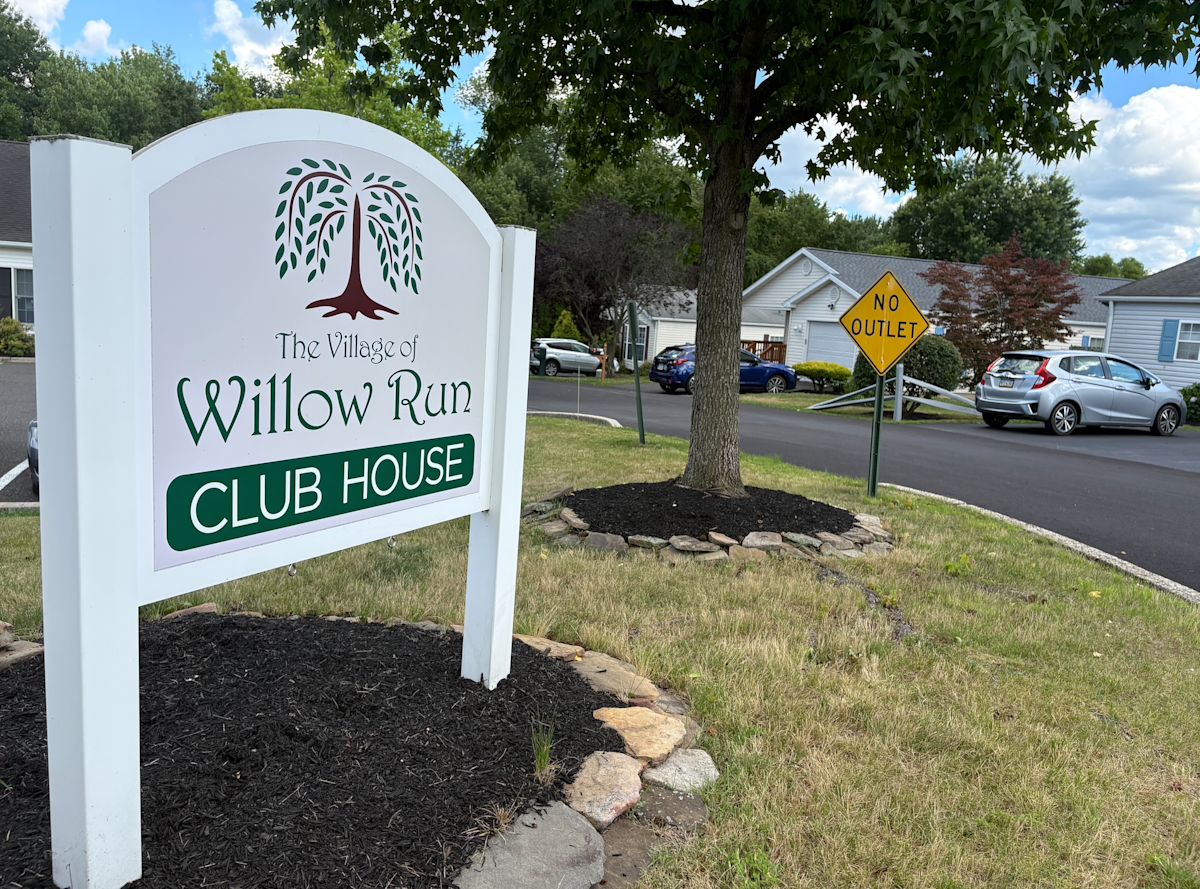
Residents in the Village of Willow Run, a 55-plus manufactured home community in Montgomery County, learned in 2025 that the property owner was raising lot rents by nearly 50%.
Even the residents and their needs can be different. In a 55-plus community like mine, many residents have chosen manufactured housing because it gives them the lifestyle they want at a price point they can afford. They may be downsizing after decades in a traditional home. They may want less maintenance, a close-knit neighborhood and the financial flexibility that comes with a more attainable housing option.
Those homeowners deserve stability and predictability. They also deserve a community that can continue investing in the roads, infrastructure, services and improvements that make it a good place to live.
Those goals have to exist together. That’s where broad-brush policymaking can go wrong.
A policy designed around the circumstances of one community, one ownership model or one region can have very different consequences when applied statewide. A rule intended to protect current homeowners can inadvertently make it harder for a community to maintain aging infrastructure. A restriction intended to control costs today can discourage investment tomorrow.
And when investment slows, it isn’t only community owners who feel the consequences. Current homeowners can see improvements delayed and amenities diminished. Community owners may struggle to make necessary long-term investments. And future homeowners may find fewer communities, fewer available homesites and fewer attainable opportunities for homeownership.
That’s the danger of treating every housing market — and every manufactured housing community — as though they’re interchangeable, and legislating with oversimplified statewide solutions.
This doesn’t mean policymakers shouldn’t act when there are legitimate problems. Residents deserve strong protections, transparency and fair treatment. Pennsylvania already regulates manufactured housing and provides specific rights and protections for people living in manufactured housing communities. But good policy should solve problems without creating new ones. That requires listening to homeowners. It requires listening to advocates and local officials. And it also requires listening to the people who operate these communities and understand firsthand what it costs to preserve them for the long term.
Most importantly, it requires recognizing regional differences rather than reaching for a single statewide answer to every problem.
Pennsylvania needs more attainable housing, not less. Manufactured housing is an important part of that equation, particularly for retirees, working families, first-time buyers and others looking for an affordable path to homeownership. We should be looking for ways to preserve existing communities, encourage investment and create opportunities for new developments.
Because housing policy isn’t successful simply because it sounds good on paper. It’s successful when the homeowner in Erie, the family outside Harrisburg, and the retiree in southeastern Pennsylvania all still have good housing options five, 10 and 20 years from now.
If we want policies that work for all of them, we have to stop pretending that Pennsylvania looks the same everywhere we go.
Jim McDonald is the past president and chairman of the Pennsylvania Manufactured Housing Association and the owner and operator of Chardonnay Village West in Girard, a 55-and-older manufactured housing community.
This article originally appeared on Erie Times-News: Housing policy that works in Philly might be wrong for Erie | Opinion