
David LeBourgeois, now in his 30th year as an educator, remembers the September morning 25 years ago when a messenger interrupted his third grade class to hand him a piece of paper, informing him that a tragedy had happened in New York City.
LeBourgeois wasn’t given details, just told not to talk about it if the kids asked questions. He wondered what kind of event could have warranted such a notice.
An hour or so later, he dropped his students off at recess and entered another Liberty Bell Elementary classroom where a fourth grade teacher had a TV on a cart.
LeBourgeois teared up recalling what it felt like to watch the first tower fall.
“It was just so shocking,” he said. “It was unbelievable.”
Twenty-five years after the attacks, LeBourgeois and other longtime Lehigh Valley educators find themselves in a unique position: Teaching students who weren’t born yet about an event that they themselves witnessed while in the classroom.
That September afternoon, and in the days that followed, the direction to not directly discuss the event with students never changed. If a student asked a question, LeBourgeois would tell them that he’d also heard the news but that it was OK, that they would pray for the firefighters and police, and that they were safe at school.
“9/11 was a story about the teachers just hanging on and surviving the mental insanity of the tragedy, but then going to work and pretending for the most part like nothing happened and just protecting the children,” LeBourgeois said.
The initial aftermath of the attacks was “very scary, very uncertain,” LeBourgeois said. Unsure if there would be further attacks, the district initially canceled field trips.
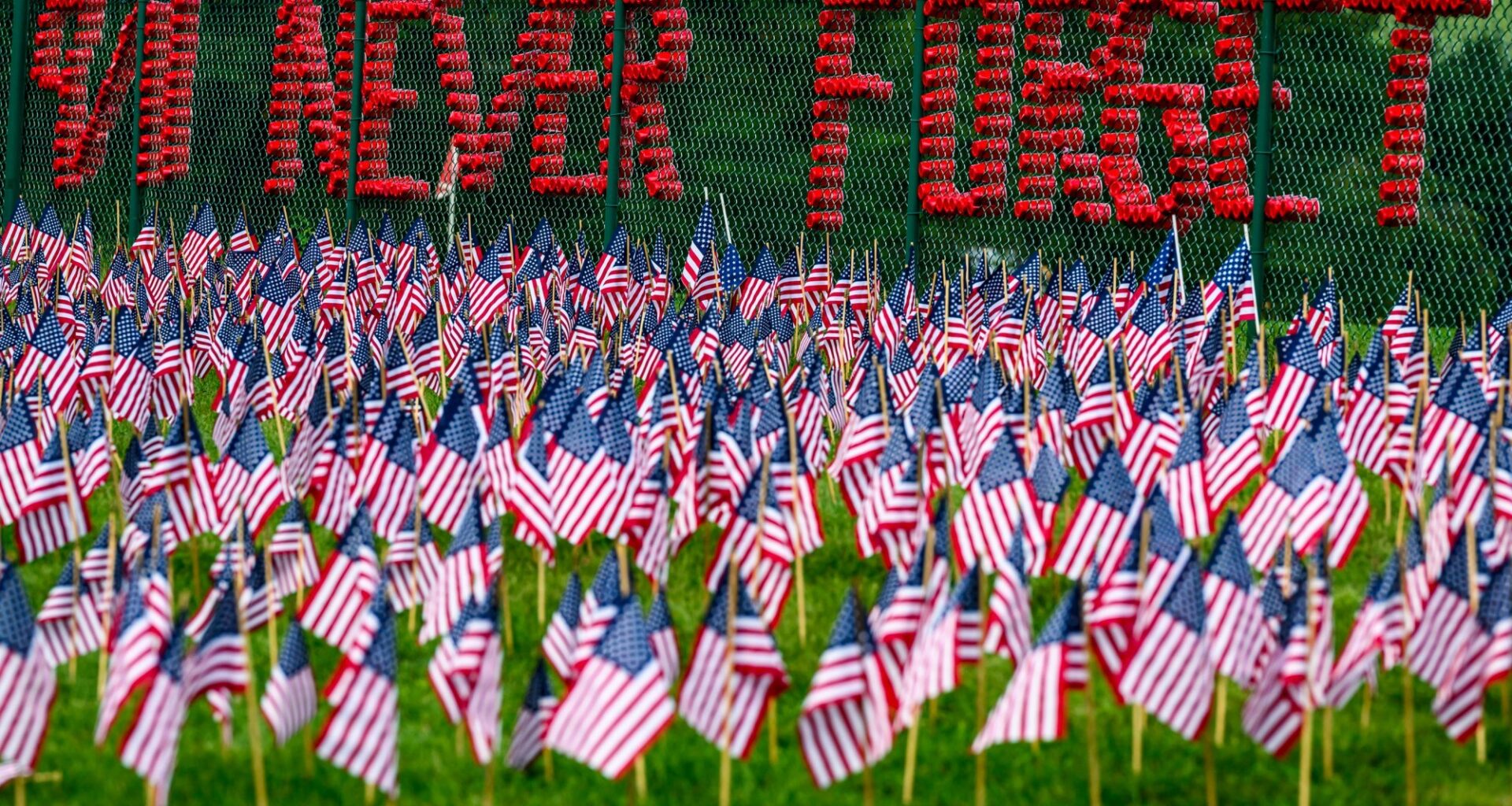
That fear faded, replaced by an outpouring of patriotism. Southern Lehigh School District implemented a Patriot Day commemoration to mark the anniversary, with a focus on celebrating the country and honoring first responders.
As 9/11 has receded from public discussion, though, it feels distant from today’s young students, LeBourgeois said.
“This is ancient history to the kids I work with, just as much as World War II or the Revolutionary War,” he said.
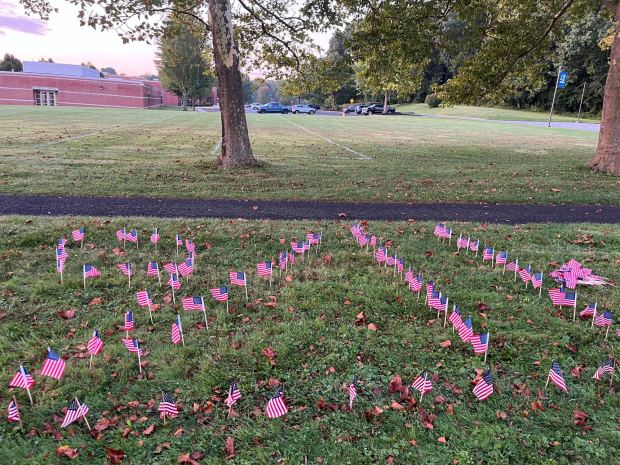 Flags outside Southern Lehigh High School mark the 2025 Patriot Day memorial in honor of the victims of the Sept. 11 attacks. (Tim Kearney)
Reaching for comfort
The tragedy in New York felt very present for the third graders in Diane Riffle’s Central Elementary School class in September 2001.
Her Allentown school did not hold early dismissal Sept. 11, but many parents pulled their children out of school, and she remembers attendance being low the next day.
At a school where so many students had family ties to New York City, teachers were careful to avoid frightening language when discussing the attack and its aftermath.
“They knew that city very well, so we didn’t want to set any fear into them,” Riffle said.
As time has passed, Riffle said, it’s become easier to acknowledge how scared she was that day.
Her father was scheduled to fly that morning, which panicked her, until she learned his flight had been canceled as airports grounded planes.
Other workers were leaving job sites to be with loved ones, but teachers had to prioritize being present for their students, Riffle said, noting how difficult that decision was for her colleagues whose own young children were at different schools.
“Deep down inside, I was looking to be comforted by my own family,” Riffle said.
On her parents’ advice, she wrote her feelings in a journal that night. She still has the entry.
Today, when she talks to students about that day, Riffle said, “my emotions and my realness will come through.”
Younger colleagues, some of whom were just toddlers on 9/11, are teaching about the event from curriculum, not memory, she noted.
What she remembers the most is watching the country come together.
“Our country was tested, and our strength was tested, and we conquered it,” Riffle said.
Processing a tragedy
The power of words to heal will be part of Amy Bausher’s Sept. 11 lesson this year, as she focuses her public speaking course on the rhetoric in speeches such as President George W. Bush’s address to the nation.
Bausher is in her 19th year at Southern Lehigh High School, having spent the first seven years of her teaching career at Allen High School.
She was a first-year teacher in Allentown on Sept. 11, 2001. During her prep period that morning, she saw the events in New York City unfold on the copier room TV.
Bausher went back to her classroom to call her father, who was a firefighter for Allentown. She said it was a “surreal feeling” trying to process her emotions as a 22-year-old teacher tasked with both understanding the magnitude of what had transpired and trying to uphold normalcy for the freshmen in her English classes.
That day, teachers were asked to leave TVs off and to follow normal lesson plans. In the next few days, a sense of “somberness and concern and confusion” set in, Bausher said.
She shared her students’ sense of disbelief and sadness, and she worked to reassure them that there were ways to move forward.
The events of 9/11 still remain “so fresh and raw for the people who lived through it,” Bausher said, and she uses that day as her own example when her English class discusses moments they’ve lived through that they will never forget.
“I want them to know that there are going to be, if there have not already been, moments in their life that will help shape who they are and who they become, and they will stay with you long after the physical act of that moment is over,” Bausher said.