
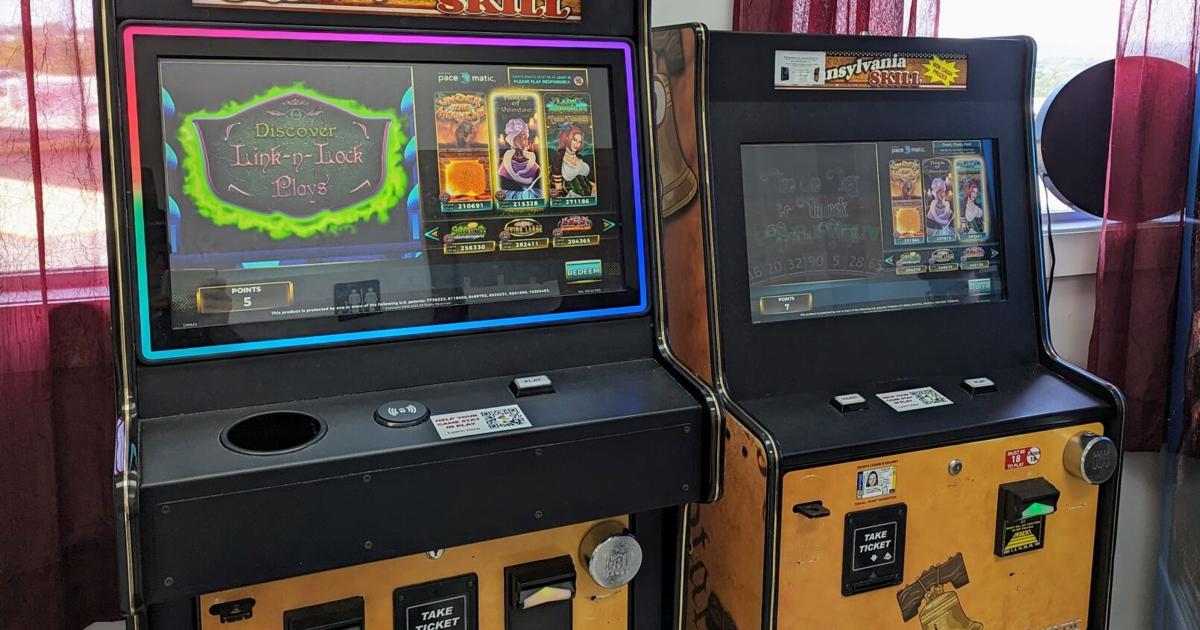
The Pennsylvania State Police urged the physical removal, rather than just powering off, of skill game terminals ahead of Oct. 13, the deadline set by the state Supreme Court for legislators to pass laws regulating and taxing the machines.
In guidance issued Sept. 9, the state police advised business owners to ask skill games vendors to remove the machines and associated equipment. If vendors are unwilling to remove machines, the state police offered to assist.

The state police are responding to a June 15 court decision that classified skill games as slot machines, therefore subjecting them to the state Gambling Act and Pennsylvania’s criminal code.
The ruling makes it a criminal offense to own, operate or maintain skill games without a license from the Pennsylvania Gaming Control Board. Most businesses that operate skill game terminals — including veteran halls, convenience stores and social clubs — won’t be able to register them, as current law restricts slot machines to approved casinos and truck stop establishments.
The state police’s guidance differs from what the manufacturers and owners of skill games have been telling businesses. According to Lena Keares, who operates K&S Games in Lancaster, the software that powers games will be turned off at the end of Oct. 13. Operators will then visit each venue to remove dongles, small pieces of hardware that allow games to run, from each machine.
The skill game terminals, Keares said, will stay put. She said Pace-o-Matic, the leading skill game manufacturer, communicated these plans with the state police and their business partners.
“There’s nothing to be seized if there’s no software,” Keares said. “It is essentially just a wooden box.”
The Pennsylvania State Police did not respond to a follow-up question about whether removing the software from game terminals would allow businesses to comply with the law.
Vital revenue for Lancaster’s social spaces
Businesses and nonprofits that host skill game terminals say the revenue from skill games is essential for keeping them open.
Jim Drier, commander of American Legion Post 34 in Lancaster, said the post relies on skill game revenue. He estimates that they receive between $500 and $1,800 a month from three machines, which goes toward operations and charitable donations. He said if that revenue is lost, donations, staffing and other spending may be cut.
Drier hasn’t personally played the games but has watched others take away up to $3,000 in winnings. He said he believes skill is required to win, not simply chance. Drier said the machines at Post 34 will lose their software at midnight of the deadline and then eventually be retrieved by the operator.
“The state police sent out these memos, and it made it sound like it’s going to be Prohibition, and they’re going to drag all the machines out in the parking lot and bash them with axes, but it’s not going to be like that,” Drier said.
Political gridlock
The Pennsylvania supreme court gave legislators 120 days to regulate or tax skill games and avoid a ban. The idea to tax or cap skill games has bipartisan support, but specific proposals are locked in partisan division. In August, Senate Majority Leader Joe Pittman, an Indiana County Republican, said there hadn’t been discussions between legislators on a solution since July.
In February, Gov. Josh Shapiro proposed a statewide cap of 40,000 skill game machines and a 52% tax on gross terminal revenue in his budget. According to a report from the Independent Fiscal Office on Shapiro’s proposal, the tax would generate $487 million for the 2026-27 fiscal year. The revenue projections escalated to over a billion dollars annually for the following years due to a slow phase-in of the tax. The Pennsylvania Attorney General’s Office estimated there are 70,000 skill game machines in the state in June.
Pittman said Republicans supported Shapiro’s proposal, and blamed Democrats’ focus on transportation funding for the plan falling apart. In turn, Beth Rementer, spokesperson for House Democrats, said Republicans have had years to regulate skill games but failed to take action.
Sen. Chris Gebhard, a Republican serving Berks, Lancaster and Lebanon counties, introduced legislation in 2025 to tax skill games at a 35% rate. He said he believes skill game regulation will be the primary issue when legislators reconvene late in September.
Pace-o-Matic is pushing against tax rates and advocating instead for a proposal that would limit the number of skill game machines in Pennsylvania to 50,000, with businesses paying a $500 monthly fee per machine to the state.
Keares said K&S also supports this proposal and said she thinks it is a fair way to give the state revenue while the games go on. She’s optimistic the proposal will become law before the October deadline.
“We have been educating legislators to ensure that they truly understand what skill games are because they are not like other machines,” Keares said. “They truly do help the small businesses and the community.”
Another loss for taverns
Chuck Moran, the executive director of small-business advocacy group Pennsylvania Licensed Beverage and Tavern Association, said he’s been telling business owners for years to be wary of skill games because of their uncertain legal status.
But skill game revenue became crucial for many small businesses, he said, after a 2016 law allowed gas stations and convenience stores to sell six-packs to-go, rather than just family-owned taverns, bars, and licensed restaurants. Moran said skill games “started to fill a void” left by the loss of beer-to-go revenue.
Moran said it is possible businesses’ liquor licenses could be at risk if they violate the skill game ban. A member of the association was given a conditional license from the Pennsylvania Liquor Control Board last year related to skill games on their property.
“The advice that we’ve been given, now that we know for sure that they’re illegal, is don’t take a chance and do damage to your license,” Moran said. “We hope that they’re listening to us instead of taking bad advice based upon what they want to hear.”
Success! An email has been sent to with a link to confirm list signup.
Error! There was an error processing your request.