
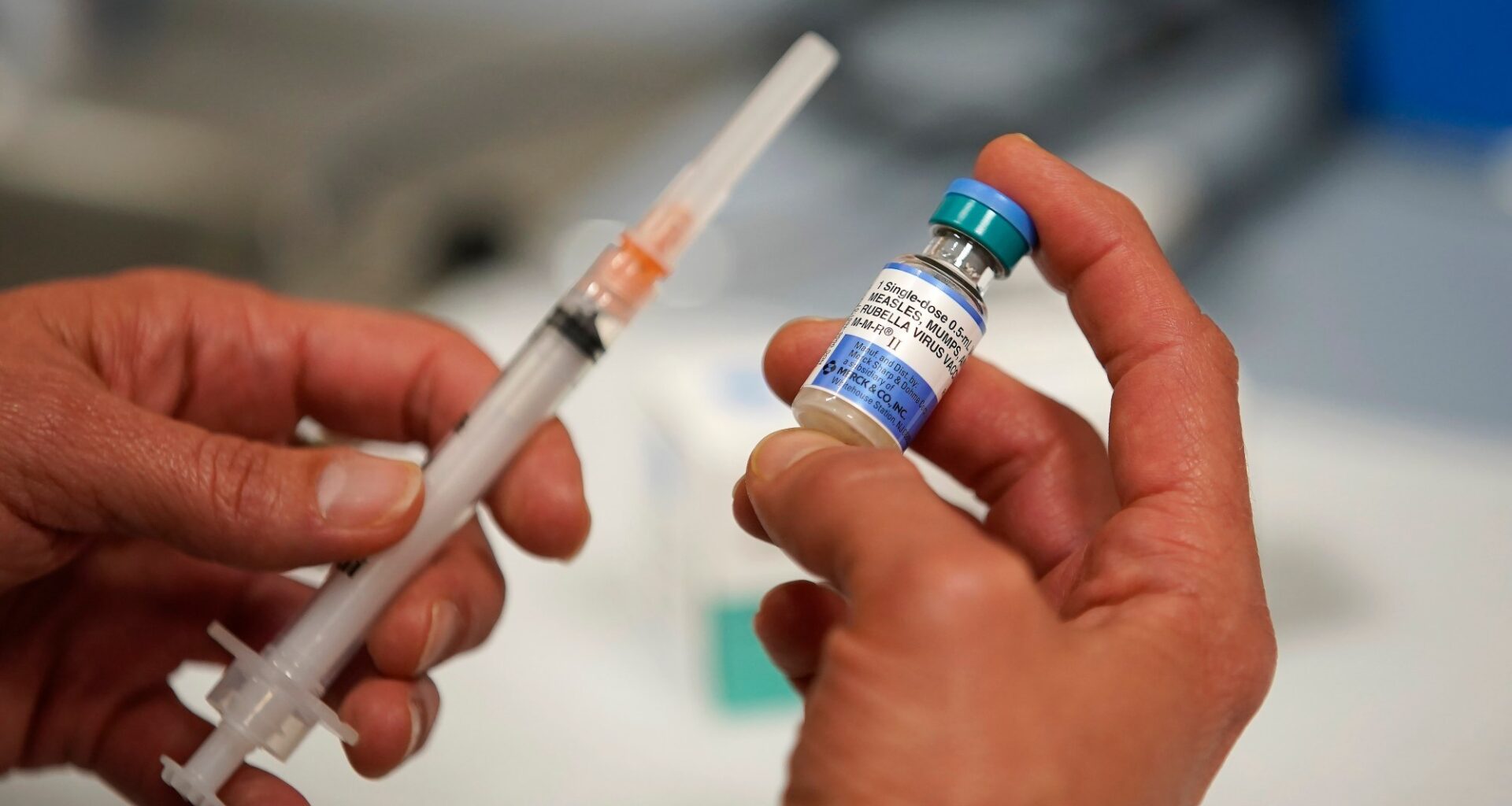
As the number of measles cases continues to increase in Pennsylvania, the Berks County Medical Society is urging adults and parents to consult with their physicians regarding the safety record of the vaccine and the risk of the disease.
Measles is a highly contagious disease and can cause serious complications such as pneumonia, encephalitis, permanent disability, and death when it affects body organs or the brain, Dr. Ankit Shah, society president, said in a statement.
Measles was declared eliminated from the U.S. in 2000 because widespread vaccination and sanitation had dramatically reduced its spread, but it is returning,” Shah said.
As of Friday, there were 676 total cases in the state, according to the state Department of Health.
Berks County had four reported cases, while Lancaster County was tops in the state with 295 cases, the department reported.
Chester and Montgomery counties reported 65 and three cases, respectively.
“We understand that parents have questions about vaccines,” Shah said. “Asking questions is an important part of making informed decisions for our families. The evidence, however, is clear: MMR vaccination is highly effective and has a well-established, strong safety record.”
He said that two doses provide about 97% long-standing protection against measles, with lifelong protection for most people.
He noted that the vaccination can result in side effects, most commonly soreness, fever, or a mild rash; serious reactions are rare.
“Decades of research involving millions of people have found no evidence that MMR vaccination causes autism,” he said.
A pressing question, Shah said, is the risk of vaccination compared with the risk of measles.
“While serious vaccine reactions are rare, measles can cause pneumonia, severe dehydration, brain inflammation, permanent disability, and death,” he said. “All persons who cannot safely be vaccinated are particularly vulnerable.
“Vaccination also protects our community. Because measles spreads so easily, vaccination rates of at least 95% are needed to help prevent continued transmission.”
He pointed out that recent data from Berks County elementary schools show reported vaccination rates ranging from about 89% to 94.9% at some schools, with some rates unreported.
“These rates represent a significant decline from rates of five years ago,” Shah said.
He said the medical society in encouraging parents and adults to:
• Check vaccination records and confirm two documented MMR doses when recommended. A list of vaccines recommended by multiple professional organizations from birth to age 18 can be found at: www.aap.org (Immunization Schedule).
• If records are uncertain, talk with a health care professional. An additional MMR dose is generally safe when the status of immunizations is uncertain.
• Keep children up to date with MMR and other recommended childhood vaccines.
• If measles exposure is suspected, call ahead before visiting a health care facility so precautions can be taken to protect others at the facility.
• Schools should continue monitoring the vaccine status of their students
“We recognize that some families have sincere questions and concerns about vaccination and may be uncertain about what information to trust,” Shah said. “We encourage them to discuss those concerns with their physician who can explain both the well-established safety record of the MMR vaccine and the very real risks of measles.”