
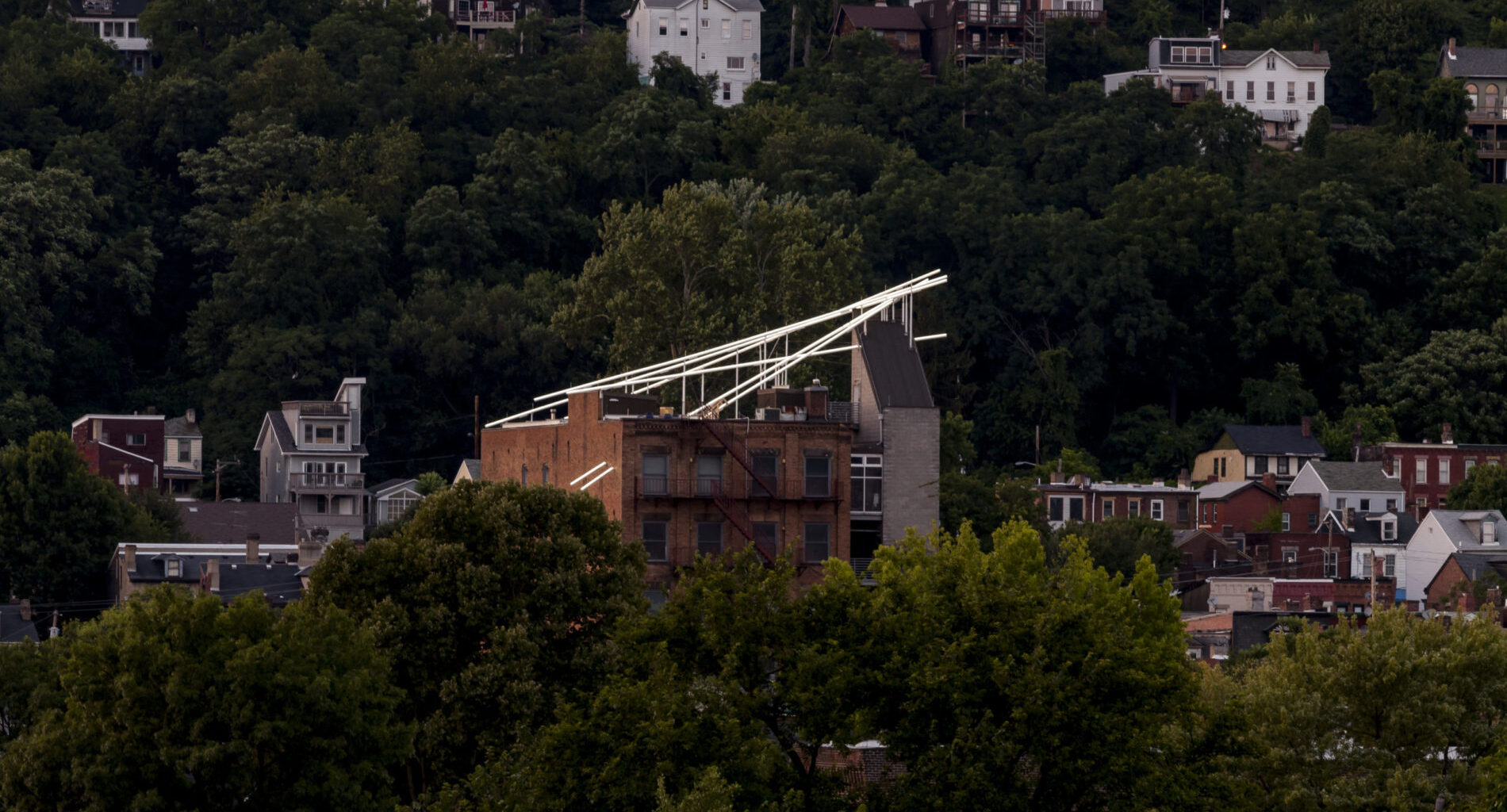
“Oh, you’re who bought the old mattress factory.”
Barbara Luderowski watched recognition spread across her new neighbor’s face. The former Stearns and Foster warehouse on Pittsburgh’s North Side seemed to already be a prominent character in the neighborhood.
The space she envisioned had its name.
Over the next 50 years, Mattress Factory evolved from an artist cooperative into a leading museum and artist residency for site-specific contemporary installation art.
Recognition grew, but the museum’s core mission remained: give artists the time, trust and resources to create.
Encouraged to experiment
Mattress Factory artist alum Shikeith exhibited at the museum in 2020 and says it was a “rare opportunity.” An interdisciplinary artist focused on the psychological landscape of Black manhood, his work has been exhibited nationally and internationally, at Locust Projects (Miami), Performa Biennial (New York) and more.
“[‘Feeling the Spirit in the Dark’] was one of my first opportunities to publicly explore questions I’d been lingering on since graduating: questions about blue space and its deep connection to Black identity,” Shikeith said. “I don’t know if I’ll ever get the opportunity to build meaning around an entire room of water again, but it affirmed a direction I would follow and transmute into other spaces for years to come. Almost anything you can imagine, Mattress Factory will find a way to make happen.”
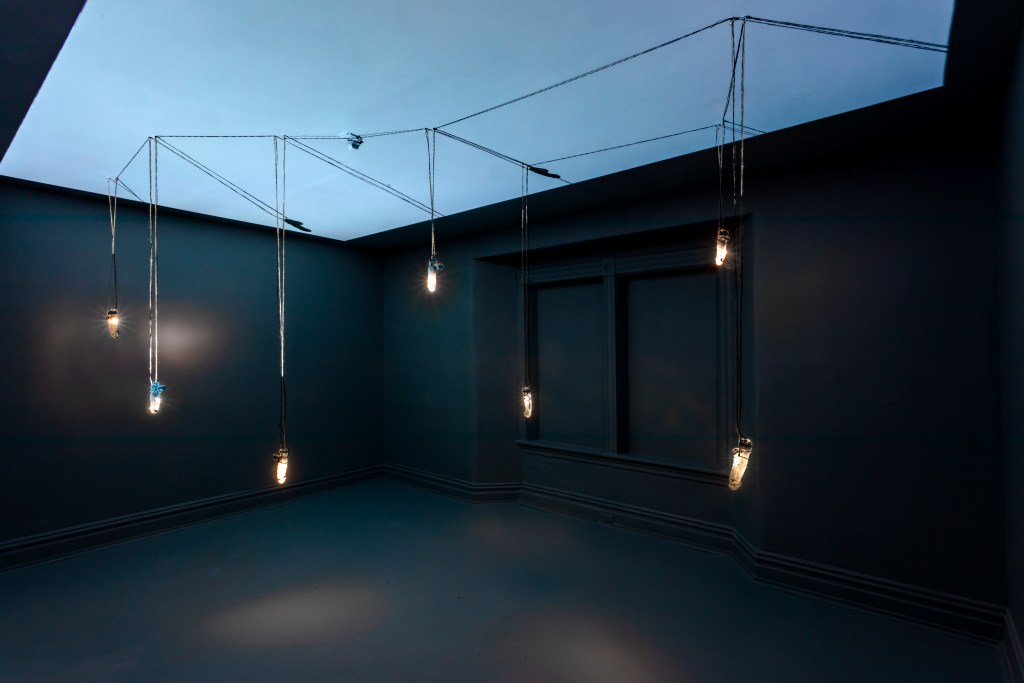 Shikeith, “Feeling the Spirit in the Dark” (2020) | In Black interior space, haint blue is used to ward off ghosts and evil spirits. Here the blue light dominates this space to create a protective boundary, offering entry into a second space that offers a religious rite of passage and purification (baptism) as well as the horrors and racial terror inflicted upon enslaved Africans during the forced voyage across the Atlantic (Middle Passage). (Photo by Tom Little).
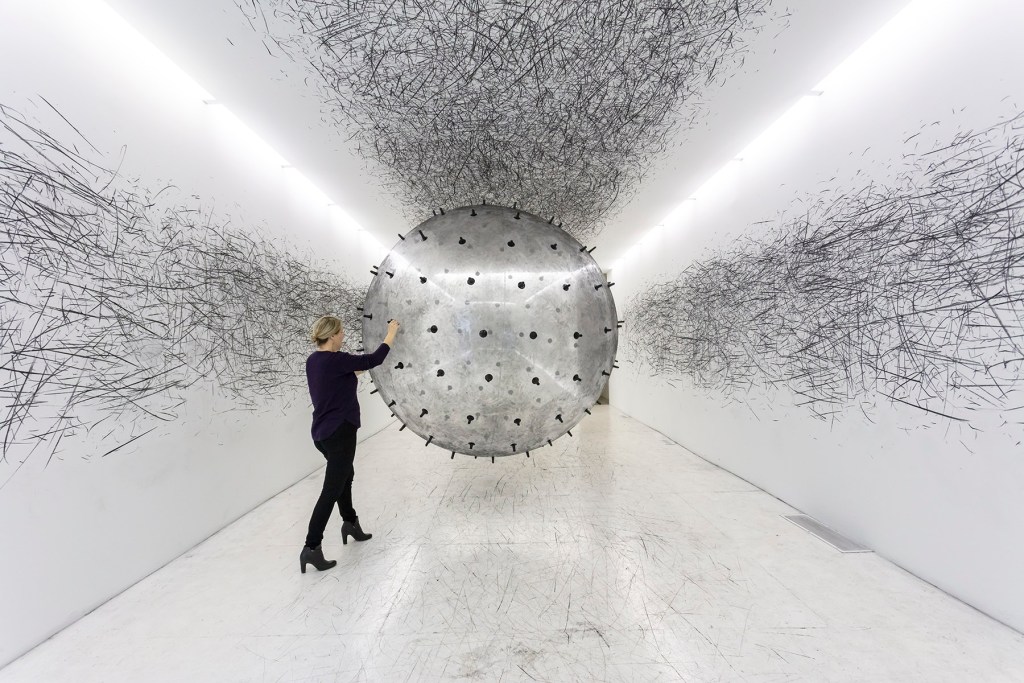 Karina Smigla-Bobinski, “ADA” (2018) | Filled up with helium, and floating freely in the gallery, ADA is a transparent, membrane-like globe spiked with charcoals that leave marks on the walls, ceilings and floors. The globe is put into action by visitors, fabricated in open space, a composition of lines and points that remain incalculable in their intensity and expression. (Photo by Tom Little).
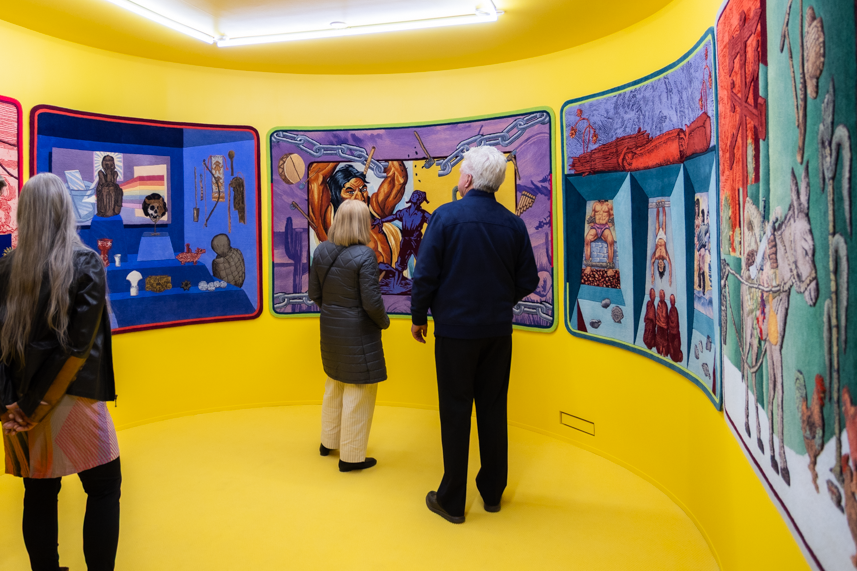 Claudia Martínez Garay and Arturo Kameya, “La ceniza ya no recuerda qué causó el incendio.” / “The ash no longer remembers what caused the fire.” (2026) | In partnership with the Carnegie Museum of Art as part of the 59th Carnegie International. Visitors pass through nine interconnected rooms across three floors, where new and commissioned works converge around the mythologized figure of Túpac Amaru II amid apocalyptic landscapes. (Photo by Quinn Kirby for Mattress Factory).
 Chiharu Shiota, “Trace of Memory” (2013) | Shiota explores the relationship between waking life and memories through installations that incorporate everyday objects like shoes, pianos and hospital beds encased in webs of yarn, reflecting the artist’s desire to “draw in the air.” (Photo by Tom Little).
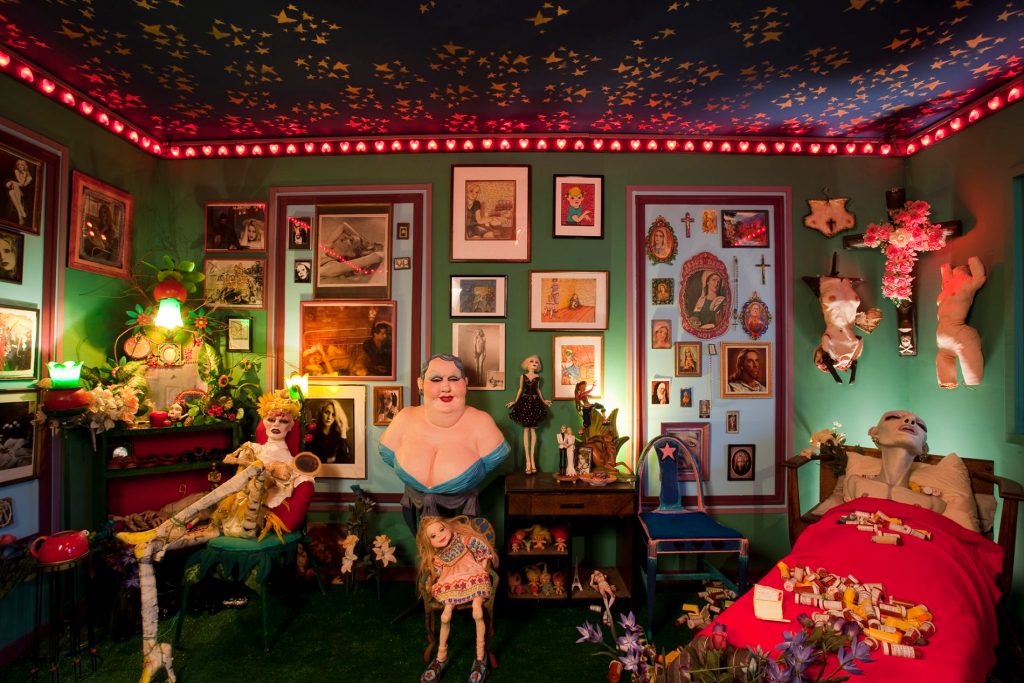 Greer Lankton, “It’s All About ME, Not You” (1996) | Greer Lankton recreated the Chicago apartment where she lived and worked. The walls are covered with the artist’s drawings and sculptures, including personal shrines to Patti Smith, Candy Darling, Jesus and the artist herself. Stars cover the ceiling. The room is further populated by dolls and figures Lankton made, as well as personal artifacts. (Photo by Tom Little).
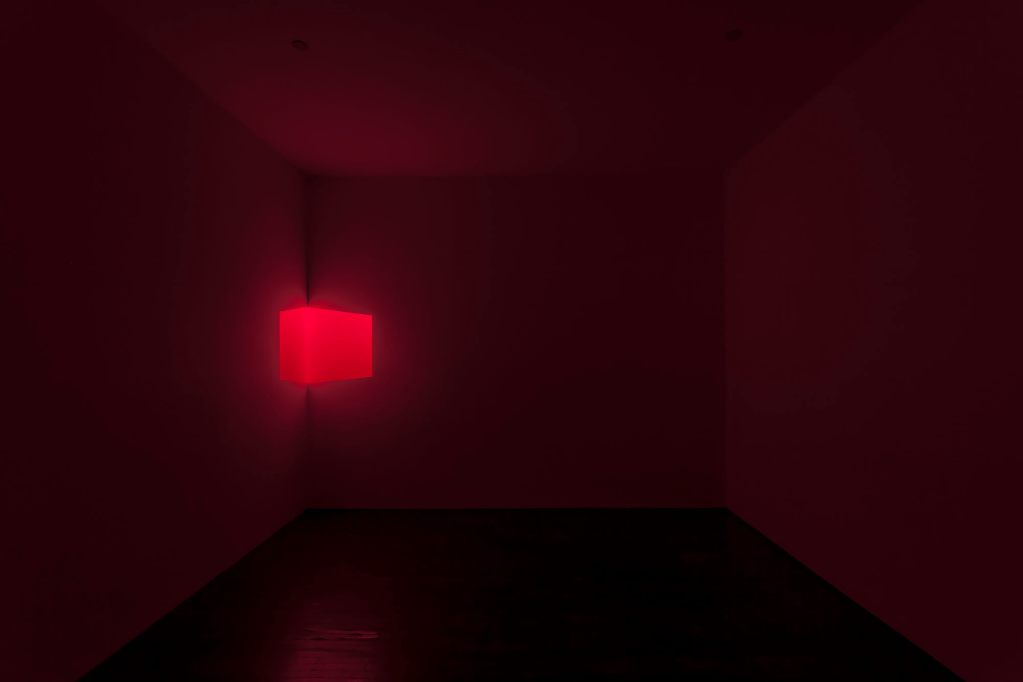 James Turrell, “Catso, Red” (1994) | Light is a material with a three-dimensional quality in this cross-corner projection rooted in the first series of light works Turrell made as a student. Light is carefully controlled within architectural detailing so that the projections take on an almost solid form. (Photo courtesy of Mattress Factory).
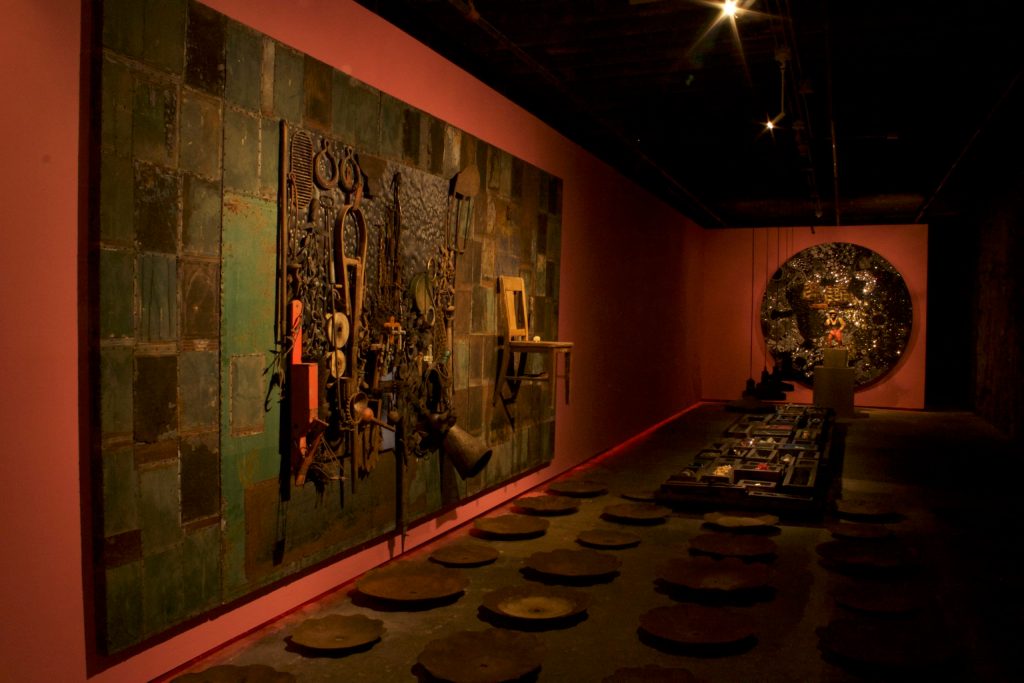 Nick Cave, “A Quarter Til Ten” (2006) | Cave is best known for his Soundsuits, life-sized figurative sculptures referencing issues of race and identity. Assigned to the museum’s dark, somber lower-level space, Cave turned it into something laboratory-like: the space contained “specimens,” collaged on the wall or arranged in grids on the floor. Rusty implements, an old chair, tools and bottles all reference time past. (Photo by Tom Little).
 Osgemeos, “Lyrical” (2018) | Osgemeos, “The Twins,” in Portuguese, are known for paintings that feature long-limbed, yellow-skinned figures with thin outlines, enlarged faces and simplified features. The yellow skin color indicates a universal figure, rather than a direct reference to a specific race or culture, to reflect the highly diverse populations of Brazil and extending into the world. (Photo by Tom Little).
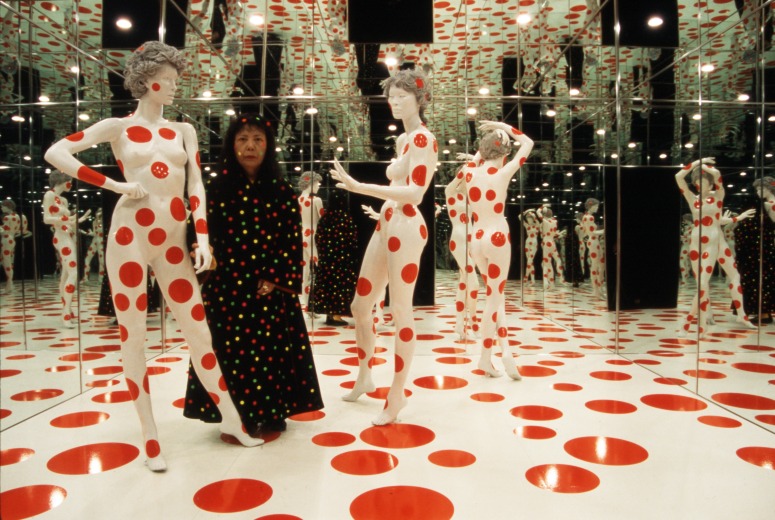 Yayoi Kusama, “Repetitive Vision” (1996) | Through two sets of double doors, walk first into a black corridor and then into an intensely lit space whose floor is covered in hot red dots. Three female mannequins painted white, their bodies and hair covered with the dots, are reflected in the mirrored walls and ceilings. (Photo courtesy of Mattress Factory).
Danny Bracken has experienced Mattress Factory from multiple perspectives over the past two decades. He has worked as a museum educator, a technician in the exhibitions department, took some time to exhibit his work independently, and returned as curator and director of exhibitions in 2020.
The role of the institution, he says, is to help make ambitious ideas possible.
“We try and lean into the process, allowing artists to start working without really knowing where they might end up. Mattress Factory doesn’t ask artists to submit finished proposals,” Bracken said.
“Instead, artists are invited to participate in the residency program based on their existing body of work. They then visit the museum’s historic buildings, spend time in the spaces and develop new, site-specific works in response.”
It’s intensive work.
“What visitors don’t see are the moments where it all begins to click, the troubleshooting, testing, research, spontaneous trips to find the perfect material, hours of leveling wonky floors, and the care and dedication from both artist and team to ensure the artist’s vision is executed how they imagine,” said former Mattress Factory Exhibitions Manager Natalie Miczikus.
A legacy looking forward
As Mattress Factory approaches its 50th anniversary, the museum has become a place where curiosity about the arts becomes a lifetime of exploration. Long-term exhibitions such as those by James Turrell, Yayoi Kusama and Greer Lankton are regularly cited by visitors as a catalyst for their own pursuits in the arts.
So, what’s next?
Forge on, says Mattress Factory Executive Director David Oresick.
“It’s a sort of small miracle we’ve lasted 50 years,” Oresick said. “We’re not looking for safe, vetted, tested works. We tell artists: we are interested in your growth, your beauty, your truth, your uncertainty, your discomfort. That’s not a set of values normally associated with institutional longevity.
Mattress Factory embraces the risk, and it has worked.
“Through pullback in government support, massive shifts in how people spend their time and attention, and through decades of the uncertainty that comes with being a small museum, we’ve survived.”
North Side neighbor Imin Yeh, an artist confirmed for the 2027 artistic program, represents the cohort ushering in the museum’s next chapter. Having originally visited Pittsburgh in 2016 for a job interview, Yeh says the minute she stepped into the Mexican War Streets, she fell in love.
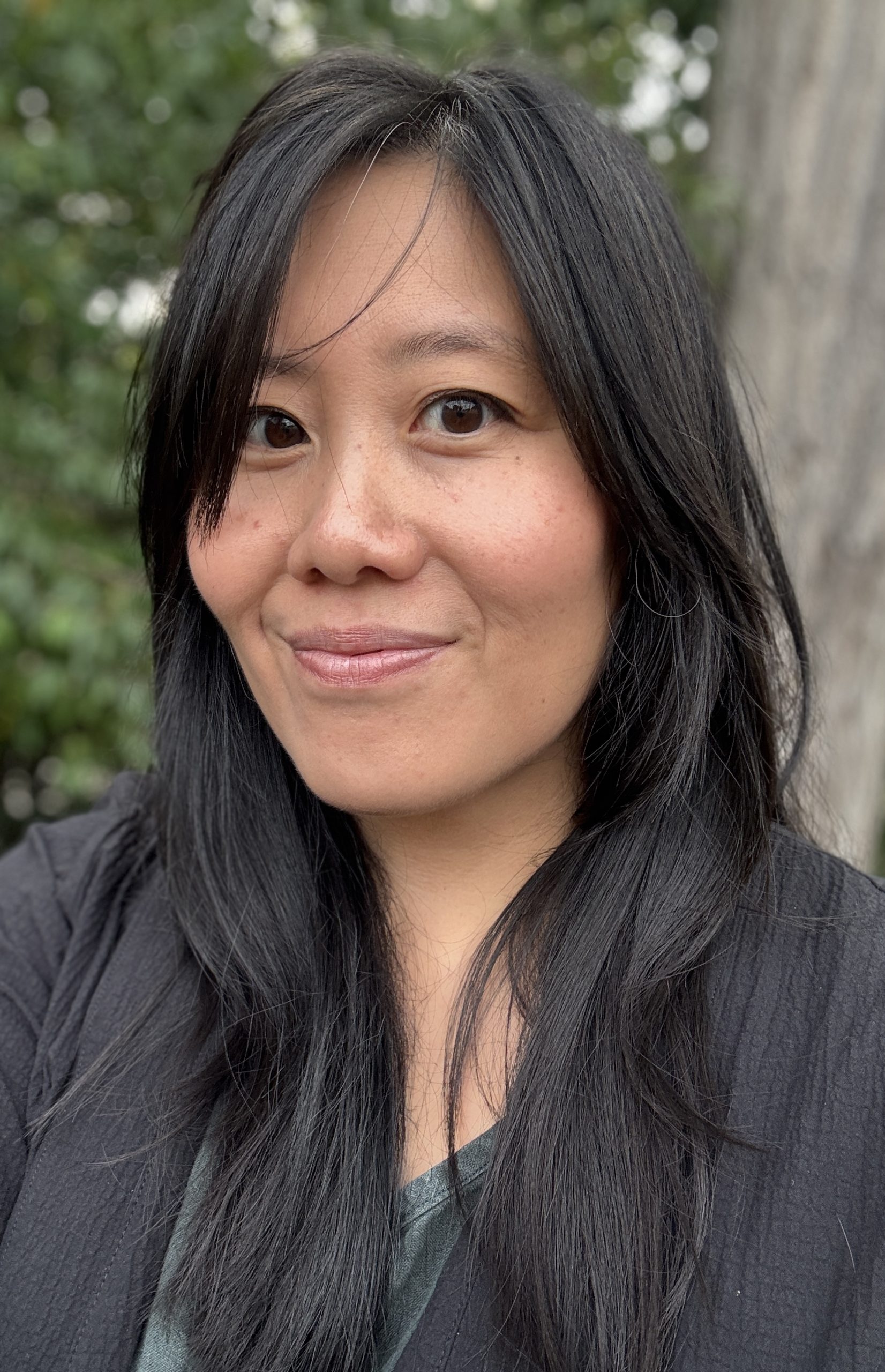 Imin Yeh. (Courtesy of the artist).
“I’m still unsure of what was better, the installation art at the museum or the fact the museum was embedded in the neighborhood,” Yeh said. “With a lot of pride, I say, ‘We live around the corner from Mattress Factory.’ It’s an honor to be a temporary steward of a home in this historic district and it will be an honor to deepen the dialogue between the museum, the people and the homes that share it.”
To stay up to date on Mattress Factory news or to visit the museum, visit mattress.org.
This <a target=”_blank” href=”https://www.publicsource.org/risk-trust-and-the-joy-of-discovery-mattress-factory-approaches-50-years-pittsburgh-art-northside/”>article</a> first appeared on <a target=”_blank” href=”https://www.publicsource.org”>Pittsburgh’s Public Source</a> and is republished here under a <a target=”_blank” href=”https://creativecommons.org/licenses/by-nd/4.0/”>Creative Commons Attribution-NoDerivatives 4.0 International License</a>.<img src=”https://i0.wp.com/www.publicsource.org/wp-content/uploads/2025/07/cropped-ps_circle_favicon_blue.png?resize=150%2C150&ssl=1″ style=”width:1em;height:1em;margin-left:10px;”>
<img id=”republication-tracker-tool-source” src=”https://www.publicsource.org/?republication-pixel=true&post=1337270&ga4=G-CCLXQK5C14″ style=”width:1px;height:1px;”><script> PARSELY = { autotrack: false, onload: function() { PARSELY.beacon.trackPageView({ url: “https://www.publicsource.org/risk-trust-and-the-joy-of-discovery-mattress-factory-approaches-50-years-pittsburgh-art-northside/”, urlref: window.location.href }); } } </script> <script id=”parsely-cfg” src=”//cdn.parsely.com/keys/publicsource.org/p.js”></script>