
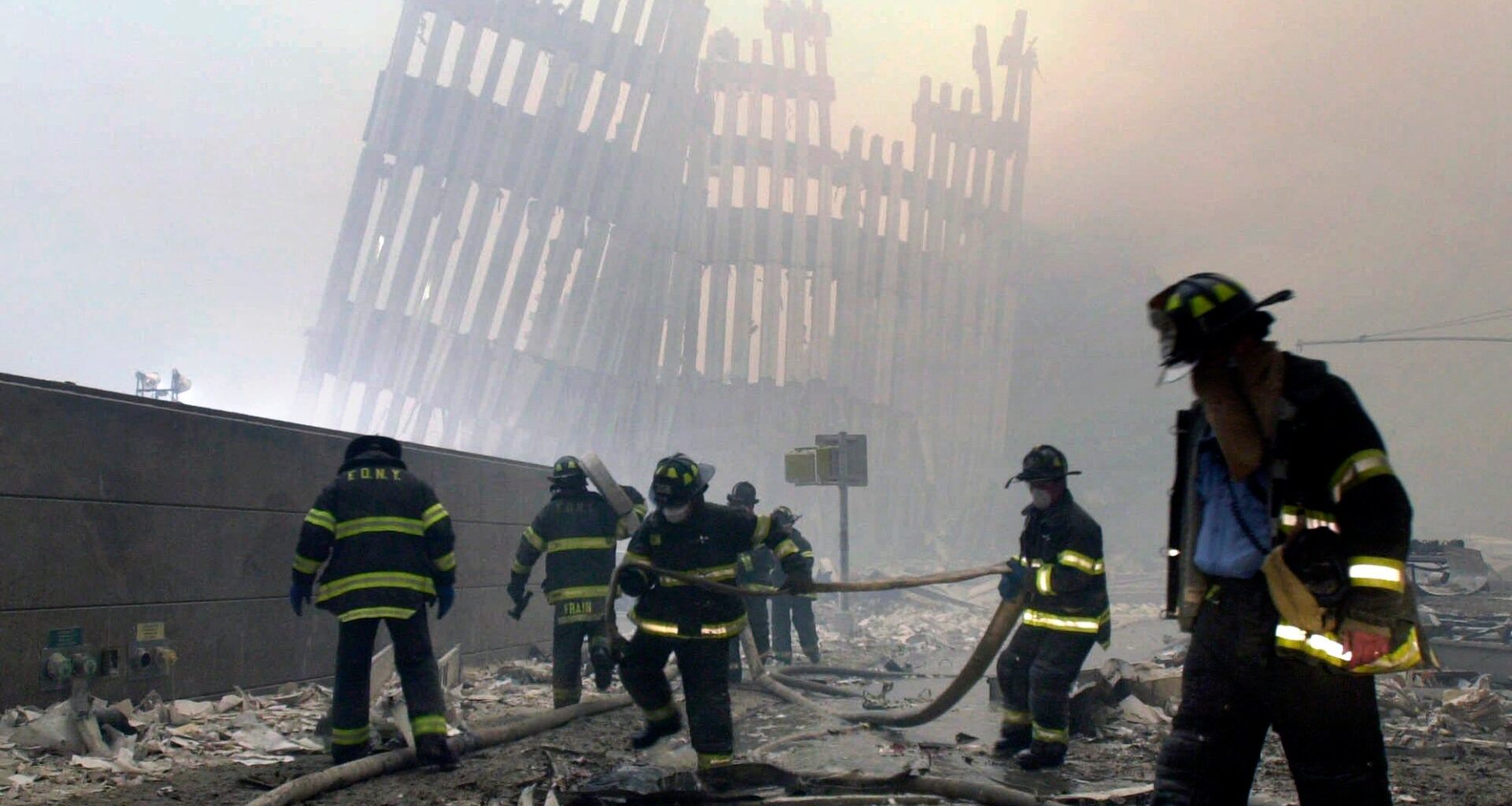
For those who lived through it, Sept. 11, 2001, is likely a day that remains etched in their mind.
They can recall the terror, the confusion and the anger that the terrorist attacks on the United States elicited. The site of the smoking, crumbling Twin Towers produced images they’ll never forget, and the story of the heroics of the passengers on Flight 93 is one they’ll always remember.
And they’re keenly aware of the aftermath, the feeling of the country coming together and the changes that resulted from that devastating day.
But not everyone has those memories. The attacks took place 25 years ago, which means many people alive today didn’t experience them. That includes all of the students — and some of the younger teachers — in Berks County schools. For them the event is a historical one, not a personal one.
What they know about Sept. 11 has been learned, not lived.
With that in mind, the Reading Eagle reached out to a handful of local educators to ask how they teach about one of the country’s most defining moments.
Gov. Mifflin High School
The Gov. Mifflin School District reworked its social studies curriculum about 15 years ago, and Michael Kurtz had a hand in it.
The high school social studies teacher and department chairperson said the district breaks up teaching U.S. history over three years: seventh, eighth and ninth grades.
At the high school level, the focus is on modern history, spanning from about 1900 to the present. And that span is taught in reverse, Kurtz said.
“The ending is the beginning,” he said.
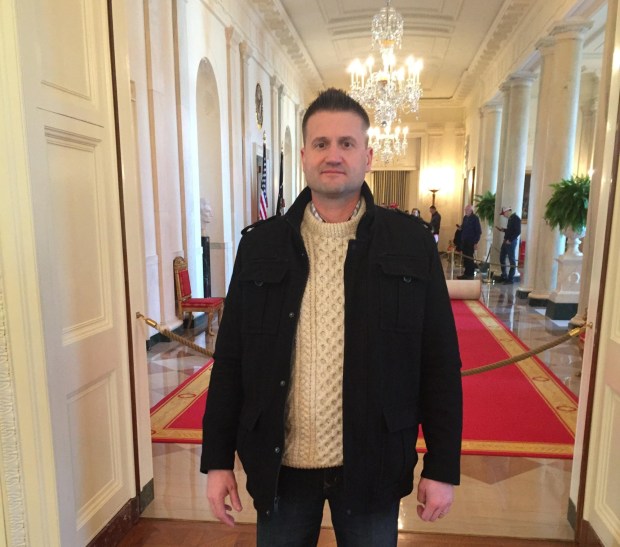 Michael Kurtz, Gov. Mifflin High School social studies teacher and department chairperson, during a visit to the White House with students. (Courtesy of Michael Kurtz)
The first unit ninth-graders learn addresses modern issues, including terrorism.
In particular, the week containing Sept. 11 is spent focused on the terror attacks. Students delve into the history of the Middle East and U.S. involvement there, as well as the foundations of Al-Qaeda and the rise of Osama Bin Laden.
“They get the deep dive I think people really need,” Kurtz said.
When it comes to lessons on the actually Sept. 11 attacks, Kurtz said he likes to lean on first-person experiences. He asks his students to speak with their parents and grandparents and then write a story about how the attacks impacted their family.
“Most of history is older, but with modern history you can tell personal stories,” he said. “You can talk to people who lived it. It’s fresh and it’s relevant, I love it.”
Kurtz said Sept. 11 lessons also have a focus on the long-lasting impact it had and changes it elicited. They also stress the lives lost, and the brave men and women who gave everything trying to help.
“The thing I want them to take away is to remember and honor the sacrifices people had to make,” he said. “I just think remembering is really important because if you don’t remember where you’ve been, how the heck will you know where we’re going?”
Kutztown Middle School
The Sept. 11 attacks aren’t directly in John Noll Jr.’s Kutztown Middle School curriculum.
He teaches U.S. history from exploration to reconstruction, a span that falls well short of 2001. But on the anniversary each year, he puts his normal lessons on pause to reflect the momentous event.
He does so chiefly by examining artifacts.
Students are shown a “60 Minutes” clip about the planning and designing of the Sept. 11 museum in New York.
“It shows what the curators and family members thought was important to pick and show,” Noll said.
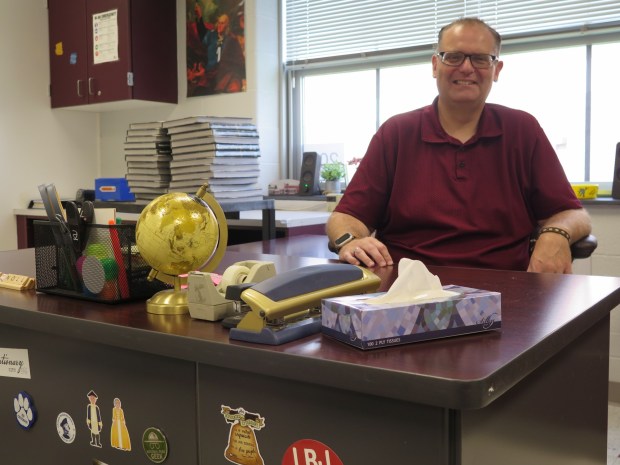 John Noll Jr., history teacher at Kutztown Middle School (DAVID MEKEEL – READING EAGLE)
The segment includes discussions about whether or not to include displays about sensitive topics such as the hijackers. Should they show photos of them and share information about their backgrounds?
“Those are the questions they had to decide on,” Noll said.
The museum ended up including those kinds of display in an alcove with a warning sign about the nature of the exhibits.
“The family members decided it was important or people to know who did this,” Noll said.
Noll said his lesson then transitions into having students choose items they think should be included in a museum dedicated to Sept. 11, utilizing the Smithsonian Institution’s online collection.
“It gets them away from a textbook and really focuses on how to honor people,” he said. “How can objects communicate about people’s experiences on that day? A simple object can tell a story.”
Noll said his Sept. 11 lesson also focuses on how the event changed the world, delving into things like increased security at public events and having to take off your shoes at an airport.
“It takes an event that is historic for them and connects it with what they’re doing today,” he said. “To me, it’s not about rewatching the planes hit the building time and time again. It’s about how did it change the world.”
Noll said he also thinks it’s important to share personal stories with students. He encourages them to talk to members of their family about Sept. 11 and shares his own recollections.
“I try to find stories for everything I teach,” he said. “And these aren’t things I had to research, they’re things I experience.”
Noll said students take the lessons to heart.
“The students definitely take it seriously,” he said. “They understand the significance of the event.”
Green Valley Elementary School
The elementary school curriculum in the Wilson School District doesn’t include much about Sept. 11.
“We’re not always digging deep into in the classroom,” Green Valley Elementary School Principal Dr. Jon Stenger said.
But that doesn’t mean the anniversary goes by without attention.
Each Wilson school recognizes Sept. 11 in its own way. At Green Valley, it’s through a ceremony focused on first responders.
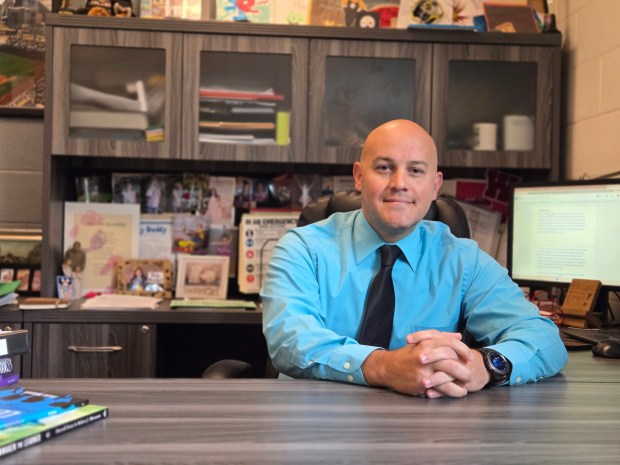 Dr. Jon Stenger, principal of Green Valley Elementary School (DAVID MEKEEL – READING EAGLE)
Each Sept. 11, students gather in front of the school. Boy Scouts and Girl Scouts present the American flag, and there’s a moment of silence and a recitation of the Pledge of Allegiance.
Stenger said he reads a brief message recognizing the tragic incident and remembering all those who lost their lives.
Then, things shift.
Stenger said the ceremony moves on to look at the positive moments that surrounded the horrific tragedy.
“Americans learned a lot about themselves,” he said. “A lot of people stepped up to help, and they’re still stepping up to keep us safe.”
In particular, students rally around local heroes. Emergency responders are invited to the ceremony, giving the school community a chance to thank them.
“We’ve gotten positive feedback on the ceremony, on the way it was focus on the positives,” Stenger said. “With kids ages 5 to 11, I think they can relate to the positive message a little better.”
Stenger said he is impressed each year with how students reacts to the ceremony with respect and reverence. And that’s the whole idea.
“I would hope it helps give them an understanding of the significance of the day,” he said. “And that they understand that, while there was something that was negative, that was tragic, that there was a response and that people helped.”
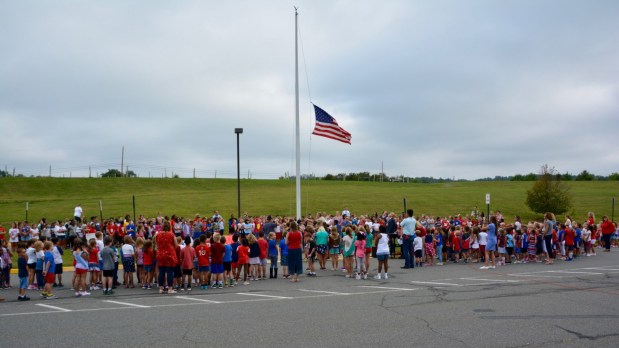 A previous September 11th ceremony held at Green Valley Elementary School. (Courtesy of the Wilson School District)