
Sept. 9, 2026, 5:07 a.m. ET
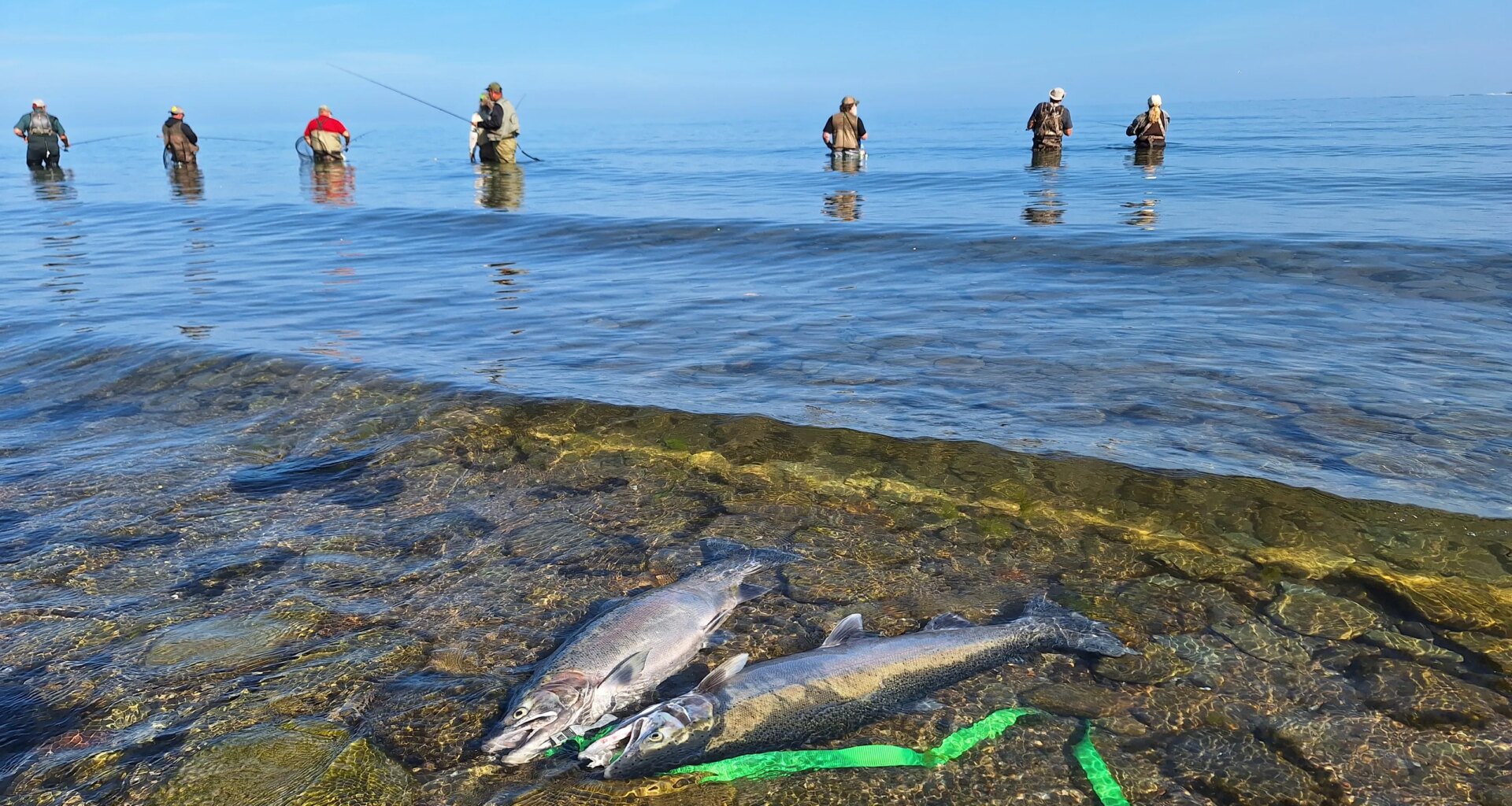
There may not be as many steelhead as a few years ago in Erie, but there are fish starting to come into the tributaries already.
The past two summers and early autumns the Erie area were mostly under drought conditions, and the steelhead had difficulty moving into the shallow creeks as part of their spawning ritual. However, this year, the rain has been plentiful and stream levels have been higher than normal.
“I’d like to think that we’ll have a better early fall run this year than we’ve had the last two years,” said Chris Larson, president of the Pennsylvania Steelhead Association (PSA) for the past four years.
“If the rain continues, and particularly if we get some colder weather, we should get a nice run,” he said.
When the water temperatures get in the low 60s or 50s, the fish move more often into the creeks. In early September, the water is still hovering in the low 70s.
Need a news break? Check out the all new PLAY hub with puzzles, games and more!
“That’s still a little bit warm,” Larson said.
More places to fish for steelhead: Pennsylvania anglers to see new minimum trout size limit
But fish are starting to move with the higher water levels.
“I’ve been told there’s fish being caught down at Avonia, at the mouth of Elk Creek, and down towards the marina at Walnut Creek,” he said. “But I don’t believe there are in many huge numbers. A lot of these fish will wander into the mouths of these streams overnight or early in the morning and then a lot of times will go back out into the lake,” he explained.
Even though the water levels are high enough, the area will be dealing with fewer overall numbers of fish. “The other thing that’s going to have an impact on all of this is that fewer fish were stocked two years ago. I think we’ll definitely have fish returning but maybe not in the numbers that we had before,” he said.
Raising steelhead in Pennsylvania
The Pennsylvania Fish and Boat Commission (PFBC) decided to stop raising steelhead in 2023 at the Tionesta State Fish Hatchery along the Allegheny River out of concerns for introducing diseases to the fish in a different watershed. The steelhead are all being raised at the Fairview State Fish Hatchery in Erie, which is undergoing improvements to handle more fish.
The work includes efforts to find more water, a new filtration system, new UV system, new temperature controls and more fish raceways. The efforts are aimed at producing 1 million fish a year at Fairview, the same total that Fairview and Tionesta raised combined a few years ago.
In 2024, the agency stocked about 800,000 yearling steelhead and close to 500,000 this past year.
After spending two summers in the lake, the fish which can grow to be more than two-feet long return to the creeks in the fall.
Sometimes, younger steelhead called jacks and older fish return as well.
“We certainly get 4-year-old fish returning, but I believe the peak number is when they’re at the 3-year range, maybe a little bit younger than 3 and up to a little bit over 3,” Larson said. “The other thing people don’t realize is that Year 5 fish can return, Year 6 fish can return.”
If the area continues to have periodic rains and lower temperatures, the fish will be moving inland.
“The fish will be returning, but maybe not in the numbers that we had before. People will still be catching fish. And I like to think with the amount of rain we’ve had over the last five, six weeks, if this continues, we’ll see a nice early run, which we really didn’t see the last two years,” Larson said.
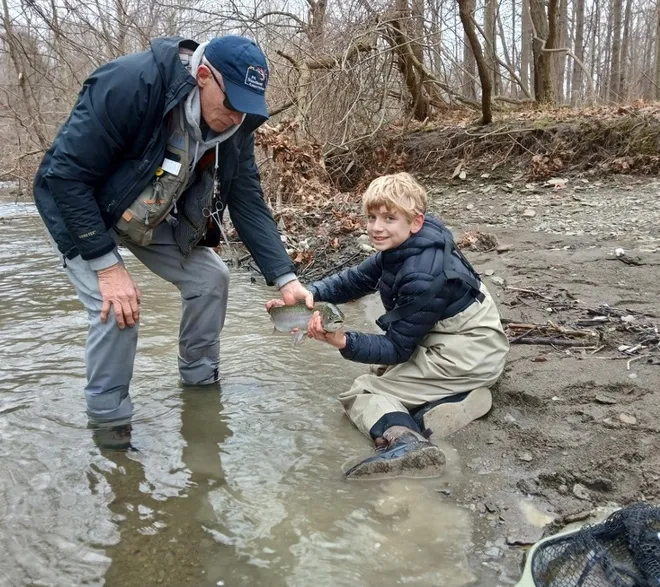
The Fish and Boat Commission in July approved three new easements for anglers this year, including the following:
Asbury Woods Partnership, Inc., has sold a 730-foot easement on both sides of Walnut Creek in Fairview Township for $14,000. The easement is for public access and aquatic resource management.
Judith M. Schroeck sold a 312-foot easement along Walnut Creek in Fairview Township for $5,750. This easement would provide public access and aquatic resource management to a section of the creek anglers refer to as the “tubes” area of Dutch Road. The agency reports acquisition of this easement is part of a strategic plan to allow for future movement upstream.
The board approved a 3,600-foot easement along Walnut Creek in Millcreek Township offered by that municipality. The township has also agreed to grant the commission easements for parking and a footpath to the waterway.
The cost for the easement was included in a May 2013 Erie Access Improvement Program grant the PFBC provided the township. That $97,000 grant was made to assist in the development of public fishing access on the township’s Bridger Park property along Walnut Creek.
“It keeps access there for basically in perpetuity,” Larson said about the fishing easements.
Having access to the creeks is an ongoing challenge. As in many places, the land is owned by private individuals who allow public access.
“Respect each other, respect landowners and if you get a chance when you’re on the landowner’s property, thank them,” Larson said.
More: Erie’s creeks have lost deeper pockets of water but projects will help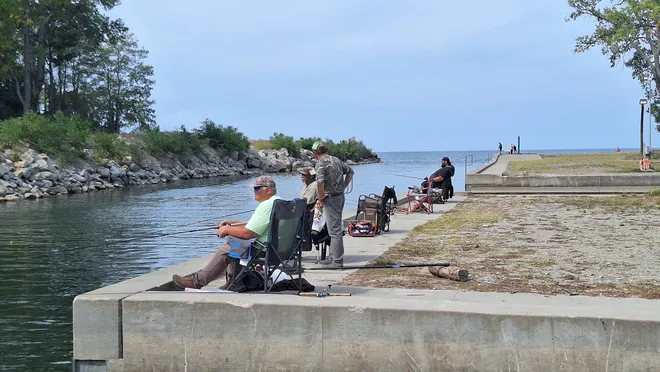
Kirk Rudzinski, and his wife, Lynne, have owned and operated East End Angler tackle shop in Erie for the past 19 years. On Sept. 8, he said he was unable to predict what will be popular with the trout anglers this fall, but there are many tried and true baits and lures.
“It’s kind of early yet. It’s still pretty warm,” he said. There are a few fish in the creeks because of the high water, but there are some creeks without any yet.
“Some guys are casting spoons in the lake. That would be at the crack of dawn until the sun hits the horizon, that’s the best time to get them,” Kirk said about early season. “I think they are coming in and feeding on the minnows that are in close.”
He said spoons, such as a K.O. Wobbler or Little Cleo, that are blue and chrome have proven themselves over the years as effective lures for steelhead.
“The K.O. Wobbler gives you more of a jigging action, but you can also cast and reel it,” he said. “If you’re jigging it up and down in the water column, it gives a little bit of a flash like a dying minnow,” he said.
Other anglers are using live minnows and nightcrawlers below bobbers to get fish strikes. People will soon start using eggs and egg sacks, too.
More: Catching steelhead in Erie doesn’t have to be complicated or expensive. Guide explains how
Rudzinski also has ugbugs made locally by Joseph Griesbaum. They are jigheads with long dubbing material that works well as a streamer floating below a bobber.
“If the water is clear, the one he calls cotton candy would be good,” Rudzinksi said. “That seems to be a really good early-season color.”
Right now, he’s waiting for cooler water temperatures to see how many fish make it off the lake and into the creeks.
“It’s kind of hard to tell this early on what we’re going to end up with,” he said. “I’ve only seen maybe a dozen guys that have actually tried to steelhead fish and you know in a couple of weeks there will be a couple thousand.”
Report your success/lack of success
The steelhead association has an online survey it wants all anglers to use after their fishing trips. It’s available on the association’s website, pasteelhead.wildapricot.org, and there are signs with QR codes posted along popular fishing areas.
Anglers can mark how many hours they fished and what they caught, including if they didn’t have any luck that day. The survey includes steelhead, brown trout and pink salmon.
Larson said the pink salmon haven’t been stocked in the Great Lakes since the mid 1950s, but there’s a natural reproducing population that continues to provide some fish each year.
The survey has been streamlined to basic information needed for research purposes.
“Hopefully, more people will respond because it’s easier and quicker to fill out now,” Larson said.
“Even if you didn’t catch a fish, it’s just as important for you fill that survey out.”
The association shares the results of the data, but not the anglers’ personal email, with the PFBC to help them manage the fishery.
The email address anglers provide are converted to a number to allow the researchers to see how many times that anonymous person filled out a survey.
Catch or release your steelhead?
With fewer numbers of fish temporarily being stocked, Larson said he would like to see more anglers think about catch and release fishing.
Anglers are permitted to keep three steelhead a day in the fall and winter months,
“I’m not going to tell people that they have to do catch and release, but I like it personally. I like to see other people do it. What I would like to see is a reduction in the daily creel limit for steelhead,” he said. They sent a request to the PFBC to temporarily lower the creel limit while the hatchery improvements are underway, but the change has not been approved.
“I still think we all feel the same way that it would help out in keeping numbers of fish in the streams that could be caught,” Larson said about the association’s request.
But he understands that some anglers like to keep some fish.
“There are a lot of people who enjoy taking a steelhead or two home and smoking them and eating them and whatever. I don’t have a problem with that, but I wouldn’t mind having a reduced creel limit,” he said. “Even if we went from three to two, it would be fine.”
What doesn’t get fully understood is actually how many fish leave the creeks with anglers, including those involved in poaching and snagging.
“I think there are more fish being taken off the stream than people realize,” Larson said.
With the agency now stocking half of the number of fish it did in past years, Larson said keeping the same creel limit will have a bigger impact now on the number of fish staying available to other anglers. “You have half the number of fish in there, but you’re allowing people to keep the same of amount of fish daily,” he said.
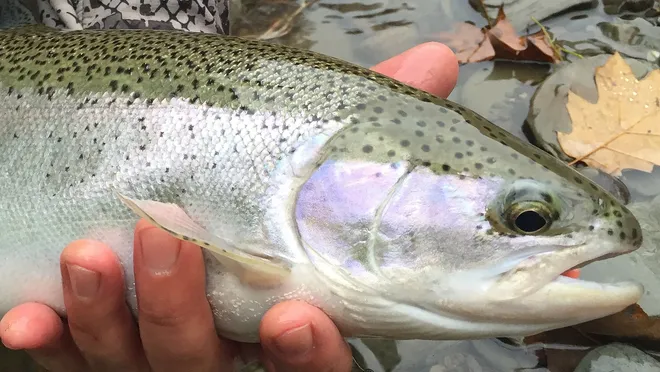
If someone wants to catch and release steelhead, Larson said water temperature plays an important role in a fish’s ability to survive.
“I would avoid particularly fishing the streams now because it’s so warm. If you catch a fish and play it for a while, you’re going to most likely kill it,” he said.
Those who like to release their fish this time of year use heavier tippet (line weight) to get their fish to the net faster.
“You can get the fish in without a lot of delay and then handle it as little as you can outside of the water,” Larson said. “If you’re going to take a picture, wet your hands and don’t have that fish pose for a long period of time and then get it back in the water.
As the temperatures cool down, he said it’s OK to use lighter line that’s not detected by the fish as easily.
“I realize that when you use heavier tippets, you’re going to probably not have as many hookups, but I would bet that you’ll land a higher percentage of your fish that way,” Larson said.
Brian Whipkey is the outdoors columnist for USA TODAY Network sites in Pennsylvania. Contact him at bwhipkey@usatodayco.com and sign up for our weekly Go Outdoors PA newsletter email on this website’s homepage under your login name. Follow him on Facebook @whipkeyoutdoors