
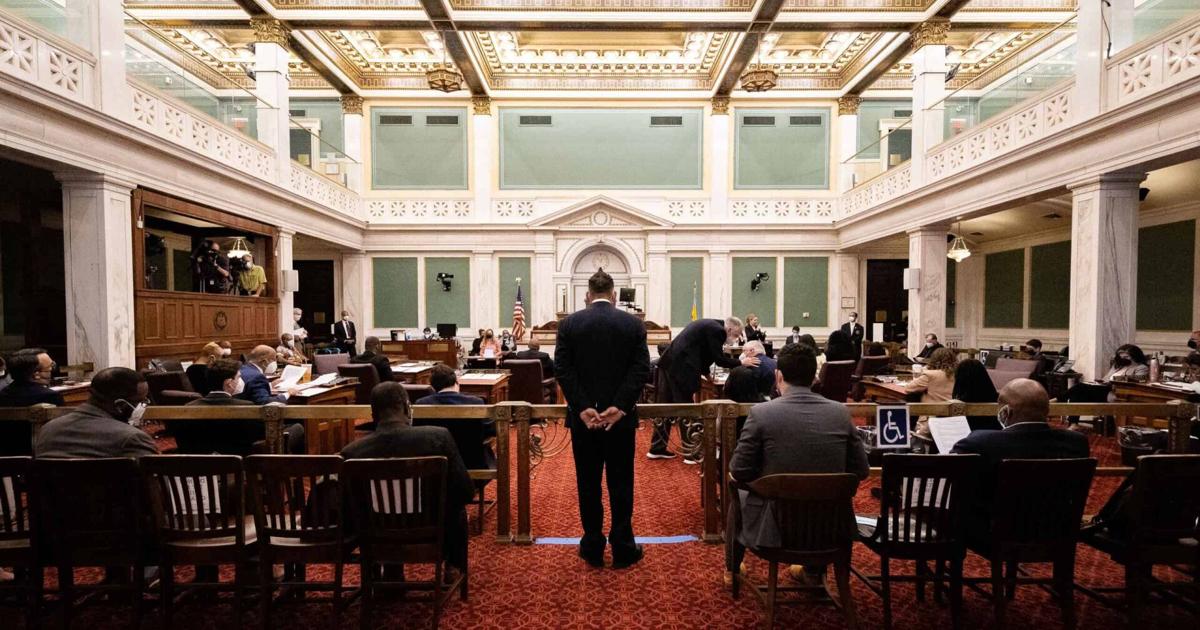
Philadelphia City Council will return from its summer break Thursday to a potential battle with Mayor Cherelle Parker over what happens to the city’s trash, an issue that could force Council members to take a public position on her administration’s plans for the city’s waste.
As the city moves toward next year’s Nov. 2, 2027 election in which Parker and every member of Council seek another term, Thursday marks the start of a record they will eventually have to defend including what Philadelphia does with hundreds of thousands of tons of garbage, and which communities bear the consequences.
One of the first votes to open this year’s session could center on Councilmember Jamie Gauthier’s Bill 250768, also known as the “Stop Trashing Our Air Act,” which would prohibit companies that provide solid waste, recycling or composting services to Philadelphia from incinerating the city’s discarded material under specified conditions. It is scheduled for second reading and final passage Thursday.
“Mayor Parker’s team announced in June that they would be awarding a contract to Reworld, which owns the incinerator in Chester,” Harrison Feinman, director of strategy and external affairs for Gauthier, told The Tribune. “It’s a four-year contract with three year-long extensions, so seven years.”
The Stop Trashing Our Air Act aims to put public health, environmental justice, cost and the fate of Philadelphia’s garbage at the center of the dispute.
The councilmember and environmental advocates argue that sending roughly 30% of the city’s trash to be burned at Reworld’s incinerator in Chester, a majority-Black city, exposes residents to unacceptable health and environmental risks and amounts to environmental racism.
The Parker administration, industry representatives and others have raised concerns about the cost and logistics of moving away from incineration, while supporters of burning waste contend that relying more heavily on landfills could increase methane emissions. If Philadelphia stops sending its trash to the Chester incinerator, much of that waste would instead be sent to landfills.
The issue has drawn elected officials, health and climate experts, environmental advocates and residents from Philadelphia and Chester to City Hall. They are expected to rally before Council’s first meeting of the fall session and urge lawmakers to reject any plan that would continue sending Philadelphia waste to be burned.
Gauthier, chair of Council’s Committee on the Environment, is expected to be joined by Chester Mayor Stefan Roots, Council Majority Whip Isaiah Thomas, Councilmember Rue Landau, former Philadelphia Health Commissioner Dr. Walter Tsou, and environmental and community organizations.
Landfills
Dr. Tsou, a former Philadelphia health commissioner, said the consequences of burning Philadelphia’s trash in Chester extend beyond air pollution.
“The description of … the chemical smell, the fine dust that surrounds the area is the health concern that is troubling to residents,” Tsou told The Tribune.
The incinerator also affects property values and residents’ ability to build wealth in one of Pennsylvania’s poorest cities, Tsou said, arguing that those economic conditions compound Chester’s health problems, particularly after the loss of Crozer-Chester Medical Center.
“So, the health impact is beyond the air pollution,” he said. “It impacts the wealth of the residents and, in a market-based approach to health care, the bankruptcy of its hospital.”
Feinman cited a study commissioned by Delaware County that found burning trash is 23 times worse for health and the environment than sending it to a landfill.
“We need to reduce how much waste we produce in general, which is something we’re working on with the City,” Feinman said. “But the safer place for our trash in the meantime is landfills.”
Roots said Chester residents have lived with the consequences of the incinerator for decades and argued that Philadelphia’s waste decisions cannot be separated from conditions in his city.
“For over three decades, the trash incinerator has profited while Chester development, investment, health and wellness has suffered,” said Roots. “Property values in the blighted west end of Chester City never have and never will appreciate as long as Reworld operates there.”
Roots described Chester as a “vulnerable, predominantly Black community” where residents experience negative health outcomes at rates far above statewide averages.
“Some have literally died from health issues stemming from toxic incineration pollution,” he said.
Economic leverage
Philadelphia currently pays $65 per ton for waste disposal. The city announced in July that its existing municipal solid waste and recycling contracts, which expired June 30, had been extended for six months while officials completed the selection and contracting process. The administration said the new contracts would require ordinances for Council approval.
Roots said he wants Philadelphia to use its economic leverage to help reduce Chester’s exposure.
“We are seeking Philadelphia’s help in addressing Chester’s health disparities by putting economic pressure on the trash incinerator,” Roots said. “Ideally, Philadelphia would stop burning its trash in Chester altogether. But as a fellow mayor, I understand and appreciate that change takes time.”
Roots said he had hoped Philadelphia’s proposed contract would at least demonstrate movement away from the existing arrangement.
“At the very least, I hoped and expected to see positive signs of progress in your proposed waste contract, such as a shorter contract term or higher emissions standards,” he said. “Instead, what it appears we’re getting is more of the same — burning Philadelphia’s trash at the expense of the health and well-being of Chester residents, neighbors just a few miles down the road from Philadelphia.”
For Roots, the request from Chester is not that Philadelphia transform its waste system overnight, but that it begin moving away from a practice his city has long lived with.
“Mirroring Delaware County, we would like to see Philadelphia commit to weaning itself off of incineration in Chester,” Roots said.
‘Shocked and dismayed’
Carlton Williams, the city’s managing director, told The Tribune in July that the city is looking into anaerobic digesters to process trash, a potential alternative officials identified while surveying New York.
“Reversing the process from incinerator to landfills does not solve the issue of the overall environmental impact it has on either Chester or Philadelphia or in the surrounding region,” Williams said. “What we’re merely doing is trade-offs — we’re placing one problem over to the next. That’s why we don’t support that bill. We need environmental policy that has us moving beyond the two flawed disposal methods.”
In July, Gauthier told The Tribune she was “shocked and dismayed” that the administration awarded Reworld another contract. During the upcoming session it may not get automatic approval from Council, she said.
“Most of the time, the Council is going to honor the administration’s work when they select a contract partner,” Gauthier said. “It is rare that a contract would get voted down. You might hear Council members ask questions during those types of hearings. They might even want tweaks or certain things reflected in the contract. It’s rare they vote a contract down. I would argue that this is a time that we should.”
Here’s what else to look for:
$581 million in new borrowing
Bill 260508 would authorize up to $581 million in additional non-electoral debt, allowing the city to issue general obligation bonds to finance capital projects and expenditures. The city’s full faith, credit, and taxing power would be pledged to repay the bonds. The measure also authorizes the Bond Committee to sell the bonds through public or privately negotiated sales and provides for appropriations to the Sinking Fund Commission for repayment.
The legislation is scheduled for second reading and final passage.
Land for public recreation
Council is also scheduled to consider legislation authorizing the city to acquire property in an area generally bounded by Vine St., Fairmount Ave., 8th St. and 12th St. for public recreational use.
Bill 250807 authorizes the city to acquire the property through purchase, donation, condemnation, an agreement in lieu of condemnation or other means.
It would also authorize Philadelphia to lease all or part of the property to the Center City District.
Protections for murals
Bill 260381 would add a section to the zoning code requiring certain permit applicants to notify the Department of Licenses and Inspections when specific murals are present on a property.
The legislation, introduced by Gauthier on behalf of Council President Kenyatta Johnson, is also scheduled for second reading and final passage.
Land, veterans and zoning
Gauthier has a resolution authorizing the Philadelphia Land Bank to dispose of 10 properties on Viola St., Leidy Ave., North 42nd St. and North 41st St. in the 3rd Councilmanic District.Councilmember Mark Squilla has a resolution that would also designate South Christopher Columbus Boulevard from Washington Ave. to Race St. as “Veterans’ Memorial Highway.”Councilmember Curtis Jones Jr. has a zoning ordinance on first reading affecting land near Ridge Ave., Spring Lane, Hagy’s Mill Road, Port Royal Ave., River Road and the Montgomery County line.
Stay informed and connected — subscribe to The Philadelphia Tribune NOW! Click Here