
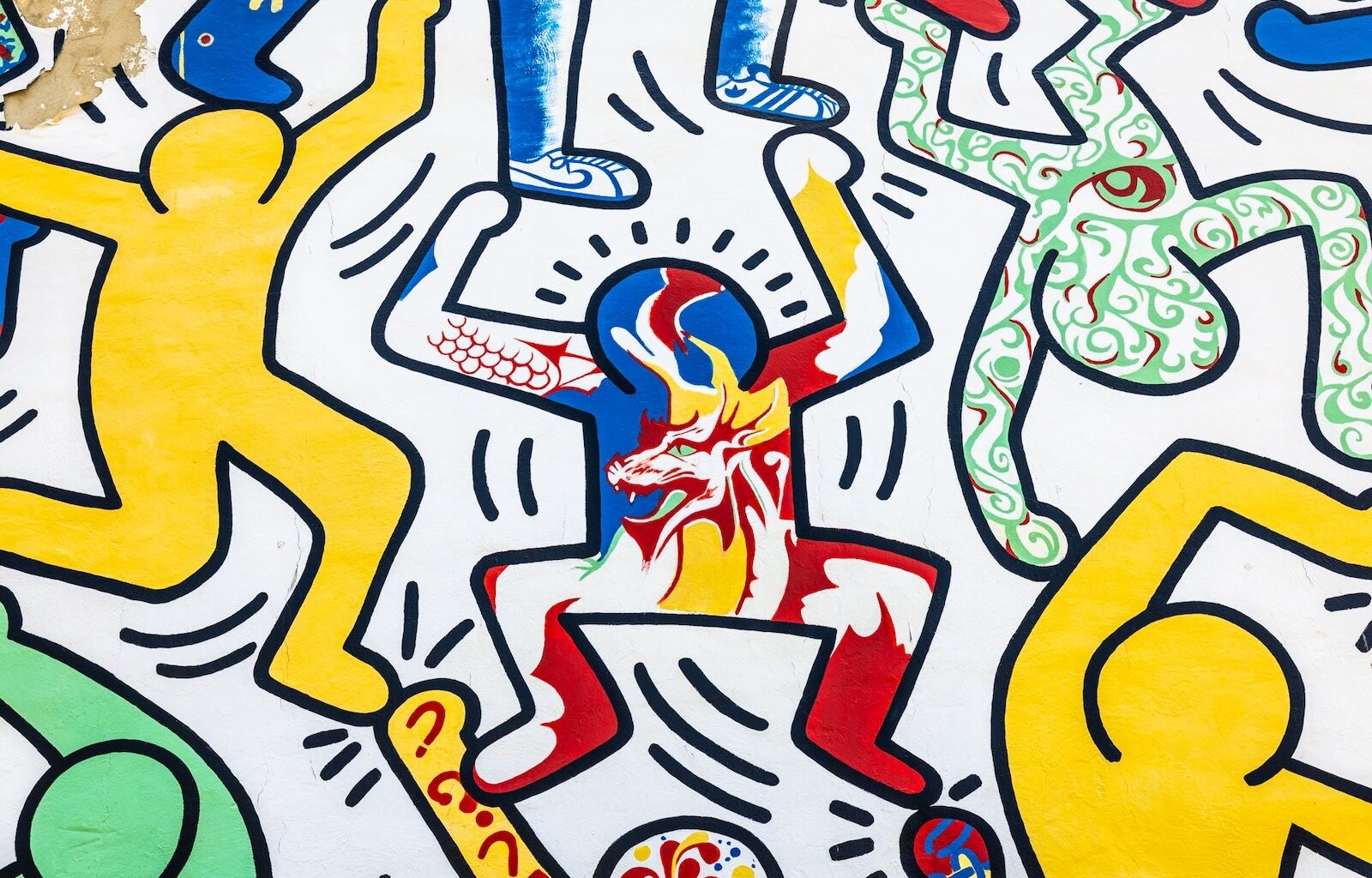
Future of the mural remains uncertain
While the historical commission often approves nominations recommended by the committee, there is no consensus among preservationists on whether murals should be included on the Philadelphia Register of Historic Places.
Less than a handful of murals, including Maxfield Parrish’s “Dream Garden” mosaic at the Curtis Center, are currently part of the register.
Ori Feibush, part owner of the rowhouse containing the mural, added to the uncertainty Wednesday by raising grave concerns about the condition of the mural and the ability to preserve it, which would fall to the Neighborhood Gardens Trust, which owns the garden plot, and the owner of the rowhouse the mural is painted on.
Feibush told the committee that the mural, which was painted directly onto the plaster of the party wall, has partially separated from the underlying brick, putting the artwork in a perilous state. The wall itself also has cracks that are exacerbating the condition of the mural. As a result, preserving the mural would likely require some interior demolition of 2149 Ellsworth so the wall can be stabilized.
“There is no engineering feat or effort here, no matter how much money is thrown at it, to ultimately preserve this mural at this location,” Feibush said, adding that historical designation would “doom this mural forever.”
Committee members and others, however, aren’t convinced the mural can’t be preserved in place the way other outdoor murals have been. What’s more, the physical condition of the building or object being nominated does not prevent the historical commission from designating it.
“The city has the latitude to designate ruins,” said Emily Cooperman, who chairs the committee and sits on the historical commission.
The condition of the wall and the mural painted on it will likely be discussed in more detail during the commission’s meeting in October. Wednesday’s vote was more narrowly focused on whether the mural was worthy of historic designation.
Speaker after speaker strongly agreed that it was, in part, because of Haring’s notoriety as an artist.
Haring rose to prominence through New York City’s downtown art and graffiti scenes of the 1980s, gaining notoriety by creating hundreds of spontaneous chalk drawings in subway stations. Drawn on matte black advertising panels, the ephemeral graffiti became a familiar sight for commuters, many of whom would stop to talk with Haring while he worked.
From there, he started doing larger works, including paintings, sculptures and installations. His art appeared in major international shows and on the cover of Vanity Fair.
He “frequently addressed political and social issues important to him through his work, including anti-apartheid activism, drug use, homosexuality, safe sex, and AIDS awareness,” according to the nomination.
“We the Youth” was created as part of Philadelphia’s bicentennial celebration of the U.S. Constitution. The title is a reference to the first three words of the document’s preamble.
“Nearly 40 years later, the mural remains at its original site, where it should stay,” Golden said. “This continuity is itself historically significant. And the ongoing threat of development and gentrification of the city — it is almost rare to find a mural that has been at the same site.”