
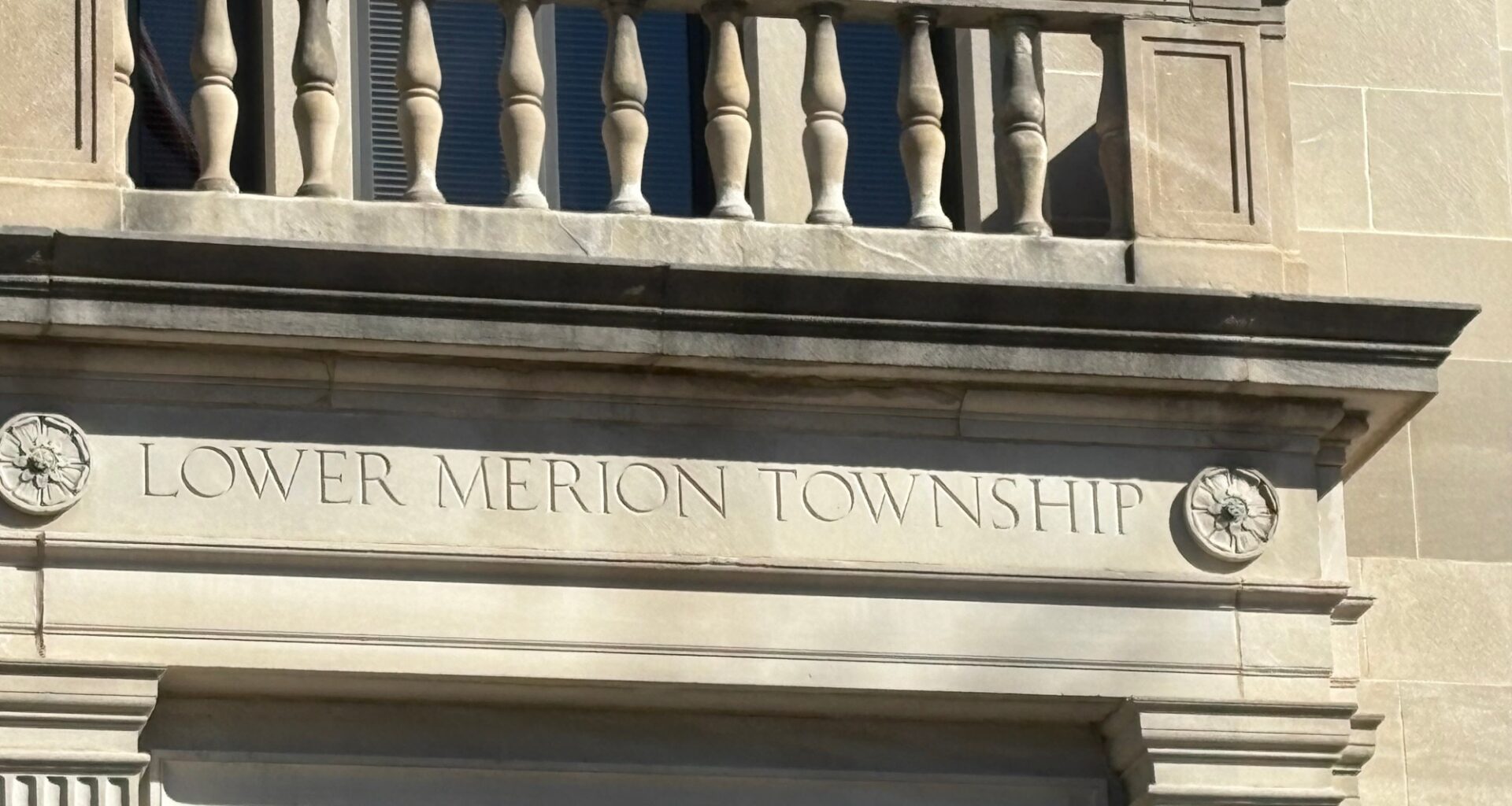
LOWER MERION — As Lower Merion’s budget season is about to get underway, officials say headwinds could cause another tax increase this year.
For over a decade, Lower Merion Township’s real estate tax rate remained frozen at 4.19 mills. The freeze was due in part to rising property values that allowed the municipality to cover basic operating costs without altering the millage rate.
But then the tax rate has ballooned: up 6.5% for 2025 with an 8% increase on top of that for 2026.
With the Lower Merion 2027 budget release about two months away, township officials say they could have a third straight year of increases.
The discussion took place during Lower Merion’s annual budget workshop, when township staff meets with the commissioners in a public session to talk about the upcoming budget.
Ernie McNeely, township manager, said the township’s annual budget workshop is the first step in the process and an opportunity for the commissioners to provide staff with policy guidance to help them prepare a proposed 2027 budget. The budget will be released in early November.
According to McNeely, many budget-related factors are still unknown, so it would be impossible to have a completed budget now.
“I will say that while this is not a complete budget, we can see that there are headwinds to this budget,” McNeely said. “We have certain things that I’ll mention that may be a pressure for a tax rate increase for next year.”
McNeely described some of the headwinds as the $1.2 million Lower Merion spent this year on storms, including snow and a major rainstorm in summer.
On July 11, a series of at least four severe microbursts ripped a 12-mile path from Lower Merion to West and South Philadelphia between 2:44 p.m. and 3:15 p.m., bringing destructive straight-line winds of 60 to 70 mph and causing significant damage.
Over the last couple of years, the township has collected more business privilege tax than expected. But McNeely warned that a couple of years with higher business tax revenue are often followed by one with lower revenue.
On the positive side, McNeely said they believe the current 2026 budget could end the year better than projected when the township adopted it last December.
“We’ll continue refining these numbers until we get to the point where it’s time for us to deliver the budget to you,” McNeely told the commissioners. “By that point, we should have things like health insurance renewals, which is a big number in the township budget, liability insurance renewals, workers’ compensation renewals, property insurance, cyber insurance.”
Another unknown factor is future salaries for its municipal employees.
Currently, Lower Merion is in contract discussions with its two employee unions. Unlike some private employers, which can go a decade or more without increasing employees’ pay, Lower Merion and other municipalities, funded through tax revenues, generally give employees annual pay increases.
“And then the big numbers, which are still outstanding and are not in this budget package yet, are the actual salaries for 2027 because we have two collective bargaining unit contracts that are up at the end of this year, McNeely said. “So we do not know what those salaries will be next year. That is a matter for negotiations that still hopefully will be concluded before the end of the year.”
According to McNeely, if they cannot conclude the negotiations by the end of the year, they will have to plan for that possibility. Lower Merion has both union and nonunion employees, but in practice, and out of a sense of fairness to all employees, it has increased nonunion employees’ pay at the same percentage rate as its unionized employees.
Lower Merion will release its 2027 budget in early November, with a final vote on it in December.