
Pennsylvania remains without sentencing guidelines for second-degree murder two months after a court-mandated deadline for the General Assembly to establish them, leaving prosecutors, defense attorneys and victims’ families facing uncertainty over how cases should be handled.
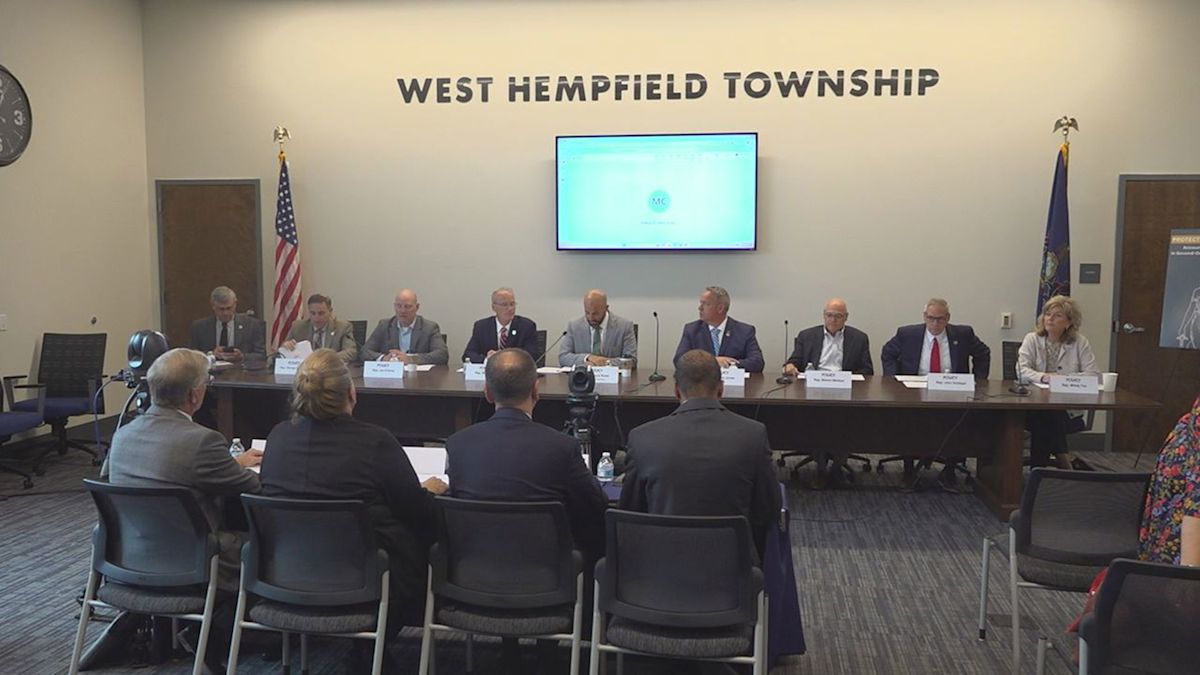
The issue was the focus of a hearing held by the state House Minority Policy Committee in West Hempfield Township, Lancaster County, where lawmakers heard testimony about the uncertainty surrounding felony murder sentencing following the Pennsylvania Supreme Court ruling in Commonwealth v Lee.
That ruling ended the state’s mandatory life sentence for second-degree murder, commonly known as felony murder. The Court gave the General Assembly a 120-day moratorium on the decision to create new guidelines.
The deadline on the moratorium passed on July 24.
Travis Anderson, Lancaster County’s first assistant district attorney, told lawmakers there is currently little clarity for families of murder victims about what sentences can be expected in second-degree murder cases.
“There’s no clarity that we can provide to the families of the victims as far as what the expected outcome is going to be,” Anderson said. “Somebody right now that’s convicted of retail theft, someone that’s convicted of DUI, someone that’s convicted of defiant trespass, there are clear guidelines as far as what the court is supposed to do with that person. But someone convicted of second-degree murder, it’s the Wild West.”
Lawmakers on the panel said the court’s decision in Lee could potentially result in violent offenders being resentenced if the ruling is ultimately applied retroactively.
State Rep. and committee chair David Rowe (R-Union), said the possibility of resentencing is concerning for communities.
“The fact that we have people who have left people to die, that have set people on fire, the fact that they could be eligible for early release under an undefined terminology is really concerning for our communities,” Rowe said.
The General Assembly has considered legislation that would establish new sentencing rules following the court decision.
A Senate Republican-led proposal, Senate Bill 1400, was passed by the Senate in June. It would establish a new sentencing structure for second-degree murder, including a minimum sentence of 35 years in most cases, while allowing for certain mitigating circumstances that could result in a shorter minimum sentence.
The proposal has drawn opposition from the Public Defenders Association of Pennsylvania.
Sara Jacobson, PDAP’s executive director, said the 35-year mandatory minimum could apply to defendants who played a lesser role in a killing, including getaway drivers or people who participated in a crime without intending for someone to be killed.
“We’re talking about people who are inherently less culpable,” Jacobson said. “These are the people who did not intend to kill, did not kill. Painting that at 35 years just doesn’t give courts enough discretion, or prosecutors enough discretion, or defense attorneys enough discretion to argue when the cases don’t warrant that sentence.”
A King’s Bench petition filed with the state Supreme Court last week asked the justices to make the ruling retroactive to roughly 1,100 people currently serving sentences for second-degree murder. If that happens, those inmates could seek resentencing hearings.
Retired Judge David Ashworth said such a process would place a significant burden on Pennsylvania’s courts while also requiring victims’ families to revisit the cases.
“I have no doubt that ultimately, it will be determined to be retroactive,” Ashworth said. “So, it’s going to overburden the courts, penalize the victims, and it’s just not good for anybody.”
Jacobson argued that resentencing hearings are part of the normal judicial process and that courts are equipped to consider the individual circumstances of each case.
“That’s exactly what courts are designed to do: listen to the evidence and hear the facts,” Jacobson said. “Judges know how to make those determinations. Courts do that all the time. They do that every day, and they’re well equipped to do that in this instance.”
The issue comes as lawmakers prepare to return to Harrisburg on Sept. 28. Skill games legislation is expected to be a major focus when the legislature returns, while the November election is also approaching.
Lawmakers involved in the debate say those political and legislative realities make it unlikely that an agreement on new second-degree murder sentencing guidelines will be reached in the near future.