
You have said that a priest’s primary responsibility is not fundraising or parish activities, but helping people get to heaven. What does that mean to you in practice?
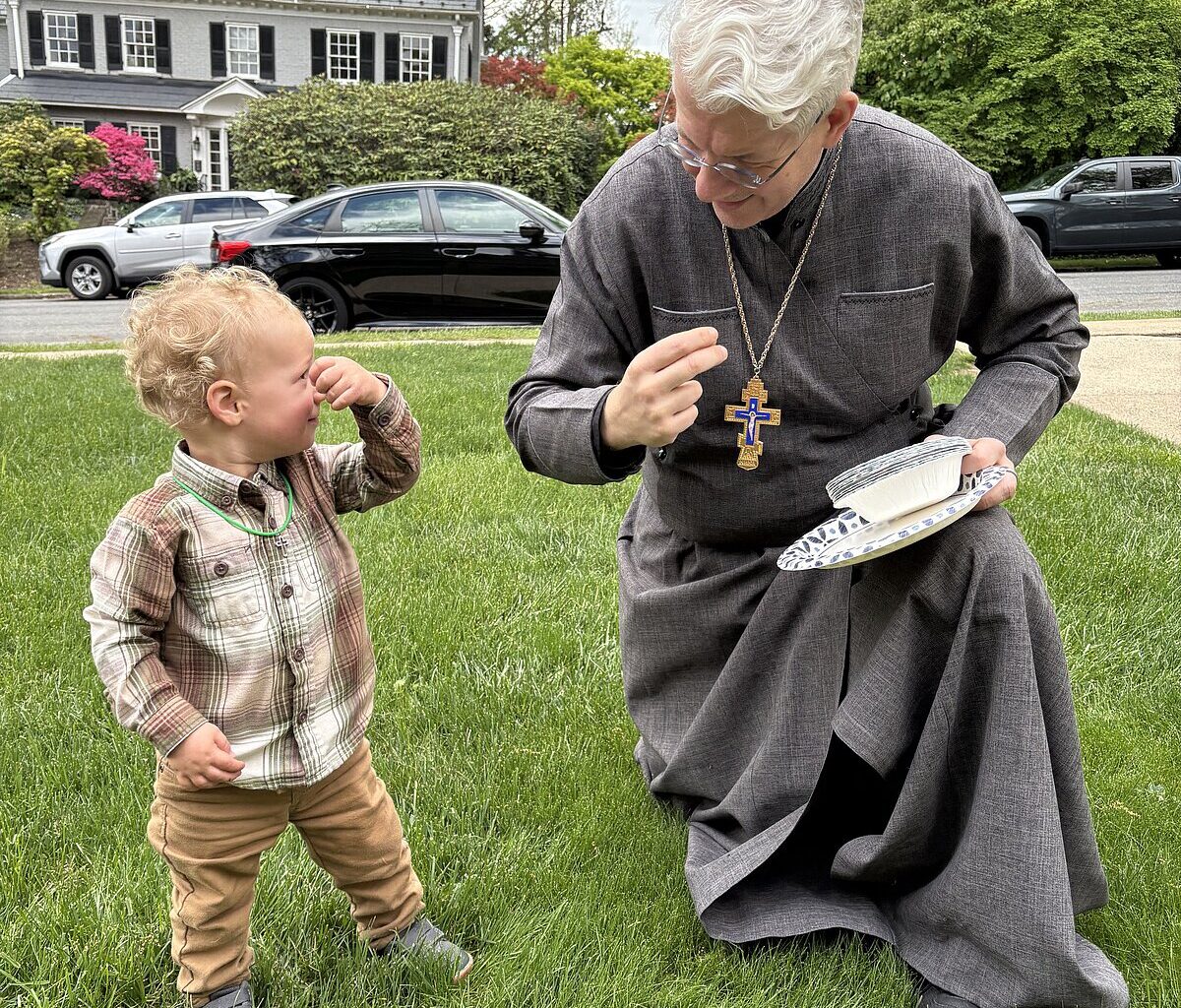
One of the main things I was taught as a priest by Father Dubitsky and Father Mirchuk is that my job is not to have the best fundraisers. My job is not to be a caretaker for the best and prettiest cemetery in the area. My job is not to have the best pyrohy or holubtsi. My job is to make sure people get into heaven, and that they have the necessary tools to help them get there. That is why we carry our cross. My job is to help people not be afraid to carry that cross and walk with it.
I am there to hear confessions, to make sure that a person comes out with a clean soul, and to help heal the wounds they are carrying. My job is to make sure they have a prayerful Liturgy, that every time they step into the church, they can truly pray. And when I preach, I ask myself: Do I leave someone with at least one thing to think about as they walk out those doors? Do I leave someone with some sort of inspiration to open their heart to God? Do I give someone even one thing that could bring them a little closer to salvation? That is what I do as a priest. And if, as a priest, I give that good example, others are going to follow. Father Dubitsky, Metropolitan Stephen, Bishop Basil, Father Mirchuk, and the others I looked up to when I was a kid—to me, they were giants.
Before becoming a priest, you trained and served in the maritime world. Years later, that part of your life returned through chaplaincy. How did that happen, and what does this ministry mean to you today?
Before I entered seminary, I had served as an officer in the United States Navy and trained as a merchant marine officer. I spent four years earning a degree in marine engineering from SUNY Maritime College.
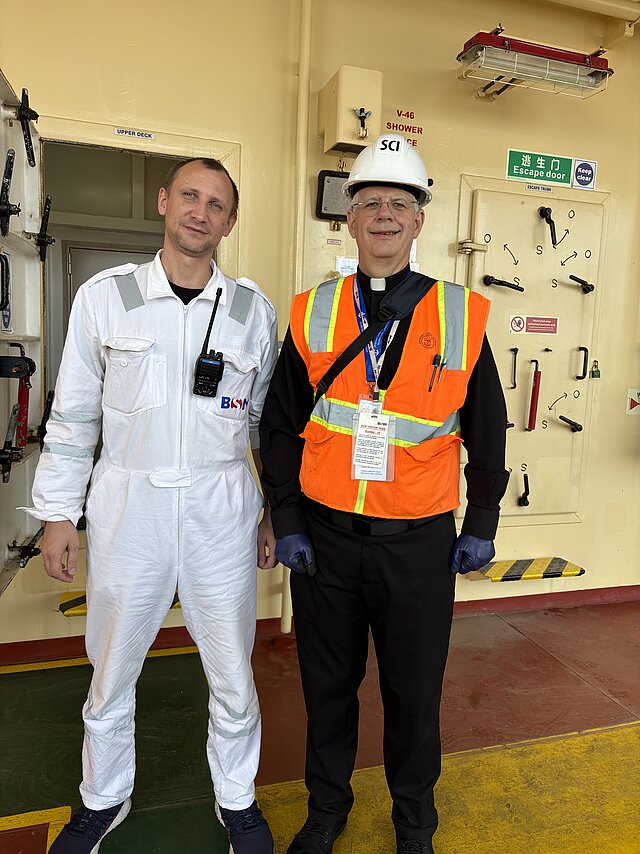
Even back then, I saw how important the presence of a chaplain could be. We had a priest who would regularly come to campus, check on us, and see how we were doing. Later, when I was in the Navy and going through some very difficult times, Navy chaplains helped put me back on a steady keel. I have watched naval chaplains save lives. Years later, when I returned to SUNY Maritime for my 30th class reunion, people who remembered me were surprised to learn that I had become a priest. They asked whether I would consider providing spiritual care for cadets and seafarers. Around the same time, I knew there was a need for ministry to Ukrainian seafarers. In 2024, I approached Metropolitan Borys, told him about my maritime background, and received his blessing to become involved. Today, I volunteer at the ports of Newark and Philadelphia, where I board ships, meet with sailors, listen to their concerns, pray with them, and help where I can.
Life at sea can be very demanding. Sailors work long and dangerous hours, often with very little sleep and tremendous pressure while their ships are in port. On top of that, they carry concerns about their families. Ukrainian sailors may be worrying about parents who were not able to evacuate, about what is happening back home, and about their loved ones living through the war. Sometimes all I can give a sailor is five minutes of respite. Sometimes it is a prayer. Sometimes it is simply a shoulder to lean on. I work with sailors of all backgrounds, but when I meet Ukrainian sailors, even hearing their native language can make a tremendous difference. I know that from my own experience at sea. That is why I do what I do. When we can do even a little bit to make their lives easier, it matters.
Drawing on your experience serving as vocations director, what role do priests and parents play in helping young people recognize a vocation?
There are two things that I have found to be especially important in nurturing vocations. First and foremost is the parish priest. Does he set that example? Is he the kind of priest that little ones will look up to and want to follow?
I am not here just to keep a museum, or to serve only one generation, or, again, to have the best looking cemetery. I am here for everyone – from the littlest to the oldest. And that means paying attention to the little ones, too. But that leads to number two: parents. Do mothers and fathers nurture the faith in their children? My own parents laid that groundwork for me. My father served as a deacon for more than thirty years, my mother worked for more than thirty years as a parish secretary, and my grandparents and great-grandparents also served the parish in different ways. Faith was part of the life of our family.
Do we lay that same groundwork for our children? Do we encourage them in their faith, or do we just take them to church, prepare them for their First Confession, and then come back only at Christmas and Easter? You do not have to be a fanatic about it. You do not need to be a theologian. But you do need to encourage them. You need to set the example. Faith has to be lived. If you don’t live it, it’s not going to take root. When children see their parents pray, make the sign of the cross, light a candle, venerate the icons, and make the Church part of everyday life, those little things help root the faith in them. When priests and parents live that faith themselves, the seeds of vocation have a place to grow.
What would you say to someone who senses that God may be calling them to the priesthood or religious life, but is afraid to answer?
Don’t be afraid. God is on your side. Carry your cross. All of you have that spark within you. Allow the Holy Spirit to fan that spark into a bright flame. The question is: how badly do you want it? For me, I am a man created in the image and likeness of God. On the back of my cross is the command to be the image of Christ in everything I do, everything I say, and the way I live.
And what do I want? I want to be saved. So don’t be afraid. Take the helm and sail out into the open sea, knowing that God is your compass and your guide. He will give you life in abundance. And when you live that life fully, you will be able to bring life to others and share it generously.