
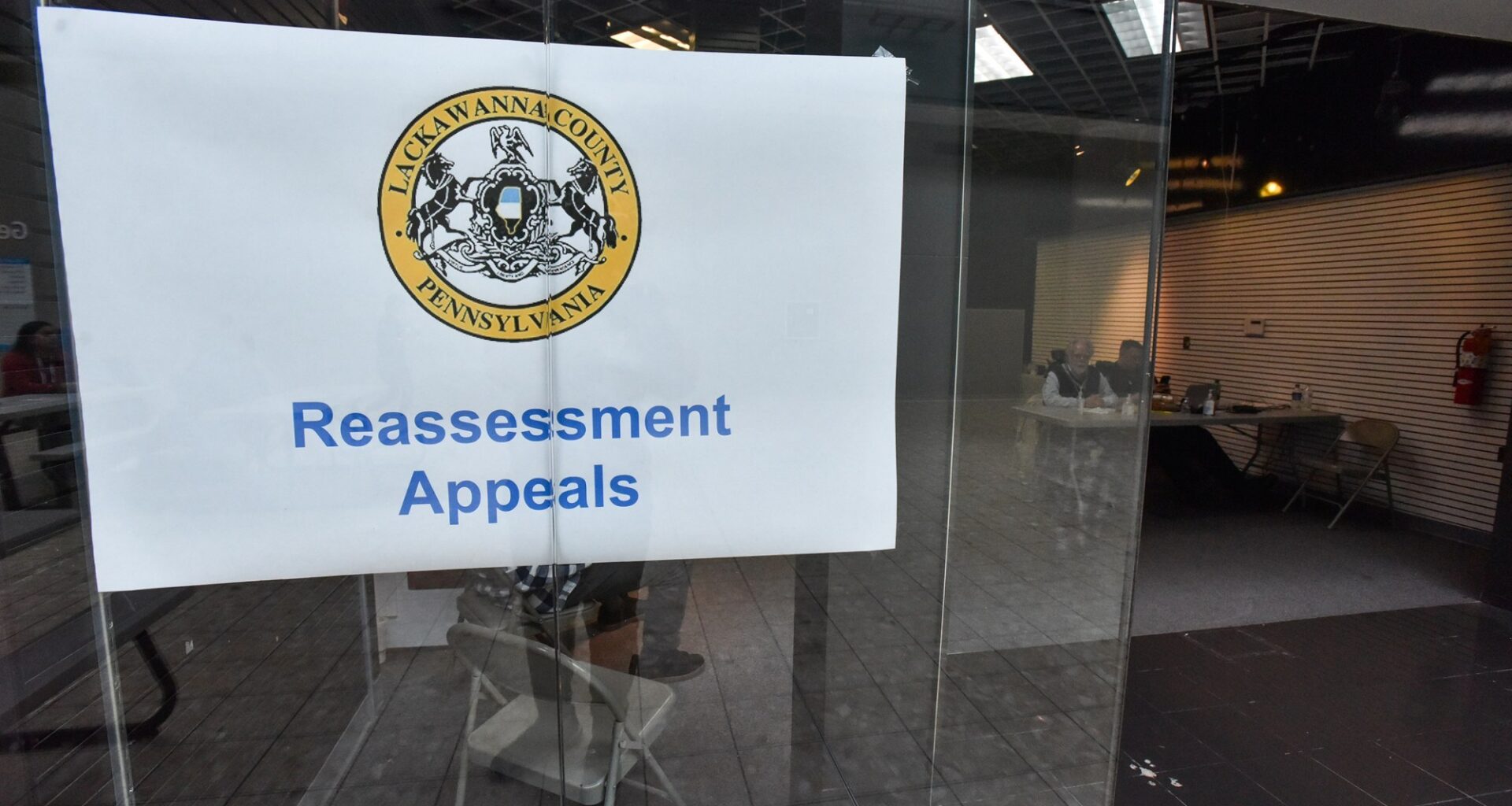
A Lackawanna County judge affirmed a Pennsylvania Office of Open Records decision requiring the county to provide requested records related to its recent reassessment — records the county claimed were exempt from disclosure under the state’s Right to Know Law.
The case stems from a Right to Know request then-county property owner Michael Marcavage filed in April 2025 seeking electronic copies of all tentative assessed values calculated for Carbondale and Fell Twp. properties during the county’s first comprehensive property reassessment in nearly six decades. Those and other tentative assessed values, calculated by vendor Tyler Technologies, were mailed to property owners last year prior to a reassessment appeals process where owners who disagreed with their new values could challenge them.
Reassessment is designed to achieve tax fairness by bringing assessed values used to generate property tax bills in line with fair market values, or what a property should sell for on the real estate market. The yearslong process of updating assessed values countywide for the first time since the late 1960s wrapped up last year, with the new values taking effect in January following the monthslong appeals process.
Marcavage, a real estate investor, requested from the county electronic copies of “all tentative property values being proposed by Tyler Technologies on behalf of Lackawanna County for properties in Fell Township (Simpson) and Carbondale,” noting in his request that a “spreadsheet that includes the proposed tentative values along with the corresponding property addresses would be sufficient.”
He also advised that the Office of Open Records, or OOR, had previously ruled in another case, Marcavage v. Delaware County, that similar assessment data was subject to disclosure.
The county exercised a 30-day extension to respond to the request but ultimately denied it on multiple grounds, claiming the records were exempt from disclosure because the requested tentative values were “draft” materials and constituted “internal, predecisional deliberations” of the county.
It also cited a section of the Right to Know Law stating agencies aren’t required to create records that don’t exist, with county Assessment Director Patrick Tobin attesting in a subsequent affidavit that a spreadsheet of the tentative values “does not currently exist and would need to be prepared by the assessment office” in violation of that section.
Marcavage appealed to the OOR in late May 2025, and prevailed.
The agency determined that, to the extent the county interpreted Marcavage’s request as seeking only a spreadsheet of the tentative values, that interpretation was unreasonable. It also determined the exemption for draft materials did not apply, as the electronic records requested didn’t fall into any of several specific categories enumerated in the Right to Know Law, and that the records weren’t exempt as “internal, predecisional deliberations,” since the values had been mailed to property owners and, as such, were not internal to the county.
The OOR issued a “final determination” in June 2025 directing the county to provide the records within 30 days, but did not find the county acted in bad faith by issuing the denial. The county subsequently appealed the OOR decision in county court, where Judge Terrence R. Nealon ultimately issued the recent order affirming the agency’s conclusions.
Part of Nealon’s Sept. 11 ruling says the county had an obligation to contact Tyler Technologies to “ascertain whether it possessed the requested electronic records,” noting it’s “difficult to envision why the County or Tyler Technologies could not retrieve the requested information from existing electronic databases.”
Among other case law, that section of the ruling cites SWB Yankees LLC v. Wintermantel, a 2012 case where the state Supreme Court ruled on an appeal by The Times-Tribune that records kept by a government contractor are subject to disclosure under the Right to Know Law if the contractor is performing a governmental function and the records directly relate to that function.
Nealon’s order affirming the OOR decision gives the county 30 days to provide the records but denied Marcavage’s request for a finding that the county acted in bad faith.
The current usefulness of the requested records is unclear, given that the county completed the reassessment last year. But Marcavage, who called the county’s position absurd, celebrated Nealon’s ruling as a “resounding victory for government transparency and a decisive vindication of the taxpayers’ right to know.”
“Judge Nealon’s opinion doesn’t just grant taxpayers access to these records; it completely dismantles the county’s baseless attempt to hide public data behind legal gymnastics,” he said in a statement. “The court firmly upheld the integrity of the Right-to-Know Law, sending an unmistakable message to local officials: public records belong to the public, period.”
One of the attorneys representing the county in the court case, Brendan Fitzgerald of the firm Joyce, Carmody & Moran, acknowledged the court order in an email Thursday.
“We are recently in receipt of Judge Nealon’s Order, which we respect, and we expect to be reviewing and discussing next steps with county officials this week,” he said. “We cannot comment on those next steps at this time.”