
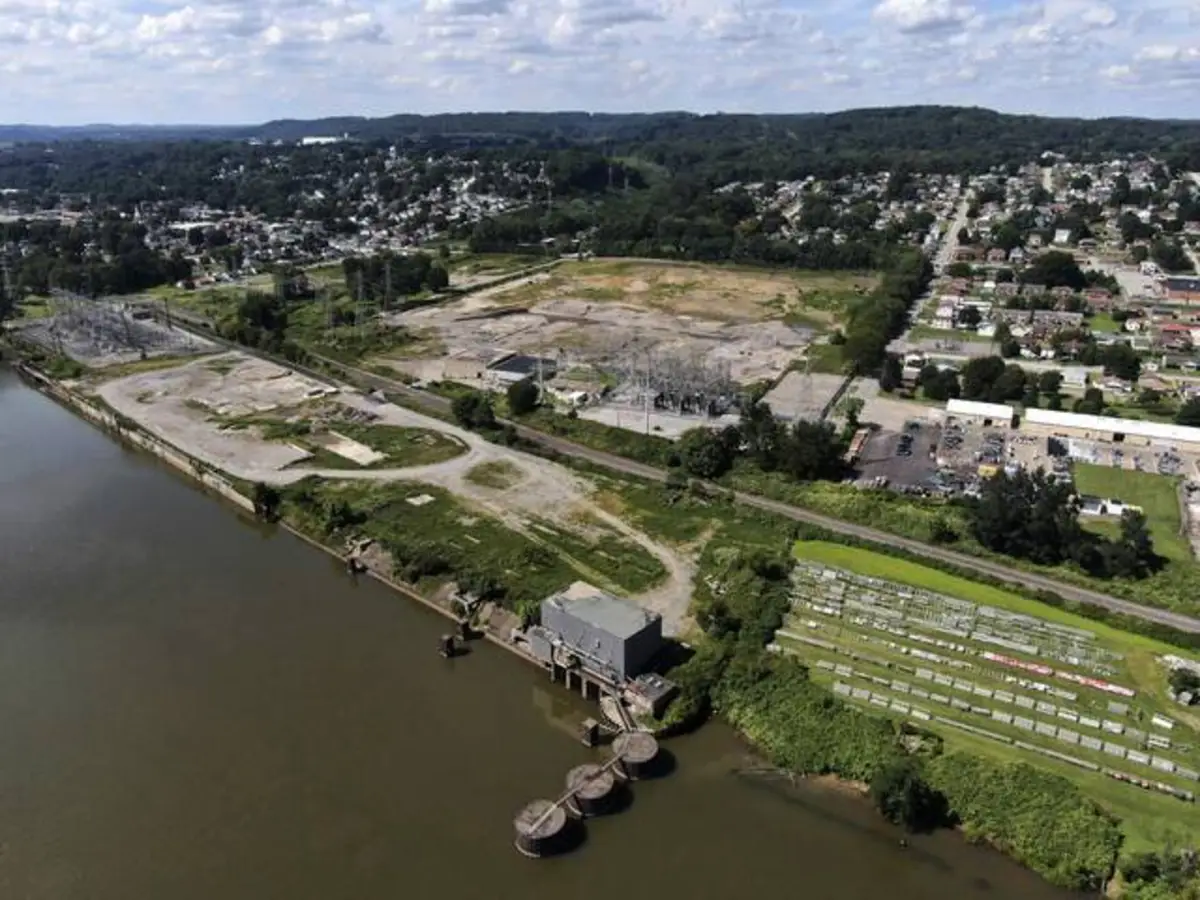
Every so often, my mom tells me about what it was like growing up in Southwestern Pennsylvania in the early ’70s. She recalls how the panoramic view of the city that greets everyone who drives through the Fort Pitt Tunnel was paired with the rotten-egg smell of hydrogen sulfide coming from the remaining steel mills that lined the rivers.
Pittsburgh made great strides to clean up the city’s air and water in the decades since the decline of the steel industry, but the economy never fully recovered even as healthcare, robotics, fracking and other industries invested in the region. Today, in the latest effort to revitalize Pittsburgh’s economy, tech companies, data center developers, lobbyists, and state and national leaders are making the case for Southwestern Pennsylvania to become a national hub for AI innovation and infrastructure. Reminding local residents of the city’s famed industrial roots, these powerful actors predict that data center projects will launch the city to a new era of prosperity.
Our research tells a different story. Over the past two years, my Data & Society colleagues and I traveled across Pennsylvania to interview data center experts, organizers, union representatives, local historians and archivists, residents and local government officials to document what it feels like for Pennsylvanians to be at the forefront of the AI revolution. In our new report “The AI Factory: Data Centers, Power, and Resistance in Late Industrial Pennsylvania,” we argue that data center prosperity is a narrative pushed by the AI industry and questioned by local organizers, activist groups and concerned Pennsylvania residents.
As a sociotechnical researcher and Afrofuturist who grew up in Pittsburgh and whose family has lived here for six generations, I’ve seen firsthand how big industries fail to bring about the futures that they predict, all the while creating benefits for few and harms for many in our communities. Situated in the middle of a data center fight that could define the midterm elections, Pittsburghers must ask: Who will this “infrastructure of the future” actually benefit?
Home to high-ranking universities that can spearhead AI innovation, energy infrastructure that can power data centers and water resources to cool them, Southwestern Pennsylvania is well positioned to support exponential growth in the AI sector. Indeed, there are nine active or proposed data center projects in Allegheny and neighboring counties. A local industry coalition called the AI Strike Team recently dubbed Pittsburgh “the Steel and AI city,” echoing connections that other data center proponents are making between the city’s past and future industries.
However, the relationship between old and new wealth-generating industries in Pittsburgh is one of lopsided growth. While steel, coal and fracking brought jobs to the region, they also generated billions of dollars of wealth for shareholders and caused devastating environmental damage and worsening income disparities for local residents. The data center-driven AI industry is no different. Experts predict that an AI economy could result in extreme concentration of wealth with limited benefits for working-class families.
Cognizant of these disparities, Pennsylvanians, including myself, aren’t buying the idea that data centers will result in widespread prosperity. Project developers often claim that data centers will bring tens of thousands of jobs to local communities that desperately need economic development. In reality, data center projects typically bring temporary construction jobs, few high skilled labor positions and some indirect labor servicing the people who staff the data centers. Data center advocates are counting on a favorable recollection of the steel and coal industries’ reputation as reliable employers in the region, but the Pennsylvanians we interviewed recall a different history, one characterized by health problems, labor violations and environmental destruction, among other harms that persisted after these industries left their communities. The residents we spoke with — some of whom are descendants of coal miners and steel workers — refuse to be used and left behind by yet another kind of extractive industry.
President Trump and his coalition of data center backers are presenting a false choice for Pittsburgh between an exploitative AI-driven economy and a “backwards and poor” future. While I welcome change for the city’s economy, I also see how growth — especially for Black, low-income, and other marginalized Pittsburghers — can be achieved with different futures than the ones we’re being sold.
Featured Local Businesses