
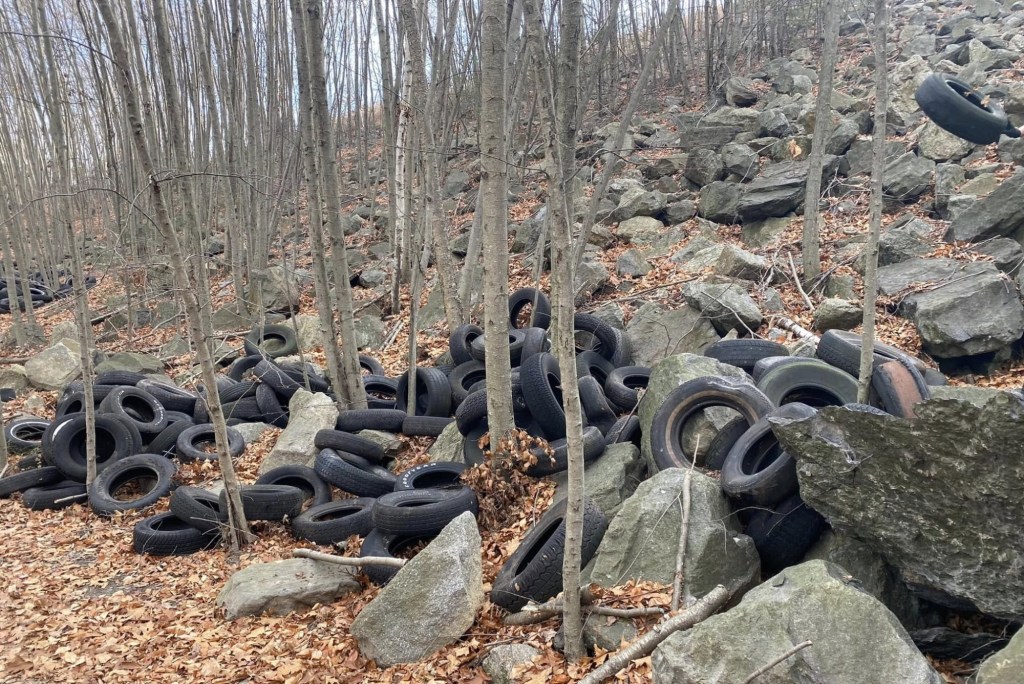
The nonprofit Eastern Pennsylvania Coalition for Abandoned Mine Reclamation (EPCAMR) received a grant to help remove several illegal dumpsites from Columbia and Luzerne counties and discourage future dumping, particularly of vehicle tires.
The Amazon Northeastern Pennsylvania Community Fund, supported by Amazon, awarded $10,000 to EPCAMR in September for a community-improvement initiative called the Remove Illegal Dumpsites (RID) Project.
EPCAMR will use the grant funds to:
Plan and conduct several illegal dumpsite cleanups in the two counties during 2025 and early 2026, providing volunteers with work gloves and other safety supplies and paying for the proper disposal of discarded vehicle tires and other trash.
Hold a panel discussion in the Wyoming Valley during early 2026 about the issue of illegally dumped vehicle tires and possible prevention strategies.
Seek to become a Keep Pennsylvania Beautiful affiliate and work with partners in multiple counties within EPCAMR’s service area to locate, clean and beautify sites that have been abused.
Cleanup dates and locations will be announced on EPCAMR’s Facebook page. Community volunteers are encouraged to get involved. Volunteers ages 14 and under must be accompanied by an adult, and all volunteers must sign a liability waiver and be aware of hazards such as ticks, uneven terrain, broken glass and other potentially harmful items.
EPCAMR staff is currently scouting potential cleanup sites in or near Centralia, Shickshinny, Mountain Top, Plains Twp. and Hanover Twp.
The RID Project continues EPCAMR’s long history of working with local residents to improve landscapes and lives in the region’s coal communities.
Over the past 20 years, EPCAMR has led or supported about 80 cleanup events, removing nearly 7,500 tires and an estimated 357,000 pounds of trash from abandoned mine lands and sensitive watershed areas.
EPCAMR, which was founded in 1996, promotes the reclamation of land impacted by past coal mining practices. It especially strives to prevent abandoned mine drainage (AMD) from entering creeks and rivers, where it pollutes the water and creates inhospitable “dead zones” for fish and other aquatic life. AMD is Pennsylvania’s second-leading cause of water pollution, tainting an estimated 5,500 miles of waterways.
The EPCAMR staff often encounters litter and illegal dumpsites when performing its streamside work across its 16-county territory.