
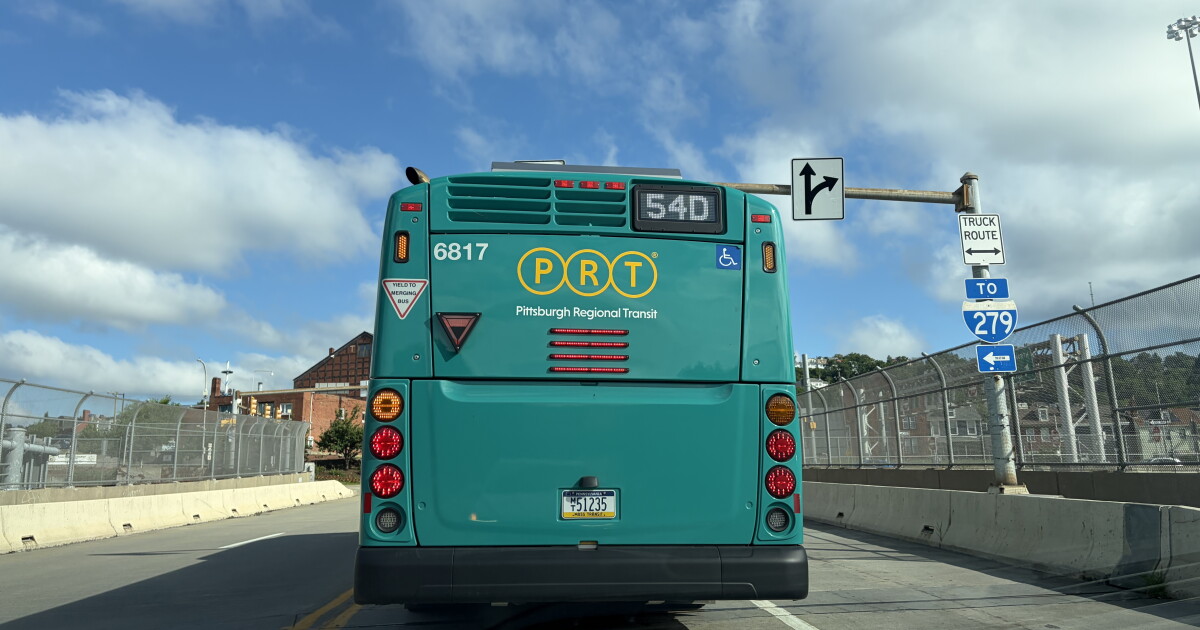
Pittsburgh advocates for public transportation wish the planned overhaul of county bus routes was bolder.
Riders have until Sept. 30 to share their thoughts on Pittsburgh Regional Transit’s plan for the Bus Line Refresh.
The plan is designed to be cost-neutral.
Laura Chu Weins, executive director of Pittsburghers for Public Transit, said that means communities are competing against each other for resources; PRT can only add service in one place if it takes it away somewhere else.
She said she wants PRT to put forth a visionary plan for what it could do with more state funding, noting Pittsburgh is now at its lowest amount of transit offerings in decades. She said the refresh plan would lock in past cuts.
“You can only win what you ask for. And if you don’t ask for more resources, then we are guaranteed to get, at best, nothing but what is needed to maintain existing levels of service,” Chu Wiens said.
PRT faces a fiscal cliff at the end of this state budget year without more support from Pennsylvania’s legislature. Transit agencies statewide had come to rely on a state funding law that expired in 2021. Pandemic relief funds helped after that, but new money is now needed to maintain operations.
Statewide advocacy group Transit for All PA said, since 2019, Pennsylvanians in every county have lost transit service. With no new revenue for transit in next year’s state budget, the group said places including Pittsburgh and Philadelphia could see service cuts and transit fare increases in 2027.
The Bus Line Refresh is meant to improve service and boost ridership, but Chu Wiens said cutting routes — especially direct routes — could prevent people from taking the bus at all.
“The uncertainty in time, the time cost, the discomfort of having to take a transfer where there currently is not one is enormous and consequential,” Chu Wiens said.
PRT is cutting some routes with low ridership. Chu Wiens said there needs to be acknowledgement that those routes can be a lifeline for the people who do use them.
“We’ve seen cuts over the course of the pandemic, and the remaining people that are taking the bus in those communities are people for whom there is no other option,” she said.
Chu Wiens says there are positives to the plan. Routes will be scheduled in more regular intervals — like every 40 minutes instead of 37 minutes — and many marginalized communities will see better service.
The refresh plan is complex. Pittsburghers for Public Transit has several tools on its website to help riders understand the changes and make a comment. It has a list of the most impacted communities, created a map of service changes by stop, and made a “Mad Libs-style” comment template for riders to share their thoughts with PRT.
PRT also has interactive maps and instructions on how to share feedback on its website.
Comments must be submitted by 5 p.m. on Sept. 30.
If adopted, the refresh would go into effect later in 2027.