
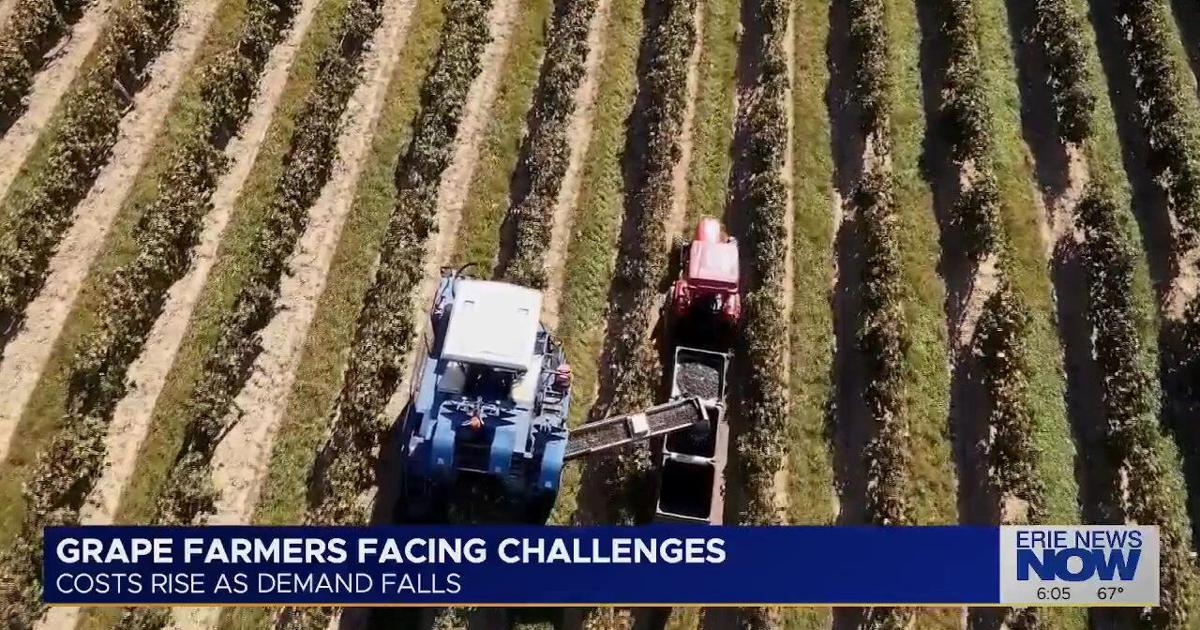

After a challenging year for grape growers across the Lake Erie region, the U.S. Department of Agriculture is purchasing $20 million worth of surplus Concord grape juice to help support the industry.
The USDA says the grape juice will support federal nutrition programs, including the National School Lunch Program and the Emergency Food Assistance Program, as well as food banks across the country.
But for some local farmers, the purchase does not directly address the losses they faced after grape-buying contracts were canceled.
Grape farmer Sam Valone says Refresco previously increased the price it paid for grapes from about $150 per ton to an industry-high of $425 per ton. The higher prices encouraged growers to expand their vineyards and invest in future crops.
Valone says Refresco later canceled contracts to purchase grapes from 126 growers across the Lake Erie region, leaving some farmers with crops they had already invested heavily in and no buyer.
“Refresco cancelled our contracts at the last minute. I actually had significant funds in this crop already this year before they cancelled,” Valone said. “With no notice, we were charging forward and making investments in next year’s crop. We spent a lot of money during the winter.”
Valone says the USDA’s $20 million purchase helped stabilize the grape market, but he says it did not directly help farmers who lost their buyers.
“It didn’t help the Refresco farmers directly because it didn’t buy their crop. It merely let the processes that are in existence and the inventory that’s around be bought at discount prices,” Valone said.
He estimates that buying grapes directly from farmers who were left without contracts would have cost a fraction of the USDA’s total purchase.
“Well, if the USDA focused on the vineyards that didn’t have buyers and bought that crop, it would’ve only been four or five million dollars,” Valone said.
Valone has already sold 42 acres of vineyards in Pennsylvania and another 32 acres in Chautauqua County, including some family-owned farmland.
He says many grape growers are now using their equity to stay afloat and still are struggling to break even.
“I do have mortgages on newer farms that I bought, and I have no means to make money to pay mortgages,” Valone said. “So, those will be up for sale soon.”
Valone says he hopes the market could eventually adjust if another buyer steps in to purchase grapes that are currently available.
He also says increased marketing by processors could help boost demand for Concord grapes.
For now, Valone says