
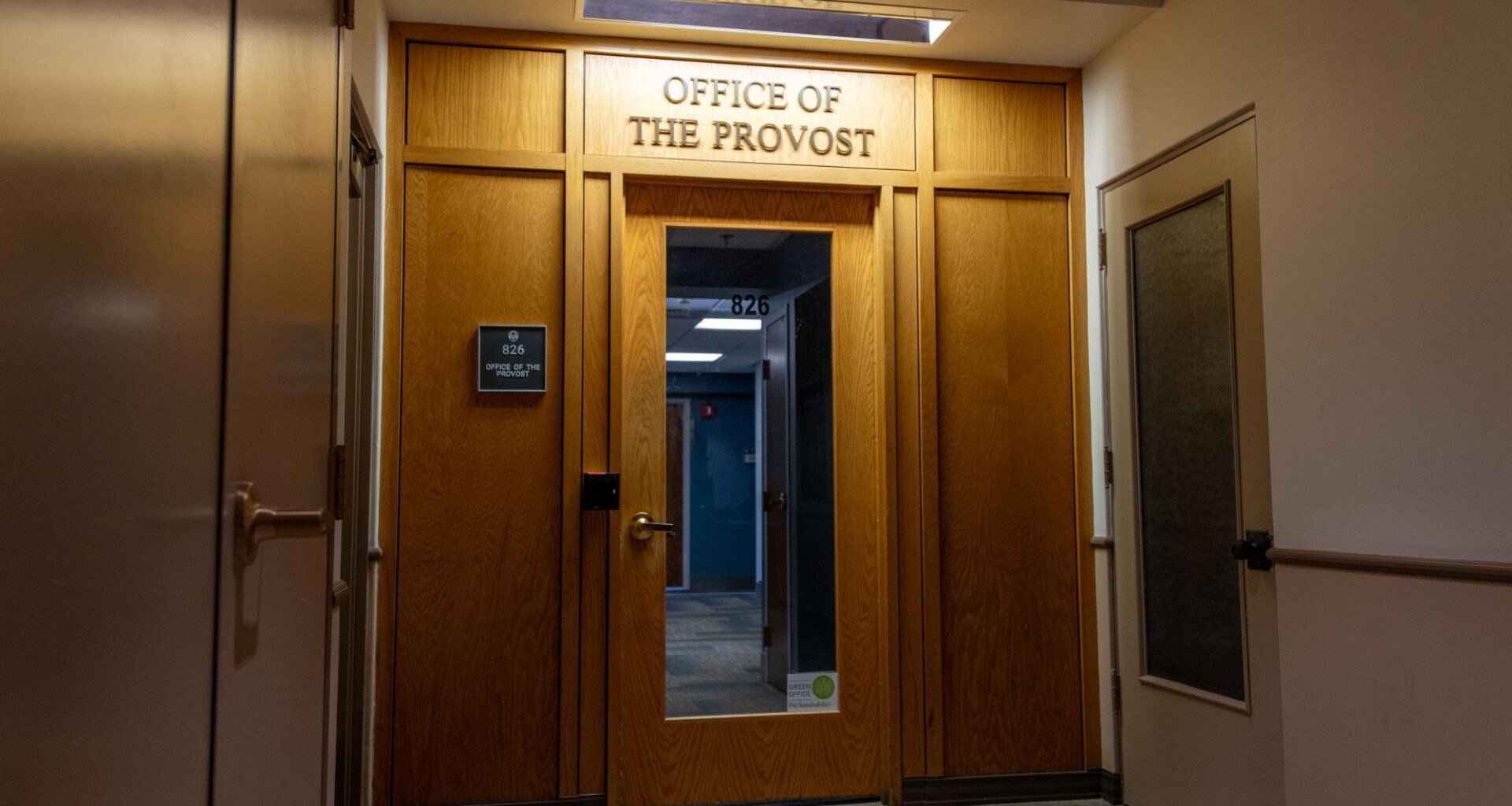
Pitt’s General Education Reform Task Force is beginning to transition its general education reform from ideas into concrete plans.
The task force, which the Office of the Provost created in 2024, is working to make Pitt’s general education curriculum more engaging for students and consistent across all branches and schools. During its most recent meeting, the Faculty Assembly voted to create two ad hoc committees, the general education curriculum committee and general education assessment committee, to support this goal. They are aiming to implement the new curriculum in fall 2027.
Currently, Pitt has nine different general education curriculums that span across different schools and branch campuses. Each of these curriculums are headed by leadership of individual branches or schools.
Belkys Torres, associate vice provost for curricular innovation and teaching associate professor in Latinx and gender studies, said the current approach to general education has unintended effects.
“That structure makes it hard to articulate a shared set of learning goals, assess whether the program is actually working and support students who transfer between schools or campuses,” Torres said.
Under the new system, Torres said students will need to meet a 40-credit minimum through classes related to four competencies. The competencies include Inquiring and Problem Solving, Communicating and Expressing, Engaging Responsibly and Understanding Local-Global Contexts, according to Torres.
Torres said these competencies include two pathways for students to follow — general and distinct.
“‘General’ means completing the minimum number of courses across all four competency areas, with flexibility to add extra courses in whatever learning goal area interests you most,” Torres said. “‘Distinct’ means covering two competencies as usual but then concentrating the other two around a single theme.”
John Stoner, interim vice president of the University Senate, chair of the ad hoc General Education Reform Committee and teaching professor of history, said he thinks the new system will work better than the old one.
“I think the goal of this new system, along with the new advising structure that’s going into place, is to really allow students to curate a very intentional path through their entire academic journey,” Stoner said.
This new curriculum would also integrate an experiential learning requirement, through which real-world experiences such as internships complement students’ desired course of study, according to Stoner.
Adriana Helbig, associate dean for undergraduate studies in the Dietrich School of Arts and Sciences and College of General Studies and professor of music, said these changes are supposed to allow students to transfer credits easier and personalize their experiences through general education classes that better reflect students’ educational goals.
“The goal was to unite and create one project of gen ed requirements for all students, anywhere within the University of Pittsburgh, and that would facilitate students moving between schools,” Helbig said.
Helbig said even though these plans seem very absolute, general education classes are always subject to change.
“We’ve constantly been evolving the curriculum,” Helbig said. “We’ve constantly been engaging with what students want, with what faculty find to be the most relevant, and I think the structure itself just needed to be blown up and recreated from the ground up.”
Maria Ionno, a senior politics and philosophy major, said the general education curriculum needs to be more catered to students’ wants.
“I know some colleges do gen ed tracks, where you can have that general education with a more specific concentration,” Ionno said. “I think it would provide more focus. Many students don’t like taking gen eds they’re not interested in.”
Caroline Murphy, a senior biology major, said she disagrees with the idea that general education requirements are unimportant, but can understand where those feelings come from for many students.
“If it’s a good gen ed that you’re interested in, then it’s nice to learn about things that relate to your major,” she said. “There’s definitely an issue in a lack of interest because many gen eds just aren’t what students want to be taking.”
While the finer details of how the new system will work are still being discussed, the General Education Reform Task Force is optimistic about its future, according to Stoner.
“I think we’re hopeful that this new structure will allow both flexibility and intentionality to coincide,” Stoner said.