

Preserving Coltrane’s legacy in the house of his spiritual rebirth
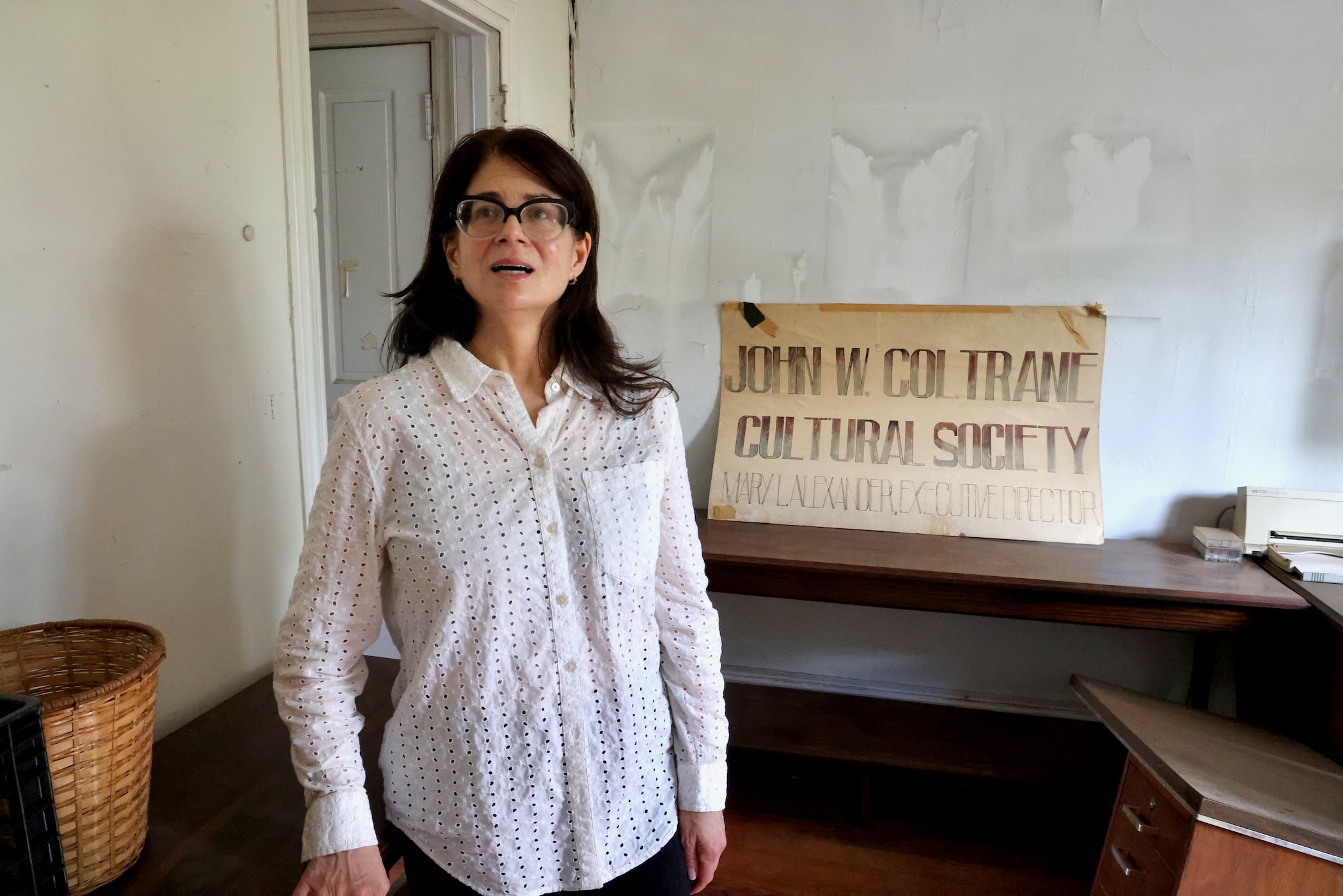 Kathleen Hennessy, the wife on John Coltrane’s son Ravi, is working on the restoration of the John Coltrane house in Philadelphia. (Emma Lee/WHYY)
In 1952, with money from the GI Bill, Coltrane bought a house on North 33rd Street. After years of tangled title and court proceedings, the dilapidated house is now owned by an organization founded by Coltrane’s son, Ravi, which has begun stabilizing the structure for renovations as a community cultural asset.
“It sounds kind of boring but it’s actually really exciting,” said Kathleen Hennessy, Ravi Coltrane’s wife. It’s very serious structural work that’s necessary.”
Together, Hennessy and her husband have nearly completed the restoration of the Long Island house where Coltrane lived at the end of his life. Coltrane’s childhood home in North Carolina is also being restored by the High Point Preservation Society.
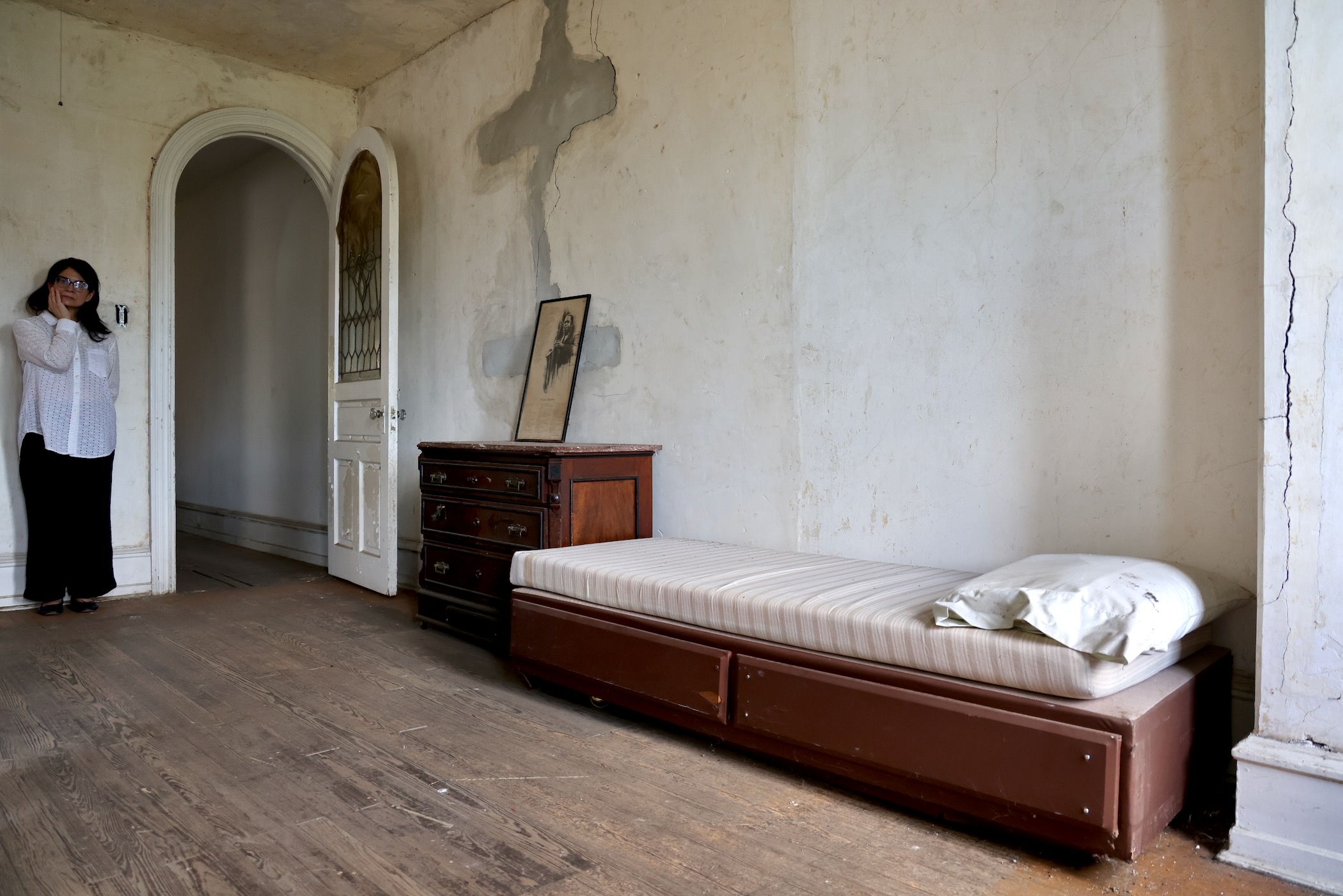 Kathleen Hennessy, the wife on John Coltrane’s son Ravi, stands in a back bedroom on the second floor of the John Coltrane house in Philadelphia. Hennessy is working on the restoration of the John Coltrane house in Philadelphia. (Emma Lee/WHYY)
Here in Philadelphia, the front façade of the 33rd Street house has been reconstructed and the structure’s back wall is being rebuilt.
“It’s going to really help stabilize the house. Whether we’re doing the Long Island home or here, that’s the first thing that we want to do: stabilize the building,” Hennessy said.
On the rear of the Philadelphia rowhome’s second floor is a small bedroom with cracked plaster walls and peeling paint. The humble space carries an outsized importance in jazz history.
“This is the room where he came to free himself of drug addiction,” said Anthony Tidd, chief creative catalyst with Ars Nova Workshop. “He locked himself in this room and basically quit his habit.”
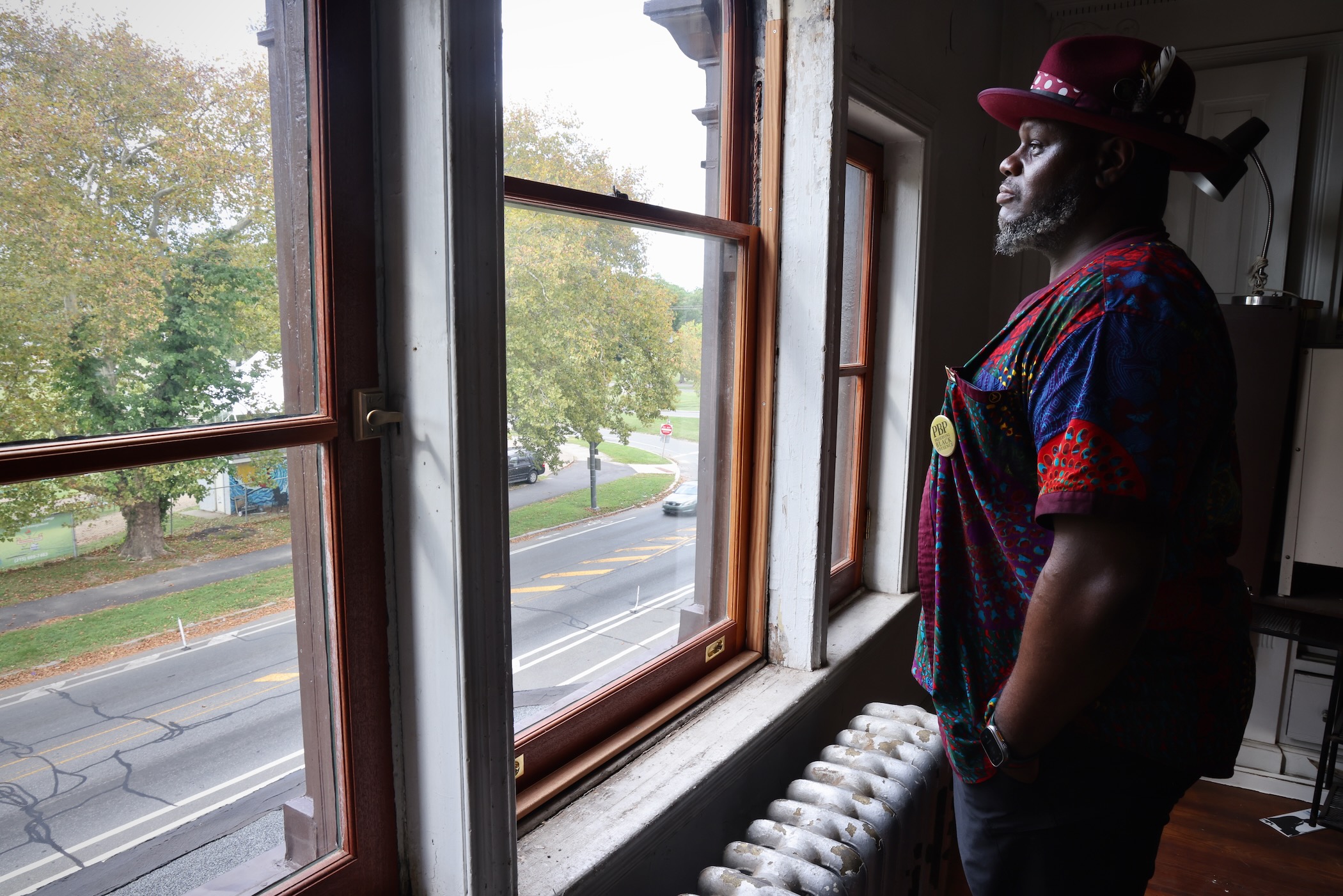 Ars Nova Workshop’s Anthony Tidd takes in the view of East Fairmount Park from the second floor of the John Coltrane House on 33rd Street. Tidd has been working on programming to celebrate the 100th anniversary of Coltrane’s birth. (Emma Lee/WHYY)
Coltrane had been struggling with heroin and alcohol, which had gotten him fired from the Miles Davis band. He later said that the sobriety he achieved here in 1957 led him to a spiritual awakening and a period of intense creativity.
Shortly after, in 1960, he released the album “Giant Steps.” It is considered one of the most influential jazz albums of all time. In 1964, he composed “Love Supreme,” which his wife Alice described as “like Moses coming down from the mountain.”
“It doesn’t matter if you like jazz or not like jazz, most people are very inspired by the idea of transcendence, of searching, of stretching towards good,” Hennessy said. “He says very specifically: ‘I want to be a force for good.’”
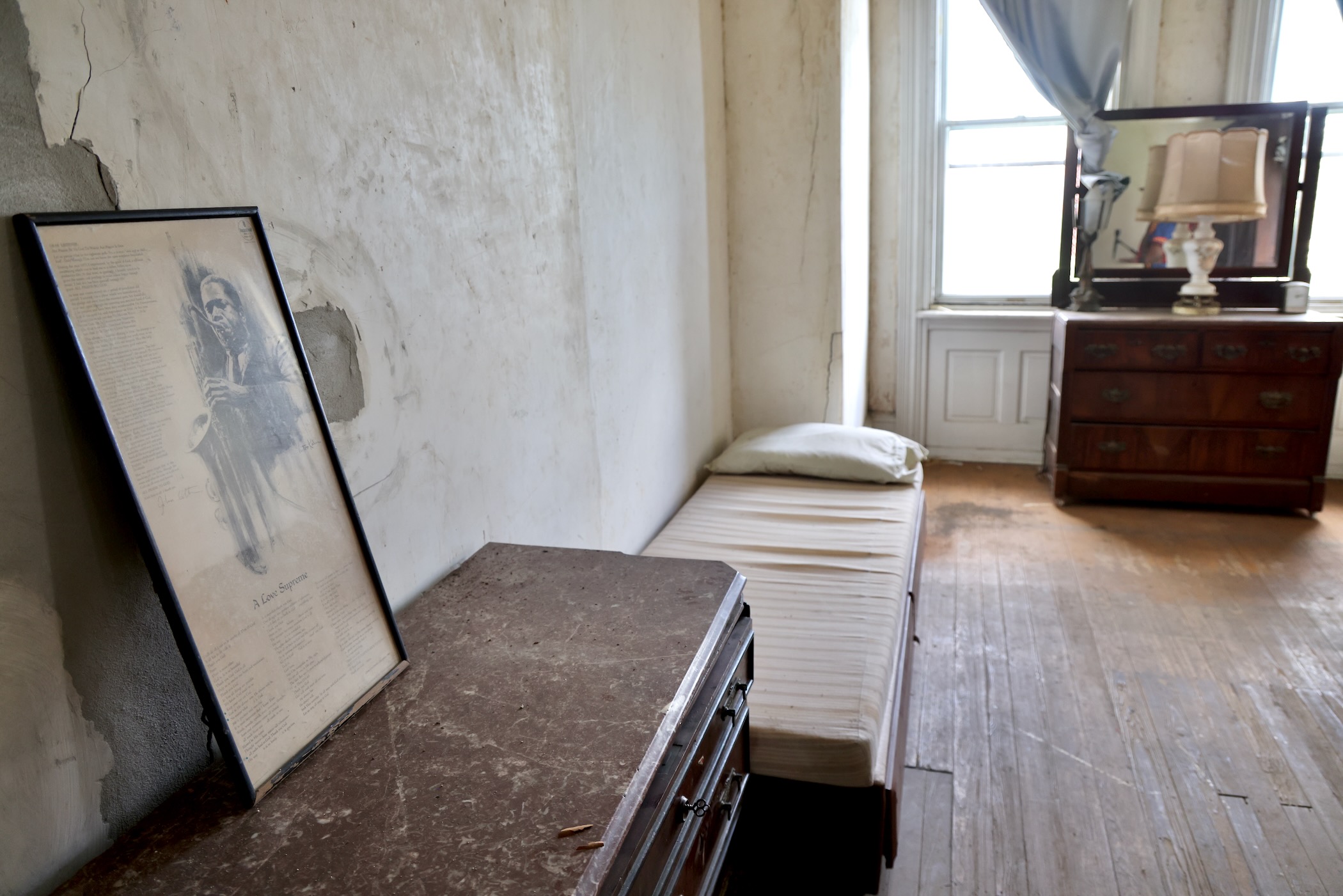 A back bedroom on the second floor of the John Coltrane house in Philadelphia is where Coltrane kicked his drug habit and came out a changed man. (Emma Lee/WHYY)
Mark Christman, the founder of Ars Nova Workshop, said the best way to understand Coltrane is to listen to his music with patience.
“It’s an artistic language that’s formed and forged within segregation, within constraint, within migration and labor and aspiration. Coltrane’s life exemplifies this,” he said. “Understanding this one particular artist’s growth can help us understand each other a little bit more intimately and honestly. Spending time with this music can be part of a kind of healing that this country needs.”