
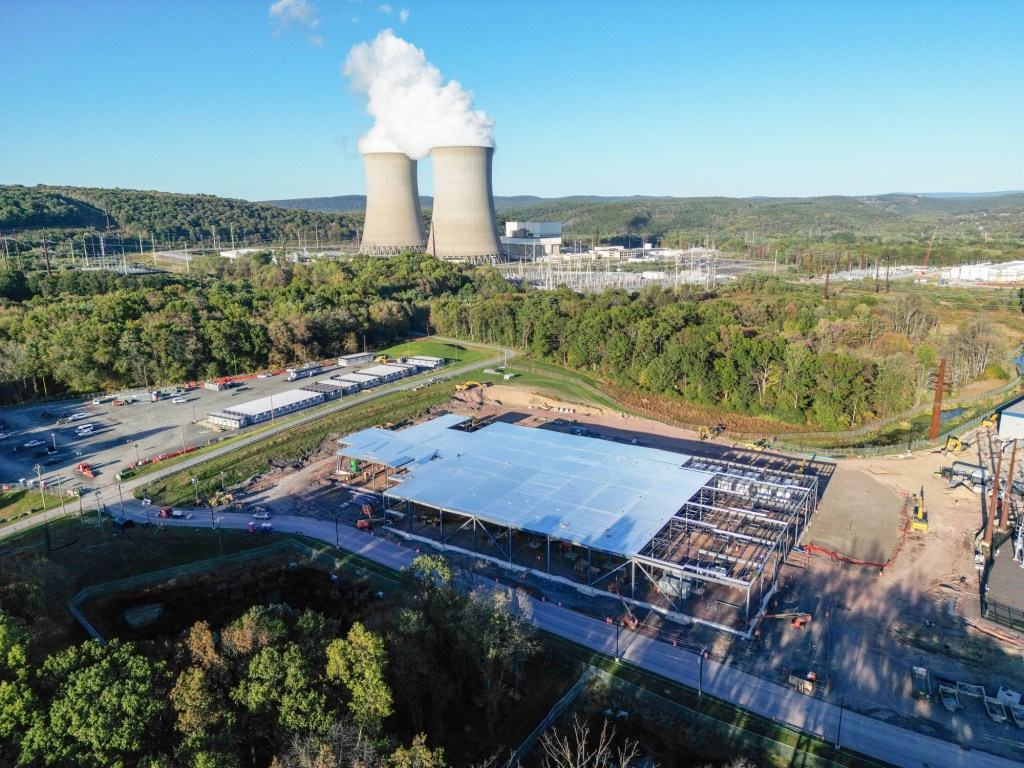
I heard a stunning stat the other day from our partners at PPL. The region’s largest electricity company took 100 years to build and utilize 7.5 gigawatts of peak load power. Now, PPL forecasts demand will nearly double that in the next five years.
That frenetic pace has the planning world moving faster than ever. Technology, societal preferences and lifestyle trends that were once measured in years or even decades, are shifting in a matter of months.
Just a few years ago, we were working with many of our 62 partner municipalities to prepare them for the arrival of one million square foot logistics centers. These, as everyone is now aware, have dramatic impacts on neighborhoods, business corridors and infrastructure systems.
Over half of the region’s municipalities responded with updated planning and zoning regulations, balancing impacts where possible but constrained by the limits of the state’s planning code. Still other communities let the change dictate how they would operate, look and grow, accepting the increased tax revenues with the traffic, noise and air quality declines. The state planning code offers this as a choice, too.
But even as communities ready themselves for a slowing pace of those types of development, and the smaller logistics hubs that are more common now, new uses have emerged or are emerging that will need their immediate attention. We’ve all heard about the “power-sucking data centers” that are pushing the world into the next version of itself.
I’ve been in more rooms than I can count in the last year where the data center was billed as both savior and devil. Like every use, especially large-scale ones, it’s not Godzilla or a Powerball win. It’s a new reality that is best to get in front of, and not behind.
Now add cryptocurrency mining, biofabrication, microchip manufacturing, industrial 3D printing facilities, large scale solar arrays, battery storage systems, hydrogen fuel facilities and an endless list of tech-based uses to the mix. Welcome to 2025. All of these are now, not next. And we need every community in the Lehigh Valley to plan for them today. It’s not a matter of if, it’s a matter of when, if not already.
No community should just throw up their hands and declare they don’t know what to do or whisper in the halls after a supervisor’s meeting about a major new industrial use as a bail-out for a budget deficit. The state made the general rules, the municipality made the specific ones, and the market largely dictates the game. So, every community is a player, and so are the specific industries that have a state-mandated right to propose these new uses. Every local government has a role, and it’s best to take that very seriously. Industry does.
And one public service announcement I have to keep making: Remember that Pennsylvania is a right-to-develop state, which means that every community, by law, is required to zone for every use. In other words, communities can’t make like Nancy Reagan and “just say no.” It’s why we’ve worked with 37 of our municipalities to get them in multi-municipal plans that enable them to share that burden, and why so many are updating their planning and zoning regulations.
Now back to our regularly scheduled programming — emerging uses.
Let’s use data centers as an example of why communities need to move fast. The largest of these can bring billions of dollars of investment to a community, and create new jobs, but they also bring many challenges.
One of the reasons why PPL needs to power up is because a single data mega center can use as much power as 500,000 homes. These centers also create other concerns that include noise pollution and water consumption. But just as existing data centers in Northern Virginia and Umatilla, Oregon, were built not so long ago, companies are looking to develop geothermal, closed loop and onsite energy generation systems to not only reduce their costs of operation but, reduce impacts. The industry itself is rapidly evolving too. So before anyone declares the downfall of mankind or stirs up any more gossip bordering on hysteria, take a deep breath and proceed with logic.
It’s why, in partnership with Lehigh County, we’re developing the Lehigh County Industrial Land Use Guide, designed to help communities prepare for these newly emerged and emerging uses many of them are about to see. A handful of local governments have already developed new land use regulations, and more are working with the LVPC to update their codes.
This region already has a few small data centers, and we are aware that several developers are actively marketing the region for more. We also have an active development plan for a 2.6 million square foot data mega center on the former Air Products headquarters site in Upper Macungie Township, Lehigh County. The larger data centers are multibillion-dollar investments, so I don’t expect us to see as many as we did big box warehouses, but we’ll almost certainly get a few and many of the smaller variety. Seriously. Get ready. Now.
And before anyone wants to paint the developers of these as villains, you should know every one of us is making the business case for more. Just the way the expectation that today’s Amazon delivery will be at your doorstep tomorrow helped create the need for giant warehouses, data centers are fed every time we say, “Hey Siri,” consult ChatGPT, stream a Disney movie or use Google Maps. Yep, you, complicit.
Similar to the way our 2022 Northampton County Freight-Based Land Use guide is helping those communities regulate large distribution centers, this 2025 version will not only help communities update their comprehensive plans, zoning and ordinances, but it will enable them to prioritize areas that are a good fit for these types of developments. The guide will also provide tools communities can use — such as traffic impact fees — that can help generate revenue needed to mitigate the impact of these on the community. We have already been working with all Lehigh County communities, and everyone should expect the guide by the end of the year.
Ultimately, this is the new reality of community planning: constant adaptation. Just as the industrial age gave way to the information age, we’re now also entering the infrastructure age — one defined by energy demand, technological adaptability, and the ability of local governments to respond thoughtfully and quickly.
Our job, as always, is to make sure our communities aren’t caught off guard. With good data, proactive partnerships and clear-eyed planning, we can welcome innovation without sacrificing livability or resilience. We just need to make that choice. No victims here.
The pace of change may be unprecedented, but it’s not unmanageable. By staying ahead of the curve — together — we can ensure that the Lehigh Valley continues to grow smarter, stronger and more sustainable in the decades ahead.
This is a contributed opinion column. Becky Bradley is executive director of the Lehigh Valley Planning Commission. She can be reached at planning@lvpc.org.