
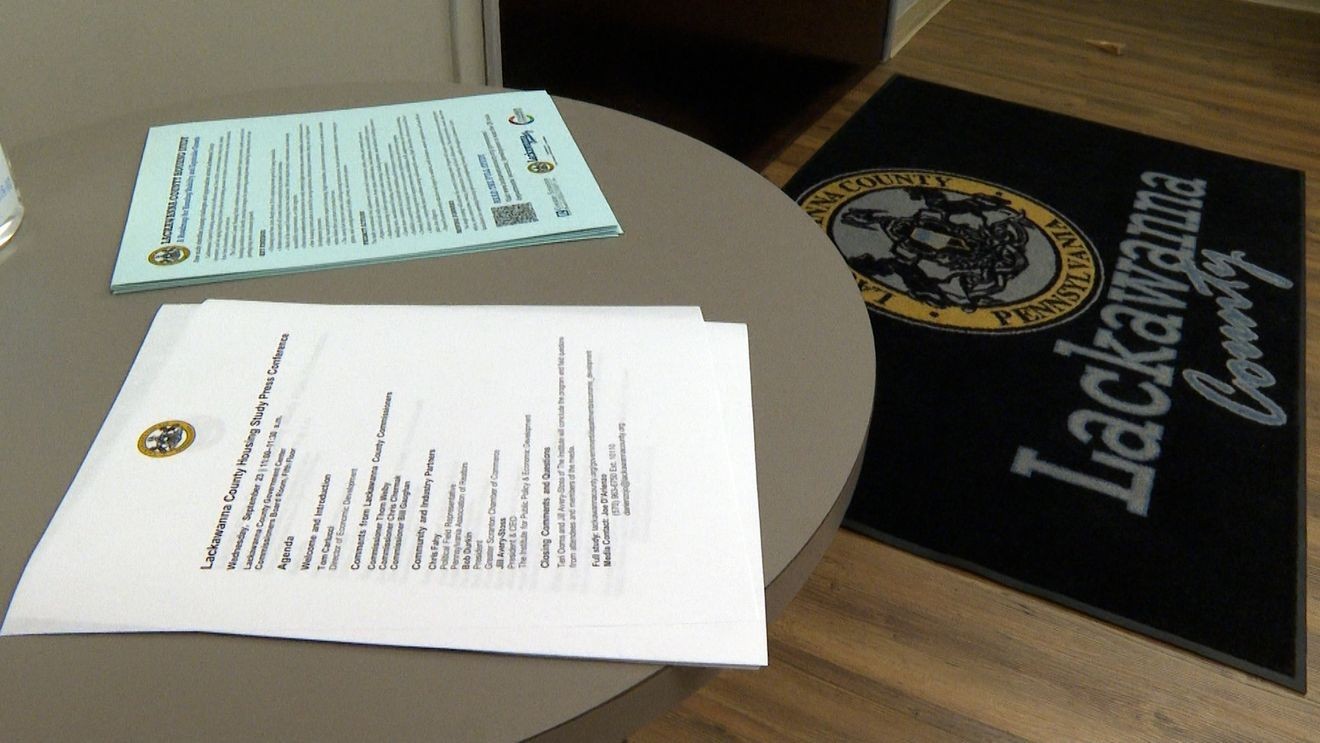
LACKAWANNA CO. (WOLF) — A comprehensive study of Lackawanna County’s housing stock is calling for more affordable and attainable housing options, zoning reform and greater coordination between municipalities, developers, employers and community organizations.
The study was commissioned by Lackawanna County, the Greater Scranton Chamber of Commerce and the Greater Scranton Board of Realtors. The Institute of Public Policy and Economic Development conducted the analysis, which began in September 2025.
The study examines housing conditions and needs across Lackawanna County, including individual township and borough profiles.
Researchers say Lackawanna County continues to benefit from a relatively affordable cost of living, but the housing market faces challenges including limited housing production, low vacancy rates, population changes and an aging housing stock.
Chris Fahy, political field representative with the Greater Scranton Board of Realtors, said the study was intended to establish a clearer picture of the county’s housing situation.
“If we wanted to have an honest conversation about where Lackawanna needed to go, we first had to understand where we stood.”
One of the report’s major findings is the age and condition of housing throughout the county.
Much of Lackawanna County’s housing was built before 1960, particularly in Scranton and older boroughs. The report says deferred maintenance has left some homes with outdated electrical systems, lead paint, inefficient heating, plumbing deficiencies and structural deterioration.
Researchers say a home that appears affordable to purchase can become less affordable when repair, insurance and utility costs are taken into account.
County Commissioner Bill Gaughan said affordability has historically been one of the county’s advantages.
“For a long time, one of our county’s greatest advantages was affordability. You could work in ordinary jobs, raise a family, buy a modest home and build a life here. That promise is becoming harder to keep.”
The study says recent population stabilization and modest growth, particularly since 2020, have contributed to renewed housing demand. Researchers say that growth also reflects the county’s appeal as a relatively low-cost-of-living area.
Another major issue identified in the report is the county’s fragmented approach to land-use regulation.
More than three dozen municipalities have their own zoning regulations, creating different standards and approval processes throughout the county.
Researchers recommend zoning reform and greater consistency while recognizing that municipalities have different community needs.
Commissioner Chris Chermak said local governments will be an important part of addressing the housing shortage.
“We can reduce blight, rehabilitate existing homes, encourage responsible development, and expand homeownership opportunities. To do that, I believe we must work closely with our municipalities which understand their communities best.”
The study also recommends exploring opportunities for adaptive reuse of vacant and underutilized buildings, particularly in traditional borough centers and former industrial areas.
Jill Avery-Stoss, president and CEO of the Institute of Public Policy and Economic Development, said housing affects multiple areas of residents’ lives.
“Housing is not an isolated issue. It really is connected to everything. It affects whether people are able to maintain their employment. It helps ensure that children can perform better academically in school, it has a lot of connections to health and well-being and overall quality of life.”
Avery-Stoss also said the county has resources that can help address the challenges identified in the study.
The report says those existing assets include legacy water, sewer, road and transit infrastructure that could support infill development and redevelopment in areas that are already built out.
It also identifies local modular manufacturers as a potential resource for producing housing more efficiently, particularly for workforce and missing-middle housing.
Lackawanna County Commissioner Thom Welby pointed to another issue affecting the local housing market.
“The issues are solely increasing rents. They’re partially attributable to the number of out-of-town landlords that have permeated our city, buying up our older housing stock, converting them into multiple apartments and rooming houses, and often doing the work without the proper permits and inspections and often leaving our residents with dangerous housing conditions.”
The report concludes that Lackawanna County has an opportunity to build on its existing infrastructure, organizations and community resources.
Researchers recommend a coordinated approach that combines zoning reform, infrastructure planning, preservation of aging homes, workforce housing development, new financing programs and data-driven decision-making.