
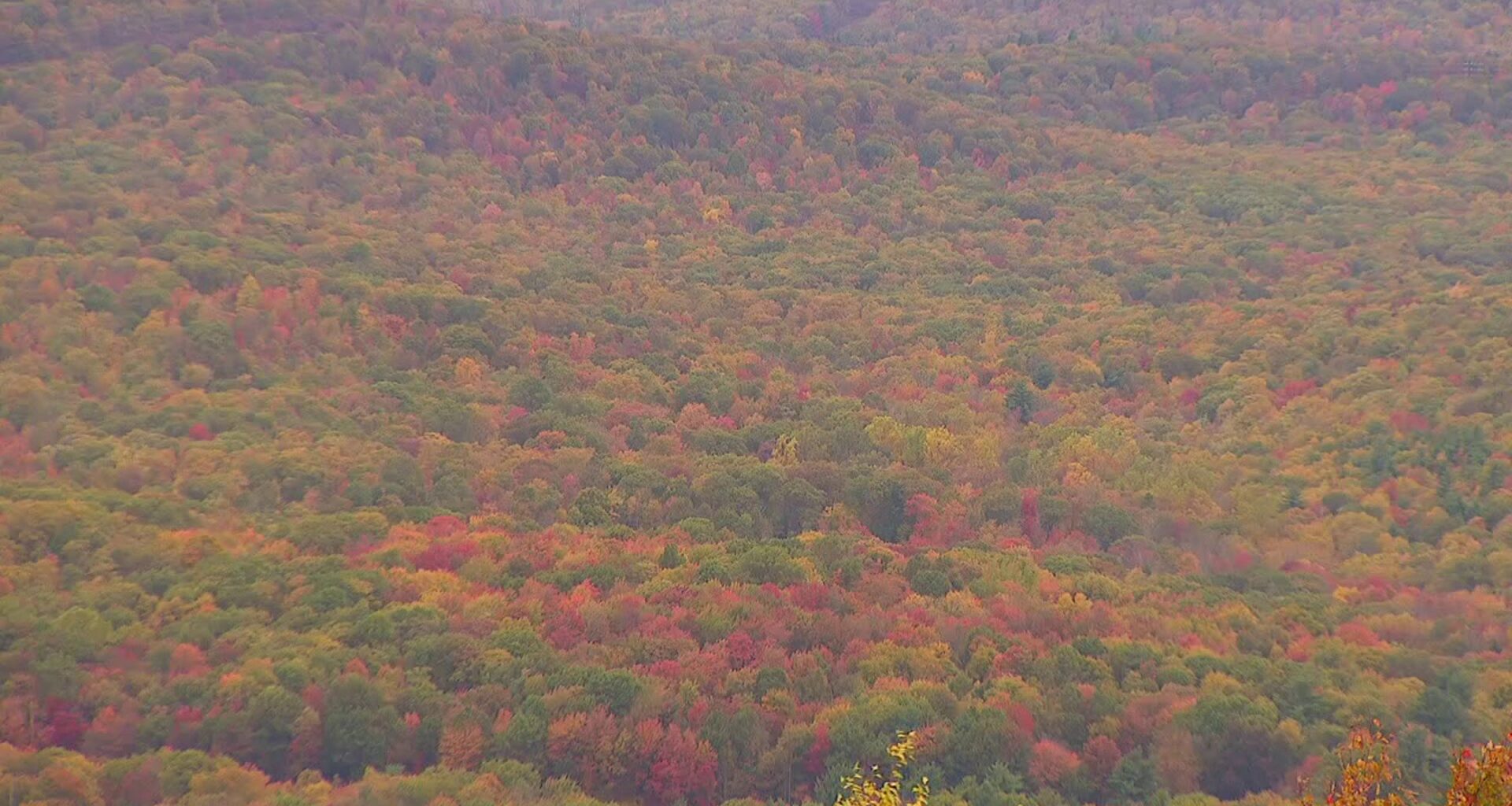
Why do leaves change color?
Information is courtesy DCNR.
For years, scientists have worked to understand the changes that happen to trees and shrubs in autumn. Although we don’t know all the details, we know enough to explain the basics and help you to enjoy nature’s multicolored autumn display.
Three factors influence autumn color — leaf pigments, length of night, and weather, but not quite in the way we were told as children. The timing of color change and leaf fall are primarily regulated by the increasing length of night.
None of the other environmental influences-temperature, rainfall, food supply, and so on-are as unvarying as the steadily increasing length of night during autumn. As days grow shorter and nights grow longer and cooler, biochemical processes in the leaf begin to paint the landscape with nature’s autumn palette.
Where do autumn colors come from?
Information is courtesy DCNR.
A color palette needs pigments. These molecules capture energy from sunlight to power the chemical reactions that convert water and carbon dioxide into sugars— photosynthesis. Trees in temperate zones store these sugars for their winter dormant period.
Three major pigment types are involved in the production of autumn color.
Find out more fun facts about fall in this episode of Stormtracker 16’s Cloud to Ground.