
Fire isn’t the greatest danger of the firefighter’s job. Far more succumb each year to diseases linked to hazardous materials exposure than to the flames of a burning building.
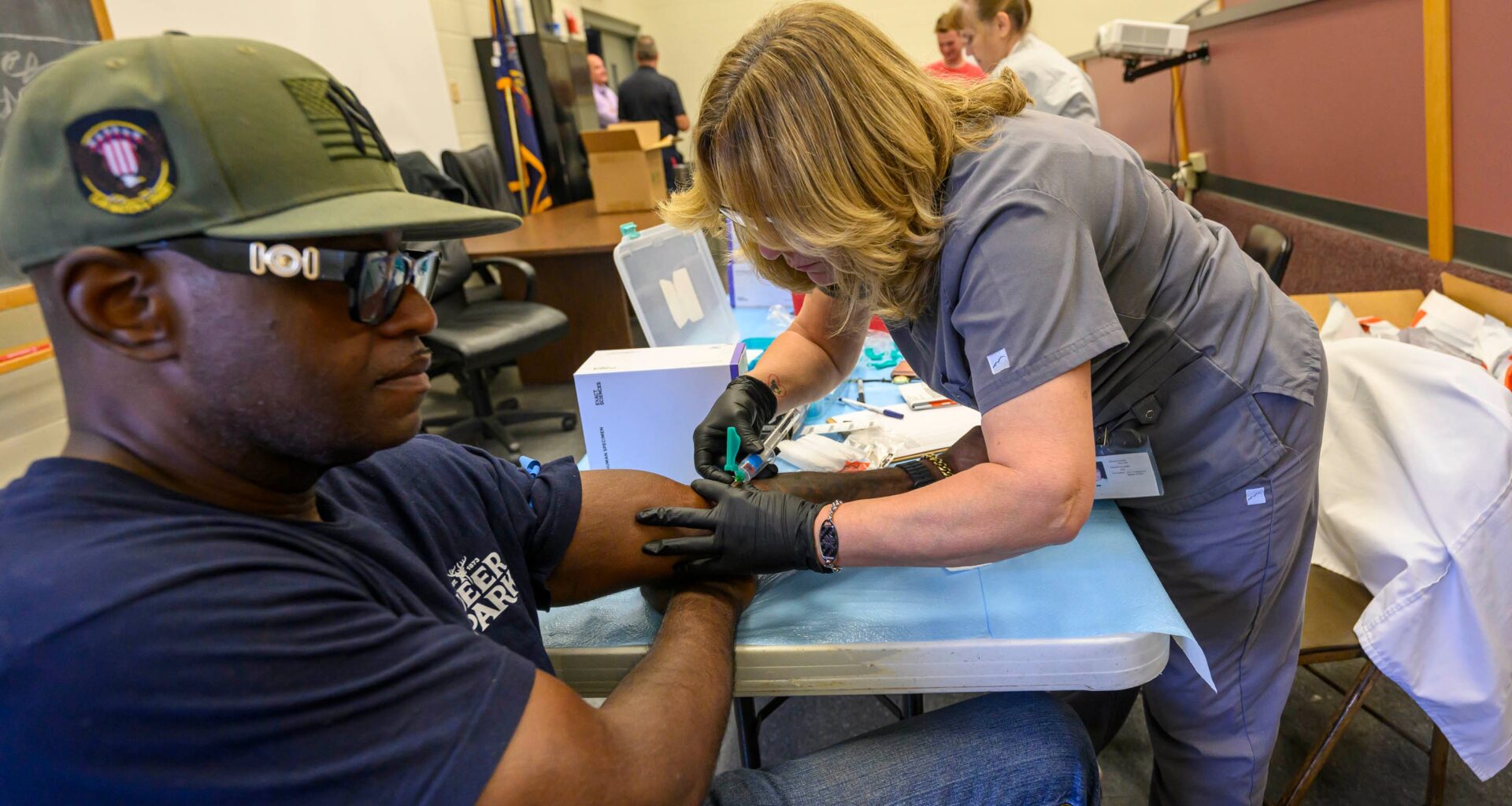
“It’s a lot of nasty stuff,” said Frank Kimble, one of about 40 firefighters who signed up for a cancer prescreening test offered this week by Upper Macungie Township Fire and Rescue.
What kind of stuff? Benzene. Lead. Asbestos. Hydrogen cyanide. Carbon monoxide. Polycyclic aromatic hydrocarbons, a group of chemicals that can penetrate protective gear and be absorbed through the skin.
All are byproducts of combustion, especially from the synthetic materials used in modern structures. Such chemicals in the smoke and rubble of the World Trade Center after 9/11 are blamed for causing more deaths than the attacks themselves.
According to the International Association of Fire Fighters, which represents 365,000 firefighters in the U.S. and Canada, nearly 80% of line-of-duty deaths among members in 2025 were caused by exposure.
“Fires burn faster, hotter and have deadlier smoke than ever,” said Doug Gernerd, the Upper Macungie department’s health and safety officer and organizer of the Wednesday afternoon event at the Fogelsville Volunteer Fire Company.
“It’s more today than it was years ago,” he added, listing lithium-ion batteries among the recent technological advances posing a threat to first responders. Some exposure-linked diseases, such as asbestos-related mesothelioma, a lung disease, can take years to develop. Cancers can develop and spread more quickly, so early detection is essential.
At Wednesday’s event, firefighters submitted four vials of blood for testing with Cancerguard, a process that identifies genetic markers of tumor growth.
“It won’t necessarily detect what kind of cancer it is, but it may detect something,” Gernerd said.
Firefighters with positive results are referred to physicians for more testing.
Over the years, “we’ve had multiple people here who’ve had cancer,” said Cody Gross, a 13-year volunteer. Though the cases can’t be conclusively linked to fire service, most firefighters suspect they are.
Cancerguard was developed by Exact Sciences, the company behind the widely advertised Cologuard colon cancer test. Informally known as a “liquid biopsy,” it can detect signs of more than 50 kinds of cancer, the company claims.
Cancerguard isn’t FDA-approved and the medical community is divided on its merits. It can result in false negatives and false positives and isn’t as effective as traditional screening, though the company notes that physicians routinely screen for only a handful of cancers.
It also costs nearly $700 and isn’t covered by insurance. Gernerd said the fire company’s screening was covered by the department’s Firefighter’s Relief Fund.
The precaution is worth the cost, he said. The department does all it can to ensure safety — firefighters are decontaminated after incidents involving exposure, and equipment is thoroughly cleaned — but no measure is foolproof.
The department has about 60 members. Gernerd said he was pleased so many signed up for testing but understood why others didn’t.
“There were some people who just didn’t want to know,” he said.
Daniel Patrick Sheehan is a freelance writer.