
SYRACUSE, N.Y. — A 360-mile journey across New York is giving one advocate a chance to experience the Erie Canalway Trail and show how thoughtful design can make the outdoors more accessible to people of all abilities.
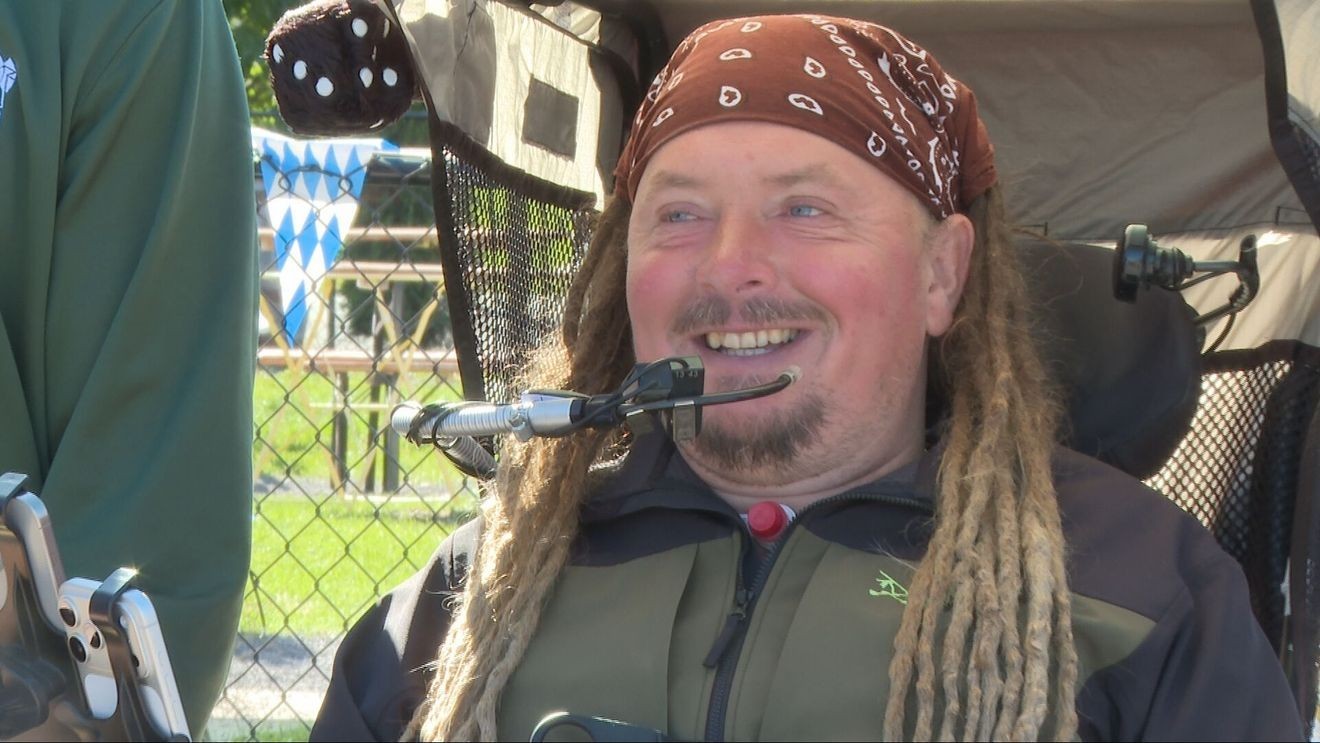
Ian Mackay, who is paralyzed from the neck down, is traveling the Erie Canalway Trail from Albany to Buffalo in a power wheelchair he controls using air rather than his hands.
Moving at about 8 mph, Mackay made his way through the Syracuse area as part of the cross-state trip.
Mackay was paralyzed in a bicycle crash in 2008. Years later, he began returning to trails near his home, initially traveling only a mile or two before gradually taking on longer distances.
In 2016, Mackay crossed Washington State in his wheelchair. What began as an adventure with friends eventually took on a larger purpose.
“What I was doing just for a lark with friends was kind of making an impact,” Mackay said. “And it was showing that accessible infrastructure — it’s really important. And people of all abilities should be able to have experiences like this.”
Mackay, founder of Ian’s Ride, now uses his trips to advocate for accessible outdoor infrastructure.
For wheelchair users, he said, seemingly small details can determine whether a trail is accessible. A curb without a cut, unclear detour signs or tree roots buckling a paved path can create significant obstacles.
“The roots are going to start to buckle that trail, and those bumps can really, really rattle you,” Mackay said. “And even at a very slow speed can be difficult to go over. So I think being thoughtful about big bumps like that — of course, avoid curbs, please.”
Mackay said he has been impressed with New York’s trail system, though he encountered some challenging detours and signage along the way.
Director of the New York State Canal Corporation Ben Walsh joined Mackay for part of the ride through Central New York.
“To be able to see the trailway through Ian’s lens, I think will really open up my eyes and our eyes to, you know, where we could make improvements, where we can do things differently,” Walsh said.
Walsh said much of the trail is relatively flat and paved, while efforts to move more sections away from roads and make the trail as accessible as possible remain priorities.
For Mackay, accessibility extends beyond people who use wheelchairs.
“Be it moms with strollers or elderly people with a wheelchair just pushing along; they all need access to nature,” Mackay said. “And when we are considering design, let’s keep in mind those aspects. We all are going to be using wheels at some point in our life.”
Mackay’s journey will ultimately cover about 360 miles across New York, but his advice for people interested in getting outdoors is to start small rather than focus on the distance.
For Central New Yorkers looking for accessible recreation closer to home, Onondaga Lake Park has the Wegmans Playground, designed for people of all abilities. Green Lakes State Park also has an all-terrain wheelchair available to rent.
To follow along with Mackay’s journey along the Erie Canal, he blogs at the end of each day with updates about his travel.