
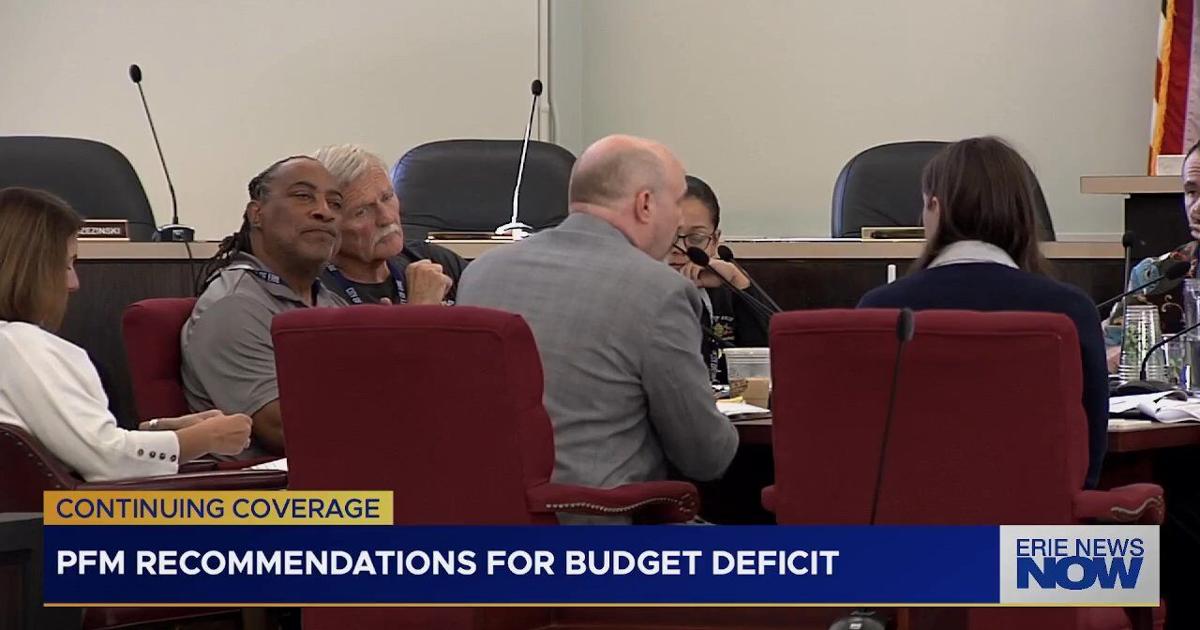
Erie City Council received a detailed look at potential solutions to the city’s ongoing budget deficit during a public study session Wednesday night, as representatives from consulting firm Public Financial Management (PFM) presented a series of short-, mid-, and long-term recommendations.
The presentation focused on strategies aimed at improving the city’s financial stability while addressing a projected budget gap that officials have been working to close.
Among the recommendations was a review and possible renegotiation of the city’s contract with the Erie Parking Authority, which consultants identified as an area that could potentially generate additional revenue or cost savings for the city.
PFM also suggested conducting position reviews across city government, with particular attention given to positions created after 2020. Consultants said evaluating staffing levels and organizational needs could help identify opportunities for efficiencies while maintaining essential services.
Employee benefit costs were another key focus of the discussion. PFM recommended exploring ways to reduce health insurance and prescription drug expenses, which represent a significant portion of the city’s operating budget. Officials emphasized that any changes would require further analysis and discussions with stakeholders.
In addition to operational changes, consultants presented possible revenue-generating options, including a real estate tax increase. According to the presentation, a potential increase of one to two mills could be considered as part of a broader strategy to address the deficit.
City leaders stressed that no final decisions have been made and that the recommendations are intended to provide a roadmap for discussion as the city develops future budgets.
The study session is part of an ongoing effort by City Council and the administration to evaluate Erie’s financial challenges and identify sustainable solutions. Additional discussions are expected in the coming weeks as officials review the recommendations and weigh their potential impact on residents, employees, and city services.