

A Philadelphia woman who thought she was giving a puppy a new home says she instead lost more than $10,000 in a scam that began with an emotional post on social media.
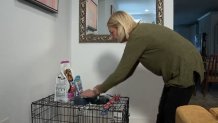
April Libman was preparing to welcome Leah, a Maltipoo she found advertised on a social media page. She had already bought a leash, collar and harness for the dog.
Libman said the post told a heartbreaking story about a woman with stage four cancer who needed to surrender the puppy.
“This puppy was desperately looking for a good home,” Libman said.
NBC10 PhiladelphiaNBC10 Philadelphia
Libman contacted the seller and was initially told she needed to pay a $250 processing fee and $450 for the dog.
But she said the requests for money didn’t stop there.
Libman said she was asked to send additional money for expenses including a shipping crate and insurance. She said she was also instructed to use payment methods including gift cards and electronic payment apps.
Then came another request.
“I received word from the shipper that I now owed an additional $5,499 for a vet check. That’s what sent off the alarm bells. I’m like, this is crazy,” Libman said.
By then, she said she had already sent thousands of dollars.
“I have lost over $10,000, $8,550 to the shipping company, $2,400 to the puppy’s agent,” Libman said.
Leah never arrived.
Libman said she later received a message confirming what she had begun to suspect. The message read, “Sorry, all this, including the shipment, was a scam.”
“I was so angry, I literally broke a vase,” Libman said.
NBC10 Responds brought Libman’s story to Cynthia Lavin with the Better Business Bureau.
Lavin said the tactics Libman described are common in puppy scams, including using an emotional story to draw someone in.
“Scammers will always try to pull at heartstrings, will always try to appeal to human emotion so that you really lower those walls, so that you listen more and maybe you are not as alert or use that discernment to say, okay, there’s something wrong here,” Lavin said.
Lavin said another potential red flag is how someone asks you to pay.
“These are methods of payment that are hard to track, that is hard to get your money back. Usually a legitimate organization is going to accept a check to the name of the organization,” Lavin said.
Before sending money, Lavin recommends verifying who you’re dealing with and examining the social media page carefully.
“It’s important to check when the page was created. Look at the interactions. Perhaps there’s other people saying, I did get a dog and this is my dog now. People are gonna interact with someone that has been around for a long time,” Lavin said.
If someone claims to represent a nonprofit rescue, Lavin said consumers can also check the organization through the IRS website.
“A lot of rescues tend to be 501C3 as per the IRS and they’re nonprofits. So it’s important to verify that because a website is just not enough,” Lavin said.
Libman contacted NBC10 Responds because she wants her experience to serve as a warning to other families searching for a pet.
“I don’t want anybody else to fall for these scams,” Libman said.
This story was originally reported for broadcast by NBC Philadelphia. AI tools helped convert the story to a digital article, and an NBC Philadelphia journalist edited the article for publication.