
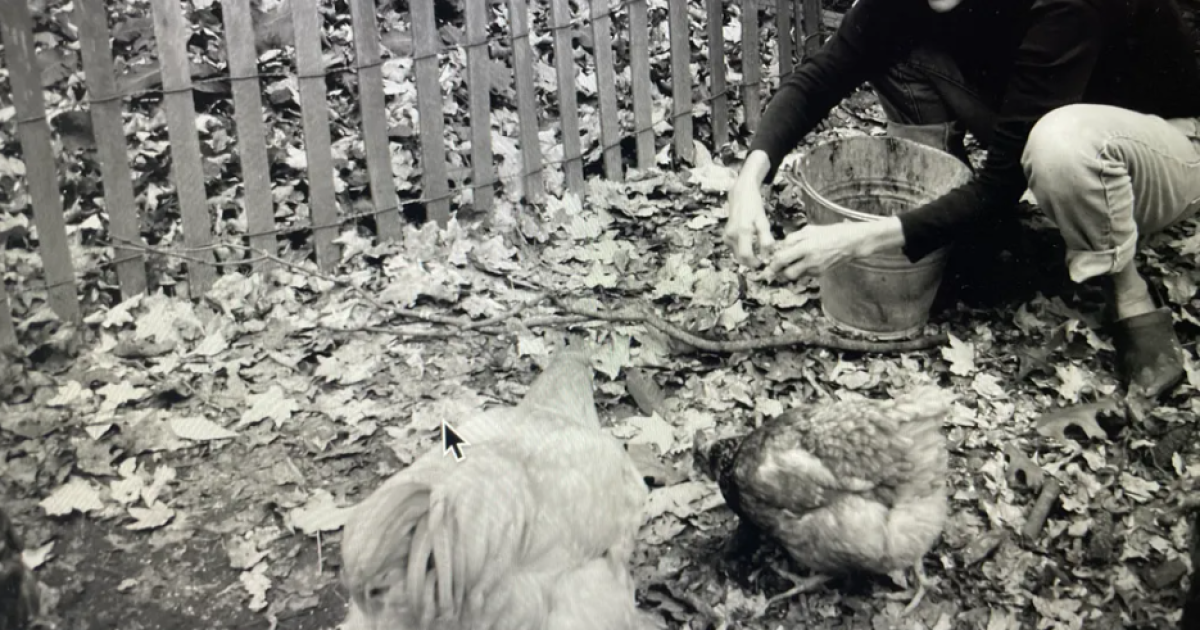
A new book describes the joys and lessons that come with paying close attention to the nature around us.
Daryln Brewer Hoffstot lives on a farm in rural Westmoreland County. She’s published essays about her life there in the New York Times and other publications. Her latest book is This Patch of Earth: Observations on a Rural Life.
Kara Holsopple: In the book’s introduction, you write that readers have told you that your last book felt like a love letter to your family, and you describe this patch of earth as a love letter to the land where you live. Can you say a little bit more about what you mean by that?
Daryln Brewer Hoffstot: I came from the East Coast. My husband is the Pittsburgher. I think I always thought maybe I’d go back at some point. The longer I stayed and the more I paid attention to the beauties of this farm, the more I fell in love with this place. The previous owner had it for 40 years ,and we’ve had it almost 40 years. So it’s really untouched. I don’t think you find places like this that often anymore.
Once I slowed down and I started to look, I began to notice stinging nettles and ghost pipes and morels and purslane and all of the varieties of birds we have. And I set out to know more about it. Then I realized how lucky I was.
There are some environmental problems nearby: fracking and coal mining. It’s not perfect. But I just think I began to realize, and we all need to realize, how lucky we are. As the late Wendell Berry said, may he rest in peace, only by paying attention and appreciating what we have will we want to save the ground beneath our feet. And so that’s what I meant by a love letter to the land.
Kara Holsopple: I like the way that you combine the observations from your land with research and reporting from experts on topics that you write about. What was surprising to you in your research or maybe fun to learn more about?
Daryln Brewer Hoffstot: First of all, that Pennsylvania has lost 99% of its bats. I mean, wrap your head around that statistic for a minute. That when I was doing a piece on chanterelles, and that only three to 8% of the fungi in the world have been described. How important snapping turtles are to the health of a pond. Everybody hates them, and everybody’s terrified of them but they eat the carrion and balance the ecosystem for the plants and the frogs and the fish and the insects.
That purslane, which is a weed we think we see everywhere, might have the highest omega-3s of any plant. That our 150-year-old apple tree is either an Early Harvest or an Early Ripe, both of which produce yellow apples in July. I could go on, but so many things are so interesting to me.
Kara Holsopple: I loved reading the chapter in the book about the maple tree on your property. Why did you include it in the book?
Daryln Brewer Hoffstot: That maple tree really meant a lot to me. It was huge. It was 13 feet in diameter, and it started to die back. My husband and I kept saying to each other, ‘Oh dear, it’s not doing well.’ And I was completely irrational. I said, ‘Well, let’s cut a few branches.’ Well, the whole thing started to come down. It was very dangerous. You couldn’t walk under it. So we finally had to tear it down.
Then I remembered this wonderful fellow, Corey Snyder, who I had bought bowls from as wedding gifts at the Ligonier Farmer’s Market, and he was a self-taught woodturner. I asked him if he would come out, and he said, ‘Yeah, I’ll come out.” He lives north of Pittsburgh. It was an hour and a half drive for him, but he’s such a nice guy. And he said ‘Sure, I will come out and look, but maple’s often too white, and I might not like what it looks like in bowls.”
Well, he came out, and about two months later, he had a bowl for me and a bowl for our son and a bowl for our daughter. So I wrote a piece about turning the tree into something else. Those bowls sold all over the country. I felt like at least the tree would go on in a different form, but that’s why I wrote about it.
Kara Holsopple: As you mentioned in the book, our landscape in Western Pennsylvania is changing with climate change and our human land use. What are some of the ways that has become evident on your farm?
Daryln Brewer Hoffstot: I actually was writing another piece about this this week that hasn’t been published. I’m actually getting scared living here. I don’t mean that to be melodramatic, but the ticks really make me nervous. The woods have for almost 40 years been my solace, and now I think twice before walking in the woods because of deer ticks.
I’m scared of the floods. We live in an old log house circa 1850. They built it at the bottom of the hill where people built houses then to be out of the wind. When that rain comes, it sounds like a freight train. It’s already come into our basement many times.
We’ve had to put in swales, and we have sandbags at the back door. It’s very attractive, but the water scares me. And the microbursts of wind. We lost two probably hundred-foot tulip poplars last spring on the driveway. By the grace of God, no one was driving or walking. That’s the other reason why walking in the woods can feel very scary now because of the microbursts of wind, which we didn’t used to have. So those are some of the big changes that I’ve seen on this farm.
Kara Holsopple: What questions did writing “This Patch of Earth” leave you with about your land and about our responsibility to land?
Daryln Brewer Hoffstot: I’m not sure they left me with questions. It left me with answers, which were get off the electronics, go out and see what’s there. Look at what is below your feet, what’s waist-high, what’s flying above your head. We’re not paying attention. It’s like what Mary Oliver said, you know: pay attention, be astonished, tell about it.
Read more from our partners, The Allegheny Front.