
Having a food and resource pantry at Pittsburgh Arlington PreK-8 is meaningful to Erica Wahid, a mother to a second grade student at the school.
“I’m a single mom, and I’m doing everything I can to take care of my child,” Wahid said. “I need SNAP benefits, and being denied when I know my family needs the support is incredibly frustrating.”
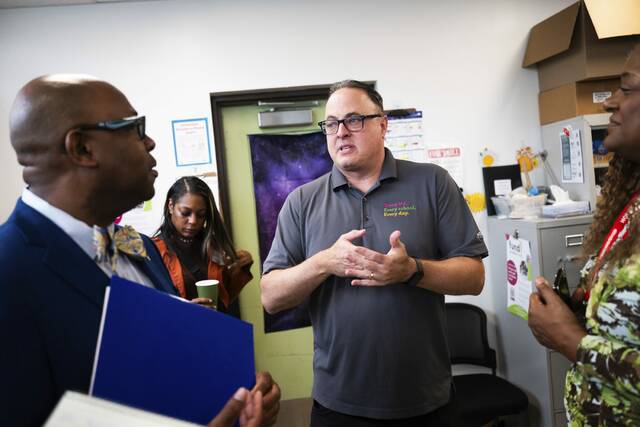
At Arlington’s food and resource pantry on Tuesday, Pittsburgh Public Schools leaders and community advocates discussed the impact recent federal policy changes to SNAP (the Supplemental Nutrition Assistance Program) have had on families in the Pittsburgh Public Schools and Allegheny County.
“These benefits aren’t a handout to me,” Wahid said. “They help put food on the table and make sure my child is taken care of. I just want a fair opportunity to get the help that my family qualifies for.”
Impact
Since the One Big Beautiful Bill was implemented in July 2025, more than 1.5 million children nationally have lost SNAP benefits, said Ann Sanders, director of public benefits policy and programs at Just Harvest, a South Side-based anti-hunger advocacy nonprofit.
In Pennsylvania, more than 90,000 children no longer receive SNAP, Sanders said. In Allegheny County, youth enrollment dropped by 11%, affecting more than 7,000 people.
The law changed SNAP eligibility rules, ended certain work requirement exemptions and shifted new costs to states that administer the federal program. In turn, that’s led to several administrative hurdles that prevent families from accessing SNAP benefits, Sanders said.
“When Congress passed (the bill), they threw a wrench into a machine that was already not fine-tuned,” Sanders said. “As a result, kids who were not intentionally supposed to be the target of this bill are going hungry. With food costs being high, families are relying more on emergency services and providers to help fill the gap.”
While the number of participants is decreasing, the need for SNAP assistance is not, Sanders said.
Kelsey Gross is director of the child nutrition program at the Greater Pittsburgh Community Food Bank. She said one in five children in Allegheny County are considered “food insecure,” meaning they lack access to nutritious food.
In Pittsburgh Public Schools, about 67% of students, or 12,500 children, receive SNAP, medical assistance or are identified as homeless or in foster care, Gross said.
“Families continue to face significant financial challenges as we head into the colder months,” she said. “SNAP can be the difference between a family being able to pay for food while also covering essential expenses like rent, utilities or heating bills.”
Christina Codario, policy director for Allies for Children, feared new Medicaid rules would also negatively impact children and families. She said 3,000 fewer children in Allegheny County have enrolled in Medicaid since the One Big Beautiful Bill was passed. The loss of parental health coverage can lead to the loss of child coverage, she said.
Community Response
Despite the challenges, city schools are working with local organizations to help families get the food and resources they need.
Since Arlington’s food pantry opened last November, more than 20,000 pounds of food have been distributed to the community, Gross said. At least 50 families use the pantry each month. The pantry is a collaboration between the food bank and A+ Schools, an educational nonprofit.
Food insecurity is an educational barrier, Superintendent Wayne N. Walters said. While every Pittsburgh Public student has access to breakfast and lunch at no cost, nutritional needs extend beyond the school day, he said.
“Programs like SNAP serve a different but complementary role to what we provide in schools,” Walters said. “School meals can help nourish children during the school day. SNAP helps families put food on the table beyond the hours and days when children are in our care, and our community schools help connect those pieces by bringing schools, families and community partners together.”
Arlington is one of Pittsburgh Public’s nine community schools, meaning the district and community organizations lead partnerships to support students and families through learning environments and resources.
A resource room and food pantry is scheduled to open next month at Morrow PreK-8, said James Fogarty, executive director of A+ Schools. Officials also are expanding the food pantry at Westinghouse High School.
“Our role is to educate children,” Walters said. “It is also to recognize the conditions that affect their ability to learn, and to use our voice and our partnerships to make sure those realities are understood.”
Walters said the community schools model will continue as the district starts implementing its Future-Ready Facilities Plan, which closes some buildings and schools in the district and reconfigures others.
“We value community schools and we also value the idea of schools being vibrant, community hubs,” Walters said. “That is vital for school success and we can’t do it alone.”