
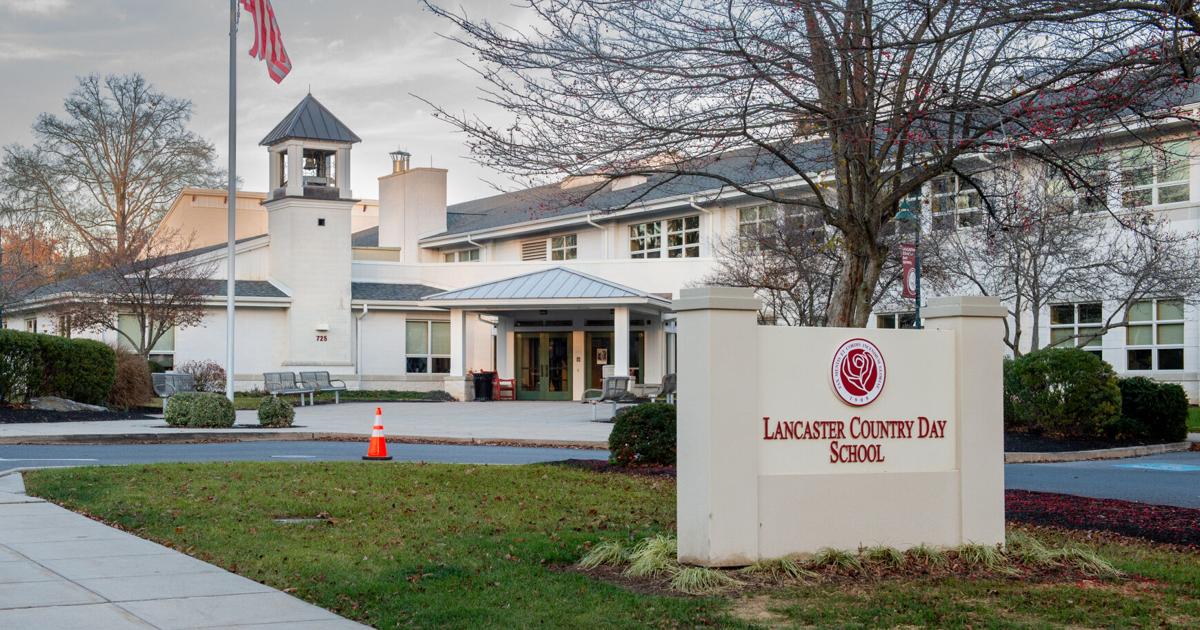
A bill to ban apps that create fake nude images of people passed the Pennsylvania Senate unanimously this week, legislation motivated in part by the hundreds of computer-generated images of students that roiled Lancaster Country Day School.
It would prevent anyone from developing or operating, in Pennsylvania, what it terms “nudification” applications, saying they could not be sold or otherwise distributed to anyone located in the state.
The proposal would prohibit using artificial intelligence to “alter, generate, manipulate or synthesize” images of people “to create a realistic depiction” of someone “in a state of nudity, removal of clothing from the individual or the individual engaged in sexual acts.”
App stores would have to remove or disable access in Pennsylvania within five days of being alerted that a nudification app violates state law.

In the Lancaster Country Day scandal, two former students, 14 years old at the time the images were created, were sentenced to probation. Some of the victims and their parents launched federal lawsuits against the school, the two former students and their parents, and unnamed AI companies. The school, the former students and their parents have asked a federal judge to dismiss the case.
Authorities and the girls themselves said the boys used images of the girls drawn from school photos, yearbooks, Instagram, TikTok and FaceTime chats in 2023 and 2024.
The bill’s prime sponsor, Republican Sen. Tracy Pennycuick of Berks and Montgomery counties, described a scenario in which someone’s 13-year-old daughter was the subject of a nudification app.
“This is not some hypothetical scenario. It happened in Bucks County, it happened in Lancaster County,” she said on the Senate floor Monday. “It’s happening every single day in the commonwealth.”
She said the overwhelming majority of victims are women and girls.
“The images may be fake, but the humiliation is very real. The fear is very real and the trauma is real,” Pennycuick told her Senate colleagues.
The bill has exceptions that include general purpose image editing, film production or other software that is not primarily used or marketed for nudification.
Violations could draw civil penalties capped at $100,000 for each unlawful download of an application that violates the law. The state attorney general and county district attorneys would be responsible for enforcement.
Pennycuick said parents should not have to wonder if an app store is making a nudification app available to children.
“Young people should not have to fear that an ordinary photo can be turned into a weapon. And victims should not be told that the law can only respond after the damage has already been done,” Pennycuick wrote in seeking support for the bill.
State House reviewing bill
The measure was sent over to the state House for its consideration. A spokesperson for House Majority Leader Matt Bradford, a Montgomery County Democrat, said Tuesday that the legislation was being reviewed.
In the Lancaster Country Day School case, the two former students admitted they made more than 300 images of teen girls and one image of an 18-year-old woman.
Lawyers for one of the former students said after sentencing that he did not intend for the images to be public and that they “contained nudity but did not contain any representations of sexual conduct or activity.” They said their client did not use any AI generator himself but was accountable as part of the conspiracy, and that both boys gathered and exchanged the unaltered, original images that were put into the generator.
Lancaster lawmakers who voted for the legislation this week described it as an important step.
Republican state Sen. Scott Martin said the consequences for victims of AI generated, sexually explicit messages “are truly heartbreaking. As lawmakers, we have a responsibility to make sure our laws keep pace with advances in technology so more families don’t have to suffer the same kind of horrors.”
Sen. James Andrew Malone, a Democrat, called the bill “another important step in the right direction,” along with efforts to bolster mandatory reporting laws concerning children sharing such images of other children.
The law, if enacted, would be known as the Stopping Harmful Image Exploitation and Likeness Deception Act.
Success! An email has been sent to with a link to confirm list signup.
Error! There was an error processing your request.